Crossed, chapter 3 of Everything My Dragon Burned
“Is it permanent?” Ardan asks.
Varga looks at him over a mug of tea that could tar a roof. It’s barely light. We’ve been standing in her tent for five minutes, side by side, not touching, and I can feel his irritation the way you feel a draft from a door someone’s left open: a cold steady pressure along one side of me that isn’t mine.
“It’s a cross,” says Varga. “It holds as long as the pair holds.”
“Then break the pair.”
“No.”
“Ma’am—”
“Captain, I’ve seen four crosses in thirty years of flying, and I’ve seen what happens to the dragons when you split a pair after they’ve coiled. Morrow wouldn’t eat for a month after Jory died. A dragon grieves what her rider grieves. You want to see her stop eating for good?” She drinks. “You’ll feel each other. Anything strong. Fear, pain, temper. The more you feel, the more it carries. If you go under together, into one dragon, you can share a sinking. That’s the useful part. Old riders say a crossed pair can even reach each other’s dragons, through each other, in a pinch.” She shrugs. “I’ve never seen it done. I’ve never wanted to. And a rider can wall it shut from his side, if he wants it badly enough. I’ve seen that once. He couldn’t hold a spoon for a week.”
“And the rest?” I ask.
Varga’s single eye moves to me, and something like amusement moves in it. “The rest is your problem, Lieutenant.”
Through the cross I feel Ardan’s jaw lock. Not see it. Feel it, in my own back teeth.
That’s going to get old.
It gets old by breakfast.
It isn’t words. That’s what nobody tells you, in the stories. I don’t hear his thoughts. I couldn’t tell you what he’s thinking any more than I could before. What I get is weather. Every time he looks at me, I feel the look, a faint warmth on the side of my face like standing too near a brazier. When he’s angry, which is often, it sits in my stomach like a swallowed stone. When Hask snaps at him in the lines, I feel Ardan’s flinch a half-second after he feels it, a hiccup in my own pulse.
And he gets mine. I know he does, because when Sol sits down beside me at the mess fire and says, cheerfully, “So, did you two cross or what? Bracken’s been sniffing your tent all morning,” I go hot with mortification, and across the fire Ardan Locke chokes on his porridge.
Sol looks from him to me. Her face lights up like a festival.
“Oh, no,” she says. “Oh, no. That’s the best thing that’s ever happened.”
“It’s not.”
“It is to me. Do it again. Think about something embarrassing.”
“I’m going to think about pushing you off the ridge.”
“He’ll feel that too,” Sol says. “Won’t you, Captain?”
Ardan sets down his bowl, stands, and walks away. The stone in my stomach goes with him, lighter by the yard, but it doesn’t go entirely. It never will now, I think. Not till the snow.
I go to the feed lines to get away from people, which is the only reason anyone ever goes to the feed lines.
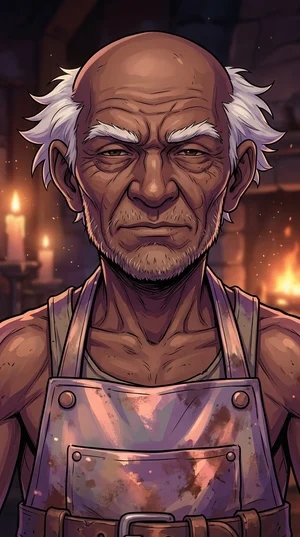
They’re downwind of camp for a reason. Long troughs under a canvas roof, carcass racks, barrels of rendered fat and salt and the bitter bone-meal the keepers mix to keep a dragon’s fire hot in the cold. Old Bram is there, as always, a small brown walnut of a man who has kept dragons for forty years and likes them better than people by a wide margin.
“How’s Morrow’s wing?” I ask him.
“She’ll fly. Joint’s bruised, not cracked.” He jerks his head toward the far end, where Morrow lies with Hask curled around her like a jealous moat. “He won’t let me near her without an argument. Your fault, I expect.”
“Everything he does is my fault. Ask anyone.”
Bram almost smiles, and goes back to his mash.
Down the line, Major Pell is walking the troughs with a ledger under his arm, stopping to talk to each dragon in turn the way some men talk to horses. He sees me, nods sorrowfully, and goes on.
When I get back to the tent in the afternoon, Captain Locke is folding his socks.
Not stuffing them in a kit bag. Folding them. In pairs, heel to heel, toe tucked into cuff, in a neat row on his cot like loaves in a baker’s window. He has eight pairs. He’s on the sixth.
I stand in the tent flap and watch him do the seventh.
“Say it,” he says, without looking up.
“I didn’t say anything.”
“You’re thinking it so loudly I can hear it through my teeth.”
That’s true. My own delight is bouncing off him and coming back as a dull flush of irritation, which only makes it worse. “It’s a war, Captain. The Ossine have a hundred spitters. And you’re—”
“When the Ossine put a chain through Morrow’s wing at four hundred feet,” Ardan says, tucking a toe into a cuff with great precision, “I’d like to know, while I’m falling, that at least my socks are in order.”
I laugh. It comes out of me before I can stop it, a real one, the first in days.
He looks up. Just for a second. And quick and startled and gone, something in him lifts at the sound, like a bird going up off a fence.
He puts the eighth pair down very carefully and doesn’t look at me again for the rest of the afternoon.
We fly that night. A raid.
The Ossine have a supply track up the lower Saddle, mules and carts under oiled tarps, moving in the dark so we can’t count them. Varga wants it burned. She wants the strike pair, and the strike pair is us.
It rains. Not snow, not yet: cold, hard, slanting rain that runs inside your collar and down your spine and fills your boots. The dark is total. I fly with my body rather than my eyes, feeling Hask’s muscles bunch and stretch under my thighs, feeling, now, on my left, the vast steady presence of Morrow, and of the man on her back.
That’s the strange part. In the air, the cross is useful. I know where he is without looking. When he decides to dive, I feel the decision land in my stomach before his hand comes down, and Hask and I are already folding.
We hit the track together. It’s the cleanest strike I’ve flown in my life. Two passes, two lines of fire, mules screaming and scattering, the carts going up like haystacks. Hask is wild with joy, a bright crackling heat under my breastbone. Even Ardan, I think, feels something like it. A hard upward flare, quick, then put away.
On the second pass, a single spitter crew gets a bolt off.
I don’t see it. I feel it. A white, ripping line across my left forearm, so sharp and so total I scream into the rain and nearly drop the reins, and I look down, and there’s nothing there. My arm’s fine.
His isn’t.
He won’t go to the surgeons. The surgeons are a mile away down the ridge, and it’s two in the morning, and he says it’s a scratch.
It isn’t a scratch. It’s a glass bolt that has opened his forearm from wrist to elbow, shallow but long, with flecks of glass glittering in it like frost. He sits on his cot in the lantern light with his sleeve cut away, bleeding with great dignity onto a towel.
“Give it here,” I say.
“I can do it.”
“Left-handed? In the dark? Captain, I’ve watched you tie a bootlace.”
He looks at me. Then he holds out his arm.
I kneel on the canvas floor between his knees, because that’s where the light is. I pick the glass out with tweezers, flake by flake, and wash it with brandy. He doesn’t make a sound. I feel every flake come out anyway, a small bright sting in my own arm each time, and after the fourth one I realize I’m not breathing and neither is he.
I thread the needle. I start to stitch.
It’s slow work. His forearm is warm under my hand, hard with muscle, a raised vein running down toward his wrist where his pulse is going. I have to hold it steady. I have to lean close. His knee is against my shoulder. Rain drums on the canvas, and outside, the dragons breathe, slow and enormous, coiled round us both.
I’m thinking about the stitches. I am. I’m thinking about the next one and the angle of the needle.
And then I’m thinking about his wrist under my thumb, and the heat coming off him, and how close his mouth is to the top of my head. I’m thinking it before I know I’m thinking it, a slow warm curl low in my stomach.
I feel him feel it.
It comes back to me doubled. That’s the only way I can put it. My own want goes out of me and lands in him and comes back, hotter, with his on top of it. His hand closes on the edge of the cot. His knee presses harder against my shoulder, and then very carefully doesn’t.
I tie off the stitch.
“Stop that,” he says. His voice has gone rough.
“Stop what?”
“Whatever you’re feeling. I can feel it.”
I look up. He’s closer than I thought. His gray eyes are very dark in the lantern light, and his face is set like stone, and none of that matters, because I can feel exactly what’s underneath it, and so can he.
“You stop it,” I say.
Neither of us moves.
Then he takes his arm back, carefully, as if it belongs to someone else, and lies down on his cot with his back to me, and I put away the needle with hands that are not entirely steady, and turn down the lantern, and lie in the dark with my heart going, and his going, both of them, in my chest.
I dream the red light.
It’s the same as always. Smoke. A red lamp, swinging. But this time there’s something new. A smell, thick and sweet and wrong: cloves, and under them, sugar left too long in the pan, burnt black and bitter. It fills my mouth. It makes me want to gag.
I wake with it still on my tongue.
The tent is dark. Rain has stopped. Outside, Hask is twitching in his sleep, his breath going shallow and quick and sweet the way it does when he dreams.
Across the tent, Ardan is sitting bolt upright on his cot, his face a pale shape in the dark. He’s breathing hard. His hand is pressed flat against his chest.
“What was that?” he says. His voice is raw. “Holt. What was burning?”
What did you think?