Terms, chapter 2 of Five Minutes for Falling
Russ Pellman’s office had a window onto the practice rink, and Anders had always assumed it was so the general manager could watch his players. Sitting across the desk from him that Wednesday morning, he understood it was so the players could watch the general manager watch them.
“Two million views,” Pellman said. He had the video up on a tablet and turned it around like evidence. “Two point four, now. You carrying an old guy. You know what the comments are saying?”
“No.”
“They’re saying you’re soft.” Pellman said it like a diagnosis. He was sixty, thick through the middle, a former defenseman himself with a cauliflower ear and a rare gift for sounding sorry about things he was about to do. “Which, Anders, frankly, is the first good press you’ve had since December.”
Anders looked at the practice ice. Beans Abara was trying to bank a puck off the glass into the bucket by the bench and missing. Every miss, he bowed.
“Here’s where we are,” Pellman said. “Gordon Vance closed on this team in October. He’s a real estate guy. Waterfront, mixed-use, the arena district, all of it. He bought a hockey club because he wants a hockey club to sit in the middle of his neighborhood like a cherry. He wants the team to look like the neighborhood looks in his drawings. Families. Charity. Character.”
“And I punched the sponsor’s kid.”
“You punched the sponsor’s kid,” Pellman agreed. “And you won’t tell anybody why, which Gordon finds more upsetting than the punch. He thinks a man who won’t explain himself is a man who’s hiding something worse. I’ve told him you’re just like that. He doesn’t believe me.”
Anders said nothing, which proved Pellman’s point.
“Your deal’s up in July. Gordon’s not extending anybody he can’t put on a billboard. And I’ve had three calls this week.” Pellman held up three fingers, one at a time, as if Anders might struggle with the arithmetic. “Teams that would love a thirty-year-old defenseman who blocks shots and kills penalties and doesn’t talk. Deadline is March second at three o’clock. If nothing changes, Anders, I don’t think I can keep you.”
“Okay,” said Anders.
Pellman sighed. “Don’t okay me. Fix it.”
The locker room had seen the video.
He knew because when he walked in, every man in the room was holding a phone, and every phone was playing it, at the same moment, at full volume. Nineteen seconds. Boss. Ice. Then a pause, then the whole room together, in falsetto: Yes. I have ice. It’s a rink.
“Very good,” Anders said. “Very mature.”
“Cap.” Beans was already standing on the bench in his compression shorts, which was against the rules, because Anders had made the rules. Beans was twenty-three and had the energy of a dog let off the leash at a beach. “Cap. Who is she. Who is the tiny furious lady.”
“Nobody. The rink manager.”
“Boss,” said Dev Castellanos, from his stall, very softly, like a man tasting wine. Dev was the alternate captain, thirty-one, father of twins, and the only person on the team who could make Anders want to put him through a wall with a single syllable. “He called her boss.”
“Get off the bench, Beans.”
“He’s never called anybody boss,” Beans said to the room. “He calls Coach Coach. He calls Russ Russ. He calls me get off the bench.”
“Get off the bench.”
“See?”
Mikko Laine, the goalie, was the only one not holding a phone. He was thirty-three, Finnish, and did a crossword before every game with a ballpoint pen. He did not look up from it.
“She’s pretty,” Mikko said. “And she is not afraid of you. This is rare.”
The room agreed loudly. Anders sat down in his stall and started taping his stick and did not, at any point, think about the way Poppy Albright had stood at the bench door at 5:58 that morning with her chin up and her hand on the latch, a head and a half shorter than him, saying you’re on my ice as though she’d have dragged him off it by the hood. He did not think about how she’d gone down on her knees beside the old man before the echo of his helmet had stopped. How her hands had shaken after, while she filled a bag with ice, and she’d hidden them by making a joke.
He taped the stick. He taped it again.
“He’s thinking about her,” Beans whispered.
“He is thinking about killing you,” Mikko said, and filled in seven across.
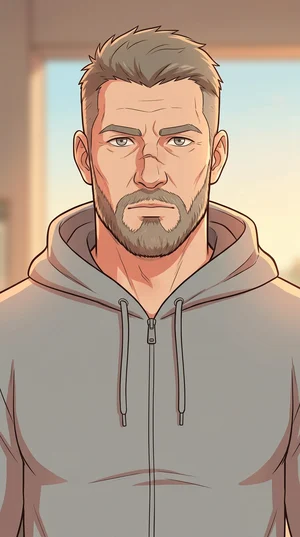
Nadia had booked a booth at the back of the Silver Top Diner, which was the kind of place that served pancakes at midnight to people in various stages of regret. Anders got there first. He sat with his back to the wall and his cap pulled low, out of habit, and watched the door.
Poppy Albright came in at 9:15 in a puffy coat the color of a traffic cone, stamping snow off her boots and talking before she reached the table.
“Okay. So. I’ve thought about it. I have conditions. Hi.” She slid into the booth across from him and next to Nadia, unwound a scarf that seemed to go on for some time, and put a spiral notebook on the table. The cover said SNOWGLOBE: COMPRESSOR STUFF. “Also, I’m not taking your money.”
Nadia blinked. “It’s a generous figure.”
“I’m sure it is. I’m not a paid girlfriend. I’m a rink manager.” She flipped the notebook open. “You need him to look like a guy with a nice life and a nice girlfriend for six weeks, until the trade thing. I need the Snowglobe not to get foreclosed on by the end of March. So here’s what I want instead.”
Anders had not said a word. He found he didn’t want to interrupt.
“One,” Poppy said. “He keeps renting my ice at five a.m. three times a week. At the full rate. Not the A. Smith discount.”
“There’s no discount,” Anders said.
“There’s an emotional discount. Two. The Captain’s Skate.” She turned the notebook around. She had drawn a poster in ballpoint: a stick figure in a C jersey, a big rink, little stick people with hearts over their heads. “End of February. Saturday the twenty-eighth. He brings the team. People pay fifty dollars to skate with real Ironclads at a real neighborhood rink, there’s hot chocolate, there’s a raffle, there’s a photo booth, every dollar goes to the Snowglobe’s note. The internet already thinks I’m his girlfriend, so the internet will come.”
Nadia looked at the drawing. Then she looked at Anders with the expression she got when a contract had a clause in it she wished she’d written.
“The team’s not mine to bring,” Anders said.
“You’re the captain.”
“Vance owns them. Not me.”
“Then don’t ask Vance,” said Poppy. “Ask them. Off the clock. Nobody owns their Saturday.” She tapped the stick figure. “That’s you. You’re tall in it.”
“I’m tall in life.”
“So it’s accurate.”
The waitress came. Poppy ordered chocolate chip pancakes and a side of bacon and a hot chocolate with whipped cream, at nine at night, without any sign of shame. Anders ordered coffee. Nadia ordered nothing and took out a pen.
“Before I agree to anything,” Poppy said, when the waitress had gone. She looked straight at him for the first time. Her eyes were brown, warm, with a fleck of something lighter near one pupil, like a chip in a teacup. “Why’d you hit him?”
Nadia’s pen stopped.
“Kyle Dorsey,” Poppy said. “Everybody’s seen it. You walk into a hallway and you just—” She made a fist and swung it, slowly, at nothing. “And you’ve never said why. If I’m going to stand next to you in public, I’d like to know I’m not standing next to a guy who just does that.”
He thought about the back hallway. The wrist. The small noise. Please don’t tell anybody it was about me.
“He deserved it,” Anders said.
She waited. He didn’t add anything. He watched her decide whether that was enough.
“That’s it?” she said.
“That’s it.”
“That’s a terrible answer.”
“It’s the one I’ve got.”
Poppy studied him for a long beat. Then she picked up a paper napkin from the dispenser, smoothed it flat on the table and wrote across the top in purple gel pen, in round, cheerful capitals: RULES.
“Fine,” she said. “But we’re doing this properly.”
She wrote as she talked.
1. Public only. Games, events, cameras. Not real life.
2. Kissing only if there’s a camera and a reason.
“What’s a reason,” said Anders.
“I’ll know it when I see it.” She kept writing.
3. No falling.
He looked at it. He looked at her.
“No falling,” Poppy said, and capped the pen with a click. “I teach people to fall for a living, I know exactly how it happens, and it’s not happening. You’re not my type and I’m not yours, and in six weeks you go back to being a scary man with a beard and I go back to being the lady with the rink. Nobody falls.”
“What’s your type,” Anders said, before he could stop it.
“Short. Kind. Talks.” She wrote:
4. He comes to Tuesday Wobblers at 6 a.m. Every week. (Walt’s knee will be better by then and he’ll want to show off.)
5. March 3: we break up nicely. Mutual. Nobody’s the bad guy.
She turned the napkin around and held out the pen.
Nadia leaned over to read it, and made a small sound that might have been a laugh. “This isn’t legally binding.”
“It’s binding on me,” said Poppy.
Anders took the pen. It was purple and smelled faintly of grapes. He looked at rule three for longer than he needed to and then signed under it, his full name, the way he signed sticks for kids at the boards. A. VOLD, the V too big.
Poppy signed beside it with a little heart over the i in Albright that wasn’t there.
“There’s no i,” he said.
“It’s a heart. It doesn’t need a reason.” Her pancakes arrived and she brightened as though a friend had walked in. “Okay. When do we start?”
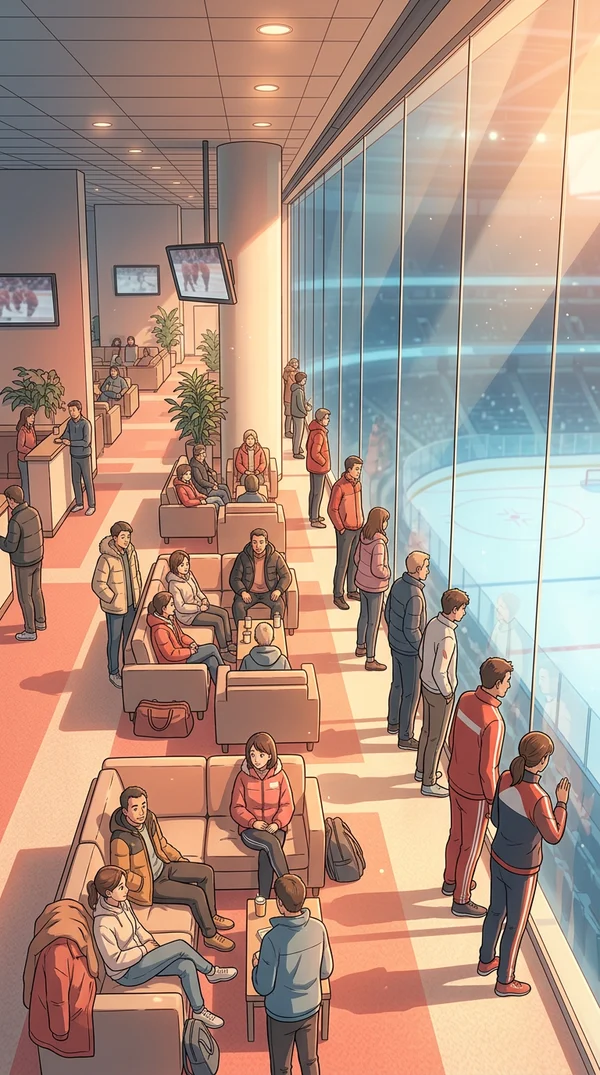
Nadia was already typing. “Thursday’s a home game against Rochester. The team keeps a family room for wives and partners. If she’s seen there, in his—”
“Put her in the family room,” Anders said. “In my jersey.”
Both women looked at him.
“That’s what people do,” he said, and drank his coffee, which had gone cold.
Poppy wrote Thursday. Jersey. Family room?? in the compressor notebook and underlined it twice. Then she ate her pancakes, all of them, and most of his bacon, which he had not ordered and she had ordered for him without asking, and talked for twenty minutes about Gus the Zamboni and the compressor and a seventy-two-year-old letter carrier who had already called her twice that day to ask whether the captain of the Ironclads would be at Tuesday class.
When she left, she forgot the napkin.
Anders watched her go out into the snow in her orange coat, a bright moving dot all the way down the block until she turned the corner. Then he folded the napkin in half, and in half again, and put it in his wallet behind his driver’s license, where he’d see it every time he paid for anything.
Nadia watched him do it.
“Don’t,” he said.
“I didn’t say a word,” said his agent, and smiled at her phone all the way to the car.
What did you think?