After the ice broke on Wintersend Water, Hester stopped counting days and started counting letters.
There were eight stones left, and on the eight stones a hundred and ninety-one letters, not counting the spaces, and nobody had ever paid for a space. She could cut, on a good day in the yard at Wyke with the light coming in level across the banker, sixty letters before dark. In a crypt by lantern, with a bound hand that still opened when she gripped too hard, she could cut forty. She did the sum on the back of the list and then stopped doing it, because the answer was always the same and it was always too close.
So she cut all day, and then she cut all night.
Mrs. Bell held the lamp. She did it without being asked, the first night, coming down the crypt stair at the last bell with a second lantern and a shawl and a stool, and setting the stool by Hester’s elbow and lifting the lantern so the light fell slantwise across the face of the stone, the way the best light falls, so every cut throws a shadow. Hester had never told her that. She supposed you could learn a great deal about light in thirty years of dusting.
“You’ll want to be abed,” Hester said.
“So will you,” said Mrs. Bell, and did not move.
The house walked above them. They could hear it, the long creak and settle of corridors rearranging themselves in the dark. It did not come down the crypt stair. Hester had begun to think it did not come where the dead were being named.
Twice a day, at noon and at dusk, she went up to the library.
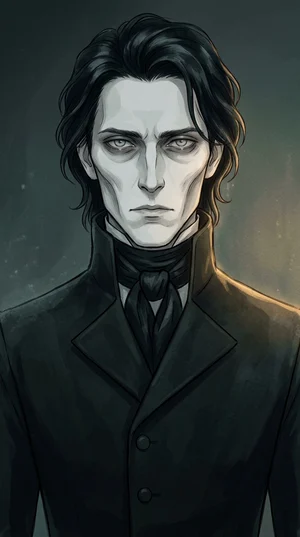
He lay under the frosted window on the long sofa and did not get up anymore. When she came in, he turned his head and looked at her down the length of the room, and his eyes were silver all the time now, with only a ring of grey at the very center, like a coin worn almost smooth.
“How many?” he would say.
“Thirty-six.” And the next day: “Thirty-eight.”
“You’re cutting through the night.”
“Mrs. Bell holds the lamp.”
He was quiet a moment, the first time she said it. “Does she.”
“She does it very well. She knows where to put the light.”
He turned his face to the window. “She always did.”
On the third of March, Hester sat at the library table with her notebook and wrote out, in a clear hand, every line in the Ledger of the House with Tobias Crane’s name in it, eleven years and more, every salver and spoon and candlestick and shelf of books, with the coffin of oak in its place in the middle like a full stop. It took her the whole of the dusk hour. When she had finished, she wrote a letter.
To Mr. Rudd, Constable, Cold Ashby.
She wrote it as she would have written a quotation for a monument: plainly, without adjectives, everything that could be measured measured. Then she read it over and added one paragraph at the end, because she knew the rules of the house better now than anybody in Cold Ashby did.
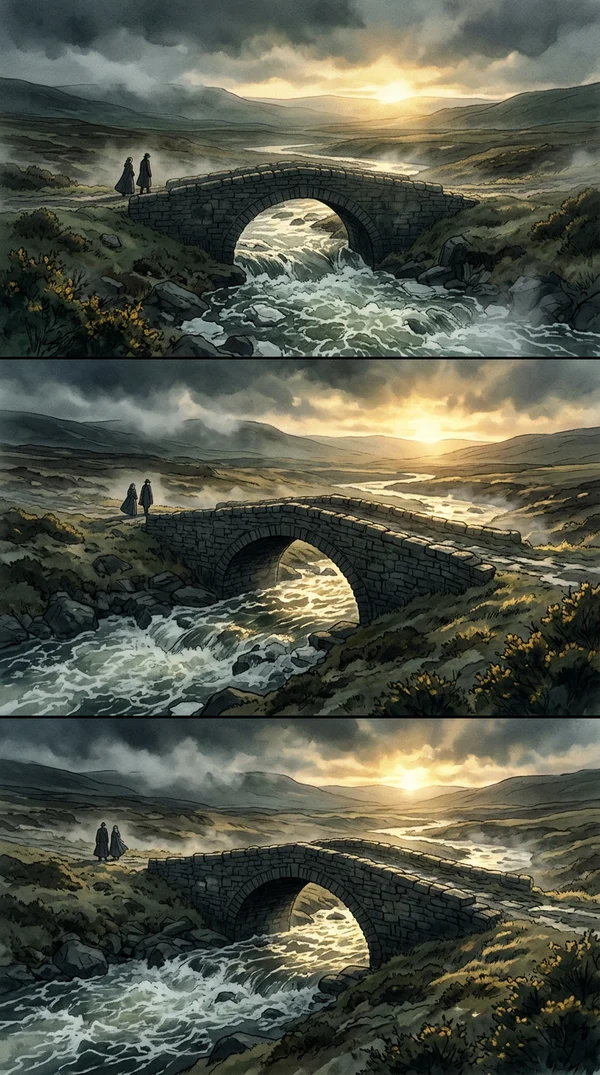
The man cannot cross the bridge over the Wending Beck before the thaw, by the custom of this house. On the first morning the beck runs, he can. I would ask you to be at the bridge that morning, at first light, with whatever men you think fit.
She did not give it to Toby, who asked her, cheerfully, at breakfast, whether she had any letters for the carrier. She said she had none. She gave it to Mrs. Bell, who folded it into the bottom of the empty flour sack, and walked down to the bridge with the sack herself that afternoon, two miles there and two back through the soft snow, because her knees, she said, wanted the air.
Hester put the notebook with the copied lines into her chisel roll, where she kept everything that mattered, and tied it up.
Forty stones were done on the twelfth of March.
She stood back from the fortieth with her mallet hanging from her hand and looked down the crypt at them, the long double row of names in the lantern light, every letter holding its shadow, and felt something she had felt only once before in her life, in the yard in April with her father’s name in the slate: a kind of dreadful quiet, as though a great noise had just stopped.
The forty-first tablet waited in the wall near the stair. She had left Lenora Bell till last. She had told herself it was because the list was in order.
“What’s to go on it?” Mrs. Bell said behind her.
Hester turned. Mrs. Bell was standing with the lamp, looking at the blank stone.
“His line,” Hester said slowly, “is I found her in the snow and I drank.”
Mrs. Bell said nothing.
“I asked him,” Hester said. “Yesterday. I asked him if it had to be his line. He said it was your stone more than his, and to ask you.” She swallowed. “So I’m asking you.”
Mrs. Bell looked at the stone a long time.
“She read everything,” she said at last. “Put that.”
So Hester chalked it out. LENORA BELL. AGED 22. SHE READ EVERYTHING. And she cut the name that night with Mrs. Bell holding the light, and the age, and the S of SHE, and then her hand gave out, the bound palm opening wet under the linen, and Mrs. Bell took the mallet out of it.
“Tomorrow,” Mrs. Bell said. “It’s sixteen letters. You’ll do it in a morning.”
In the morning the forty-first tablet was in pieces on the floor.
Someone had taken a sledge to it in the night. Not a chisel; a sledge, a great swinging blow that had cracked the face right across and shattered the bed behind it, so that the stone had come out of the wall in four pieces and lay on the flags, and the name she had cut was broken through the middle, LENO on one piece and RA BELL on another, and the S was gone altogether into grit.
Hester stood and looked at it.
She did not need to untie her chisel roll. She knew already, from the way it lay, a little loose, on the trestle where she had left it tight. She untied it anyway. The chisels were all there. The notebook with the copied lines was not.
Behind her, on the stair, Toby said, “Lord have mercy.”
He came down and knelt by the stone, and his face was white and sorry and horrified, and his voice shook. “Who’d do such a thing? To her stone? Miss Vane, I swear—” He looked up at her. “It’s the house. It must be. There’s no one else down here at night. It doesn’t want her named. It never let her go, not in eleven years.”

 100 to start reading with.
What did you think?