I Release You, chapter 1 of Mated to My Ex-Husband's Alpha
My ex-husband told his whole pack I was barren, and then he got mated on a Sunday night, and pack law said I had to stand up in front of all of them and say I was fine with it.
The invitation had come eight days before. Not a text. A card, cream stock, engraved: Keegan Pruett and Sierra Croft request the honor of your presence at their mating. My name in my ex-husband’s handwriting. Underneath, in ballpoint: Pack law. You have to. I’m sorry.
I had put it on the fridge under a magnet from the dentist and looked at it for a week.
The law is this. When a wolf leaves his mate, the mate he left has to stand up before the pack and release him out loud. Not on paper. Out loud, at his next mating, or the bond stays where it was put and the new mating never takes all the way. Keegan needed the words. I was the price of them.
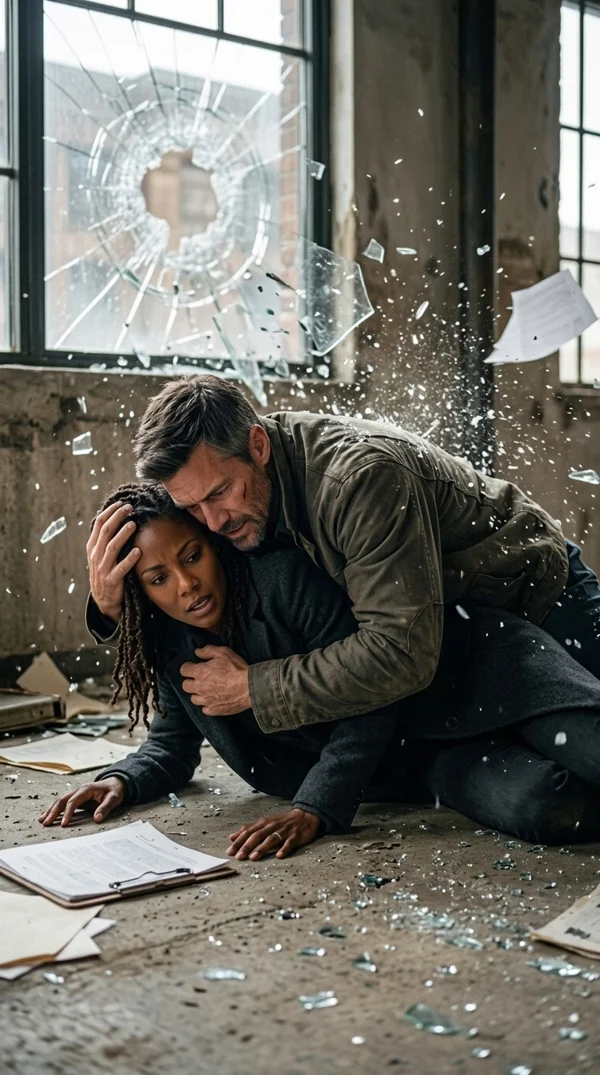
The mating wasn’t in a church. It was in a steel mill. Ashby Works had been cold since 1979, a brick cathedral on the Monongahela with a crane runway down the middle and windows high up like a row of broken teeth. The river-valley pack had spent ten years making it legal again, which is a sentence I never thought I would write about a building with no sprinkler riser and one working exit. They had run power in from a generator truck. They had set out folding chairs in rows. They had hung a string of work lights over the old hearth, and the lights made everybody look like they were standing in a hospital corridor at three in the morning.
Seventy-four wolves in their good clothes, and me at the back in my city coat.
I could have refused. There would have been consequences for him — the bond never taking, the pack saying he wasn’t clean — and for one entire evening I let myself enjoy the idea of those consequences. Then I got my coat and drove to Rankin, because I was not going to be the woman who broke something she didn’t want anyway, and because a stupid part of me still wanted to see whether he would look at me while it happened.
Nine years married. Four months divorced. He had wanted pups. The clinic had run its tests and said there was no explanation, which in my experience is what doctors say when they mean we would rather not tell you whose fault this is. Keegan told me it was mine. He told his pack it was mine. Then he found a she-wolf from a ranking family and moved out of our house on a Tuesday while I was at work.
Keegan and Sierra stood at the hearth with their backs to the room. There was no officiant, no vows, no rings. The Alpha was supposed to witness it, and the Alpha’s chair — a steel folding chair with a piece of duct tape across the back — was empty at the front. Nils Croft, Sierra’s father, had started without him, which told me something about the Crofts and something about Easton Kilbride, and neither thing was reassuring.
The pack settled. A woman in the second row was knitting. A man near the wall was eating a sandwich out of foil. It was, I realized, a family meeting, and I was the item on the agenda.
“She’s the one that couldn’t,” a woman in the third row said. Not quietly. To her neighbor, in the tone of a person settling a fact.
The floor tilted about two degrees.
Sierra Croft turned her head, and she was twenty-seven and had the kind of shine that comes from never having been told no, and she was standing in a cream dress that had no business in a building with steel dust in the rafters. She heard the woman. She let her mouth do something small and pleased and then straightened her shoulders under it.
I kept my eyes on the hearth. If I looked at the back of Keegan’s head long enough I was going to say something I couldn’t take back, and my mother’s voice was in my ear the way it always is at the worst possible moment. Don’t make a scene, Marlo. Nobody likes a woman who makes a scene.
I had made a scene at the divorce. I had stood in the hallway of the family court and told Keegan Pruett that if he ever called me barren in front of another living soul I would put his teeth through the back of his head. The judge had pretended not to hear. The bailiff had grinned. Keegan had looked at me like I was a stranger, which, to be fair, I was.
Nils walked to the front of the mill. He was sixty-one, a retired millwright with hands like a bag of tools, and he had never once looked at me like I was a person.
“Marlo Hartigan,” he said. “Come forward and speak the release.”
The pack turned. Seventy-four faces, some of them sorry, most of them curious, a few of them pleased, and nearly all of them white. I had been the only Black woman in a lot of rooms. I had never been the only human in one. I walked up the aisle between the folding chairs with my boots loud on the concrete. I am five foot seven and I have spent seven years walking into buildings other people are afraid of. I know how to walk into a room. I did not know how to walk into that one.
Keegan didn’t turn around. That was the thing that got me. Nine years, and he kept his face forward like a man waiting for a bus.
I stopped behind him. I could smell the wool of his suit and the soap he had used since he was twenty-four. There was a piece of me — a stupid, animal piece — that wanted to put my hand on his back. I put my hands in my coat pockets instead.
“The release,” Nils said.
I had rehearsed it in the car. I had rehearsed it in the shower and at the kitchen sink and once, at two in the morning, into the mirror in my bathroom with my bonnet on and my toothbrush in my mouth. Two words. That was all. Two words and I could go home and eat cold lo mein standing up and never see any of them again.
I said them.
“I release you.”
My voice didn’t shake. That surprised me. It came out low and steady, a voice I recognized from inspections, from the day I stood in a landlord’s office and told him his building was going to kill somebody if he didn’t fix the stair.
The pack exhaled. Keegan’s shoulders came down an inch.
Something happened in my chest. Not pain. A loosening, like a knot I had carried so long I had stopped noticing the weight of it. I had thought the release was a formality, a sentence I said for him. Nobody had told me it would do anything to me.
I stood with my hands in my pockets and waited to feel free. What I felt was the room, and the cold coming up through the concrete, and something under my ribs pulling toward the back of the mill.
Sierra turned around.
She was pretty the way a new knife is pretty. She looked me up and down, from the twist-out I had spent an hour on and would deny to my grave, to my city coat, to my boots, and she smiled with her whole mouth.
“Don’t cry, human,” she said. “You’ll rust.”
Somebody laughed. Not everybody. Enough.
Keegan didn’t say anything. That was the other thing. Nine years, and when his new mate told me to stop crying, he looked at the floor and let her. I had spent a year telling myself that the man I married was still in there somewhere, under the silence and the pack and the want of a pup. He wasn’t. He was a man who let a room laugh at me because it was easier than loving me out loud.
A woman in the second row had stopped knitting. She was younger than most of them, with black hair in a braid and a hospital ID badge still clipped to her sweater, and she was looking at me with something I couldn’t read. She wasn’t laughing. When I caught her eye she gave me a small, tight nod, the kind you give somebody who has just walked a plank without falling off.
I felt it in my face — the heat, the stupid heat — and I stood there and let it come and did not look away from her. I have been called worse by better. I have been called a lot of things in nine years of being the human wife, and the one thing I have never been is a woman who cries on cue.
“Congratulations,” I said. “On the mating. Not the manners.”
Sierra’s smile flickered. Nils Croft said something under his breath. Keegan finally turned around, and for one second he looked at me the way he used to look at me across a kitchen, like I was a problem he would solve later, and then he looked away.
The doors at the back of the mill opened.
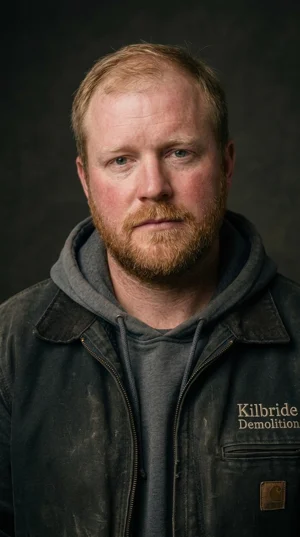
I don’t know how long he had been standing there. The wind came in first, cold and wet off the river, and then Easton Kilbride came in with snow in his hair and on his shoulders and his hands in the pockets of his work coat that had seen better decades.
He was forty-four. He was the Alpha. He was the man whose company tore down half the mills in Allegheny County, including, if the paperwork went through, the one we were standing in.
He had been Alpha for eleven years, since his father died. People in Rankin talked about him the way they talked about the river: it was there, it was bigger than you, and you didn’t argue with it. He employed half the men in the valley. He had never married, which the pack found interesting and I found irrelevant until approximately nine seconds later.
The pack went down.
Not all at once, and not neatly. It was like a field of wheat when the wind crosses it. One row of chairs scraped, then another, and then seventy-four people were on their knees on the concrete with their heads down, and the only sounds were the generator and the river and somebody’s baby starting to cry.
It took eight seconds. I counted them. In eight seconds, the room I had walked into as the discarded human wife became a room where I was the only person standing.
Easton walked up the aisle.
He didn’t look at the hearth. He didn’t look at Keegan or Sierra. He walked past them both like they were furniture, and he stopped in front of me.
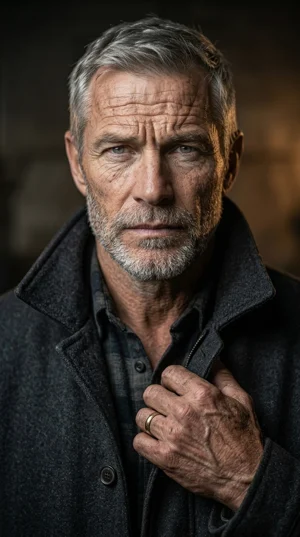
Close enough for me to see the scar on his jaw and the gray at his temples. His eyes were the color of river water in February. He looked at me a long moment, and then he did something I did not understand until much later.
He breathed in.
It was not a sniff. It was not rude. It was the way you breathe in at the top of a hill, or the way you breathe in the first cold air of October, like your body has been waiting for it. His eyes changed while he did it. The gray went warm and then gold, a ring of amber around the pupil, and the hair on my arms stood up under my coat.
Something under my ribs pulled tight. A seam giving way, low and sharp.
“Sierra,” Easton said, without turning his head. “Your mother’s car is blocking the fire lane. Move it.”
Sierra’s mouth opened. Her father said, “Alpha—”
“This ceremony is over.” Easton’s voice was quiet. It carried to the back of the mill anyway. “Keegan. Kneel to your Luna.”

What did you think?