The Foundry, chapter 6 of Mated to My Ex-Husband's Alpha
The Northbank Works sat on the Allegheny with its feet in the water and its name still carved over the gate in letters a foot high, and behind the gate it had been turned into money.
Four stories of the old furnace building had new windows, black frames, tall as church windows, and behind them the lofts were framed out and drywalled and hung with pendant lamps that were on at ten in the morning for no reason except that the photographer from the brochure had liked them. The rolling shed along the river had been stripped to its steel and re-roofed, and a food hall was going into it, and there were already brass numbers on the stall pillars.
I stood at the gate in my city coat with the construction fence at my back, and the river went by brown and fast, and the whole thing smelled of wet plywood and hot cutting oil and money.
“Marlo Hartigan.”
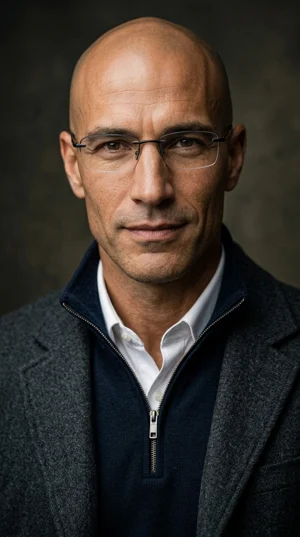
Cullen Rudnik came across the yard without a hard hat. He was forty-six and built like a rower, in a gray coat that had never been in a yard in its life, and he had a coffee in each hand.
“You’re the human,” he said. “I expected someone taller.”
“I’m the inspector.”
“Here.” He held out a coffee. “It’s from the cart on the corner and it’s better than it should be.”
I took it, because refusing a coffee on a site is a statement and I had not decided what statement I wanted to make yet.
“You’re the Alpha of the Allegheny pack,” I said.
“I’m a developer with a pack,” he said. “It’s more useful at zoning.”
Miles Rudnik was waiting inside the gate with two hard hats and a roll of drawings under his arm. He was twenty-four and had his father’s height without his father’s ease, and the hard hats were both already adjusted, one of them too small.
“Miss Hartigan. We’ve got the file in the site office. I can walk you.”
“You can walk me. The file stays with me.” I put my hat on over my work bun, which I wear low at the nape for exactly this. “Where’s your engineer?”
“Off site till one. I’ve got the stamped set.”
“A stamped set isn’t an engineer. We’ll do the visual first.”
Miles looked at his father. Cullen said, “Do the visual,” pleasantly, and stayed where he was by the gate with his coffee. He did not follow.
The rolling shed first: a hundred and forty feet of clear span, new steel columns bolted to the old ones, a mezzanine of heavy timber running down the river side at twelve feet, four hundred square feet of it, hung over the floor where the food hall tables would go. One stair, steel, open, at the far end. The front edge had a rail of two-by-four and a top rail of scaffold tube.
I stood under the mezzanine and looked up.
“Second exit off this?”
“That’s the design,” Miles said.
“Where?”
“It’s coming.”
“Where’s it drawn?”
He flipped to the sheet. There was one stair on the sheet, and a dotted line with a note: future second means of egress.
“Future,” I said.
“The stair’s in.”
“The stair’s one stair. Four hundred square feet of assembly floor with forty-odd seats over a cooking line with one way down. What’s the rating on that stair?”
Miles checked the sheet again, and then the general note, and then, when neither of them said anything, the stair itself.
“It’s, ah. Steel.”
“Steel’s a material. It’s not a rating.” I walked over and put my hand on it. It was hollow section, two stringers, treads welded in, no riser plates, bolted to the slab with four anchors. Under it, the floor of the hall, and the spot where the brewery’s boilers would sit.
“It’s decorative,” I said. “It’s a pretty stair. It’s not a means of egress. Look at the treads — no nosings, no riser plates, open risers at nine inches. Somebody comes down that in a crowd and the first pair of shoes goes through the gap and the whole run goes over like dominoes. And it’s bolted, not welded to embed plates, and it’s in the same room as the boiler flues with no fire separation.”
“Building’s sprinklered,” Miles said.
“Where’s the riser?”
“Pump room.”
We went. The pump room was a concrete cell off the furnace hall. The riser came up out of the slab, six inches, with the main valve on it and an alarm valve that had a tag on it from a contractor who had gone out of business in 2023. Above the valve, the main ran up the wall and stopped, the end of it capped with a screwed plug and a bit of red paint.
“Capped,” I said.
“It’s pressure-tested.”
“It’s capped. Nothing’s wet above this line. Your heads in the loft ceilings are decoration.” I put my hand on the pipe. “When was the wet test?”
Miles looked at the tag as though it might answer.
Then we did the furnace hall, and the lofts, and it got worse in ordinary ways, which is the way it gets worse: nothing dramatic, everything in the wrong order.
The furnace hall had the brewery in it, tanks set, a boiler flue assembly on the floor with the flue not yet running, and a mezzanine over the back third of the room — a proper one, steel, with a fire escape stair at the outside wall — except the mezzanine had been extended since the drawings and the extension had no stair at all, and the guard rail on the river side stopped four feet short of the wall.
“Where’s the second exit from up there?”
“The fire escape.”
“On the extension?”
Silence.
In the lofts, an elevator shaft had been cut through the old slab, three floors, with a plywood curb around it and one length of caution tape that had gone slack and was lying in the dust. The curb was six inches high and open. The tape was at ankle height.
“Somebody walking the corridor at night with an armful of stuff goes straight into that,” I said.
“We’re putting the doors on next week.”
“The doors don’t go in the hole. A guard goes in the hole.”
Cullen had come up the stairs behind us and stood in the corridor with his coffee, looking at the shaft with the interest of a man admiring a view.
“Tell me what it costs,” he said.
“A guard’s two hundred dollars. A proper shaft enclosure’s a day of framing and a fire door and about four thousand, if you want it rated.”
“Put the enclosure in the list.”
“The enclosure’s in the list.”
“Good.” He walked on down the corridor and stopped at the end window, the big one over the river, and stood looking out, and he was a man who liked his own view and expected you to like it too. “How’s Kilbride?”
“Working.”
“I hear he put you under escort. Bo Tarrant’s a good man, but Keegan Pruett behind your wheel every day is a message, for sure.” He turned from the window. “How does it feel, being a message?”
“Like being a package with a clipboard.”
He laughed, properly, a real laugh with his head back, and Miles smiled at the floor because his father had laughed.
“You’ll want the discharge width off the food hall too,” he said. “I’ll save you the walk. It’s eleven feet, and the code wants fifteen for the occupant load the stalls will pull, so you’ll write it down, and I’ll widen it, and it’ll cost me a pair of storefronts I was going to lease at five thousand a month.” He drank his coffee. “Anything else you already know?”
“Your flue isn’t connected to anything, your mezzanine rail’s four feet short, and the stair’s bolted with four anchors when the sheet says eight.”
“Eight.” He looked at Miles. “Get the anchors.”
“Today?”
“Today.”
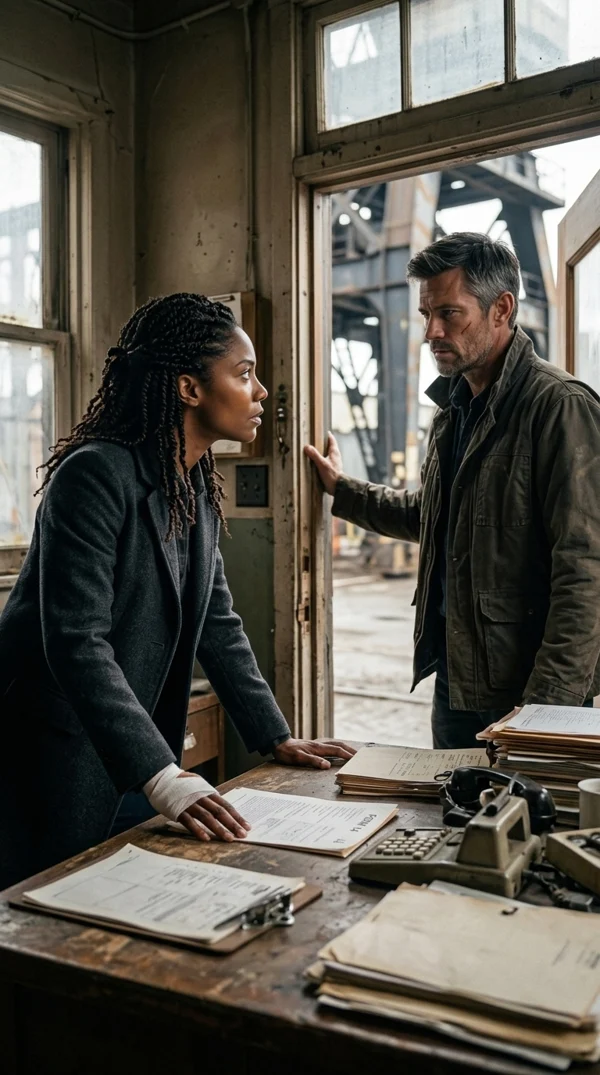
At two, in the site office, with the drawings spread on a drafting table, I asked Miles for the sealed set.
“It’s the stamped set,” he said. “You’ve got it.”
“Sealed. An engineer’s seal and a signature and a date, on the egress sheets.”
He went through the stack twice. The egress sheet had a seal block in the corner — a printed box, the state registration line, the words seal and signature — and the box was blank. There was no seal, no signature, no date. The sheet beside it, the structural sheet, was sealed and signed by a name I did not know and a registration number, and the egress sheet was not.
“Where’s the engineer?” I said.
“He said he’d be here by one.”
“It’s two. Call him.”
Miles called the number printed on the title block, put it on speaker, and got the three-tone and the recorded voice telling him the number was no longer in service, and hung up looking at the phone as if he’d been handed something broken.
“Whose number is that?” I said.
“The engineer’s.”
“It’s a dead line.”
“He’s got an office. In Monroeville. He’s—” Miles stopped. “The drawings got revised in August. The new sheet’s got the new number, maybe.”
“Then find the new number and get me a sealed egress sheet before the hearing. Until it’s sealed, the sheet on the wall is a drawing by nobody, and a drawing by nobody is not a design.”
At three, Miles gave me the package.
The package was the thing the city had already accepted. A progress inspection, three site visits in September, one report, all boxes checked, the whole job signed off for drywall and the certificate of occupancy application. The signature at the bottom was a scrawl I knew, on a form the Bureau used, with the city seal printed at the top.
Ira Szymanski.
“Who did these visits?” I said.
“Mr. Szymanski.”
“Three visits, one a week?”
“Something like that.”
I turned the report over. The date on the second visit was September 18. That was a Friday. On that Friday, Ira Szymanski had a stent put in at Allegheny General, and I knew because the third floor had sent a card and a plant and Beverly had gone over at lunch and come back with the news that he was sitting up and complaining about the food.
The signature was on the line for the visit. The little box that says inspector present on site had a check mark in it.
“Mr. Rudnik,” I said. “Your friend. The inspector. It’s Ira Szymanski?”
“Cullen’s known him for years,” Miles said.
“And the second visit here — September eighteenth. Mr. Szymanski was in the cardiac unit at AGH that day.”
Miles’s mouth opened and then closed.
“I’m sure he was,” he said. “He’s very thorough.”
Cato Croft came out of the yard then, in an orange vest with a tablet in his hand, and he stopped in the office door and looked at the drawings on the table and then at me, and then, deliberately, at the wall behind me.
“Cato’s our safety supervisor,” Miles said.
“We’ve met,” I said. “Sort of.”
Cato nodded at the table. “You’ll want the shoring drawings for the basement.”
“I’ll want a lot of things.”
He put the tablet down, face up, and went out again, and he had still not looked at me.
At the gate, Cullen Rudnik was where I had left him, on his second coffee, and he walked me out to the sidewalk as if we had done something pleasant together.
“You’ll have a list,” he said.
“I’ll have a list.”
“Good. I like a list. Miles is young and the drawings are six months behind the building, and I’d rather have it now than at a ribbon-cutting.” He looked up at the furnaces, four stories of new glass, and there was real pleasure in his face. “You know what this was? A hole in the ground with a roof. And now it’s going to be sixty apartments and a brewery, and in April there’ll be a man on that mezzanine playing a guitar on a Friday night.”
“Not on that mezzanine,” I said. “It’s got one way down.”
“Then we’ll put in another.” He smiled. “That’s what lists are for. Sierra Croft’s got a loft buyer already, by the way, if you ever want one. She’d sell you the one over the boilers and call it rustic.”
I got in the car and got the report out of my bag and photographed the signature, and then the date box, and then the whole page, and sat with the phone in my hand and the heater going.
September eighteenth. Stent.
I had a signed progress inspection from a man who had been flat on his back in a cardiac unit with a needle in his groin, and a building six weeks from opening that could not legally hold a party, and the charming son of a bitch at the gate had told me the city had already passed it.
I put the car in gear.
What did you think?