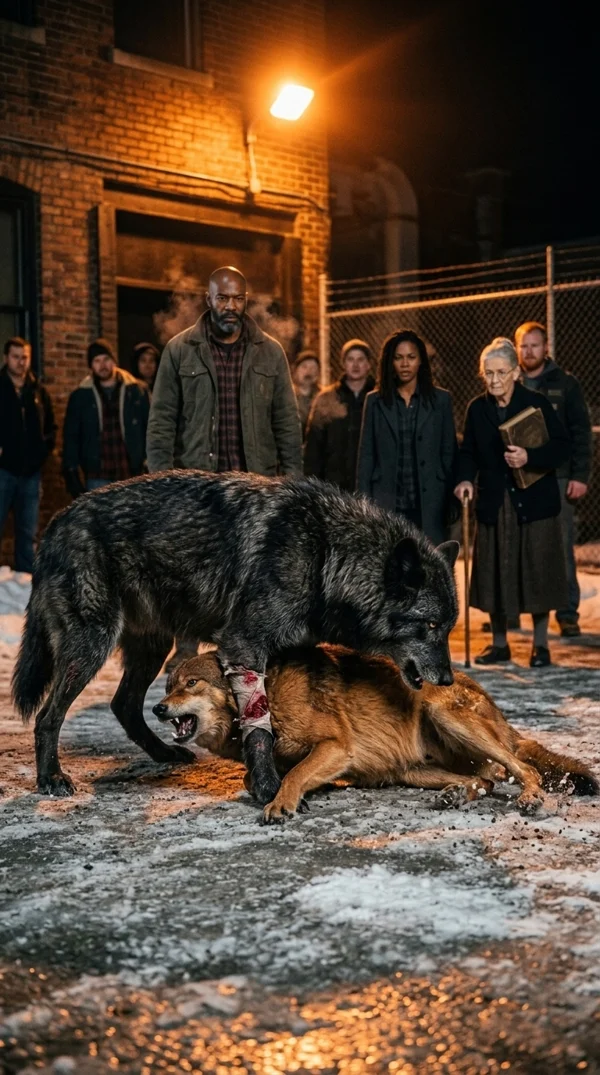
They held the meeting in the yard on Sunday because there was nowhere else. The north end of the mill was a black mouth with tarps over it and the yard smelled of wet charcoal and the fire investigator’s spray paint, and the pack stood around in the cold with their collars up in a loose half-circle, and every one of them looked at the tarps and then at me.
Easton’s forearms were wrapped to the elbow. He had discharged himself on Saturday against advice, which Bryn had told the whole pack about at volume, and he stood with his hands loose and his coat over the dressings and said nothing while Nils talked.
“The fire is the proof,” Nils said. He had his back to the tarps, which was a choice. “A month ago the pack had no fires and no city in its business. Today the office is ash and there are two inspectors in the yard and a placard on the Foundry and a hearing booked. And what came into the pack a month ago?”
He did not point. He did not have to.
“A human Luna,” somebody said.
“A claimed human,” Nils said. “Claimed in a mill by an Alpha who did not consult his council. And now a challenge is the only clean way to ask the question.”
“It’s not clean,” Bo said, from the side. “It’ll be December, and there’ll be ice on the yard.”
“It’s pack law.”
Cato said, from the back, “It’s a full moon in ten days and nobody’s dead yet.” It was not much of a line and it was the first time he had spoken, and the yard heard it.
“Then call it in June,” Bo said.
“June’s six months.” Nils turned. “By June the city has condemned this mill and the trail’s through it and we’re meeting in a parking lot. In June it’s over.”
“It’s not June I’m worried about,” said a man in a Steelers hat. “It’s Thursday. There’s a riser to be tested and a door to hang and a plumber from Duquesne coming out of his own pocket, and if there’s a challenge on the third, what happens to the list on the fourth?”
“The list goes on,” Easton said. “Bo’s on it and the plumber’s on it and it doesn’t care who’s Alpha.”
“The list is a city list. The city list’s got an inspector’s name on it.” The man looked around at the pack, and then at me, and he did not look sorry. “If the inspector’s the reason we’re fighting, the list’s the thing that fixes the mill, and the two are the same woman. That’s all. It’s a fair question.”
“It’s a fair question,” Easton said, and left it there.
A woman from the church committee said, “It could have been a poacher. There’s a spotlighting crowd out of Whitaker on the weekends.”
“With a can of kerosene?” somebody said.
“Poachers don’t carry kerosene.”
“Poachers carry a can for the diesel in the truck,” the woman said, and half the yard nodded, because in that valley everyone knew a man with a lamp and a can, and half the yard shook their heads, because the fire had gone up the inside of the door like a pour and no poacher pours a door.
“Nobody knows,” Nils said. “That’s the argument. Nobody knows, and the pack is being asked to trust a thing it can’t see.”
Cato Croft came out of the crowd.
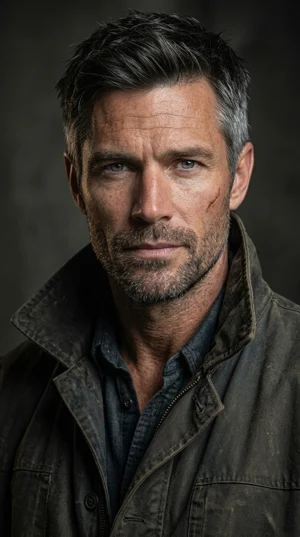
He had been at the back with his hands in his pockets and his Northbank jacket on, and he walked to the middle of the half-circle and stopped, and the pack made the small shuffle it makes when a thing is real.
“Alpha,” he said.
“Mr. Croft.”
“I challenge for the chair.”
The yard went quiet. Even the wind seemed to have found something else to do.
“Say the terms,” Easton said.
“The full moon. December third. Here, or the club if it’s ice.” Cato’s voice was steady and he did not look at his father. “Wolf against wolf. Until one yields or leaves. No weapons, no killing.”
“Second’s permitted.”
“Second’s permitted and it’s not a weapon.” Cato worked his jaw. “You’ll want yours.”
“I’ll have Bo.”
Bo did not look pleased. He looked like a man told he was going to hold a rope in a blizzard.
“Who’s yours?” Easton said.
Cato turned his head. “Keegan.”
The pack made a sound. Keegan, at the fence with his arms folded, did not move for a second, and then he nodded once, and it was the smallest nod I had ever seen a man give.
“Keegan’s been a second before,” Cato said. “He knows the yard.”
“He knows the Alpha,” somebody said, and there was a laugh, and Keegan’s ears went red.
Easton looked at him a moment longer than he needed to.
“All right,” he said.
Hedda’s stick came down twice on the concrete.
“Terms,” she said. “The third, the yard unless it’s ice, and if it’s ice the club hall and no fight on a wet floor. Second each. The moon’s up at twenty past ten and the fight starts when it’s up and not before. Nobody brings a phone into the square, nobody’s uncle runs in, and the pack stays behind the trucks.” She looked around the half-circle. “Yields are said out loud or they’re not yields. If he can’t say it, it’s not over. Is that the law?”
“That’s the law,” Nils said.
“Then it’s the law for both of them.”
I stood by the tarp at the north end with my hands in my pockets, and I did the only useful thing I could do, which was watch the faces.
Half of them wanted it.
Not half in numbers — half in want. There were wolves at the back with their chins up and their eyes bright, and there was a woman near the fence with her hand over her mouth, and there was a knot of young men on the left who were watching Cato the way you watch a horse you have a ticket on. The older ones looked at the tarps. Nils looked at the ground and then at his son and then at his son again.

 100 to start reading with.
What did you think?