The call came at seven in the evening on Wednesday, the day before the review, and it was Keegan and he was out of breath.
“Croatian Club,” he said. “The back door. Bring a bag for it.”
“For what?”
“A phone.” He breathed out hard. “Mar. They’ve fired me.”
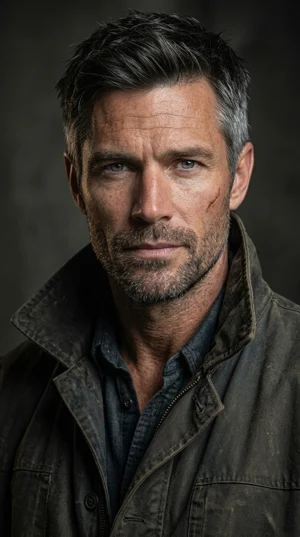
He was at the club’s back door when I got there, sitting on the step with his back against the brick and his shirt torn at the shoulder and a cut over his eyebrow running down his cheek, and he had his coat over his knees like a blanket and he was shaking.
“The boat ramp,” he said. “Cato.”
“Why the boat ramp?”
“Because it’s where a man goes to be told to leave.” He wiped his eye with the heel of his hand and looked at the blood on it. “Cullen’s secretary called this morning and said the site liaison’s role’s ‘concluded by mutual agreement’ and could I return the jacket. Then Cato called at four and said come down the ramp, there’s a thing for you. And there was a thing. It was him and two men and the thing was: Erie, by the end of the month, and don’t come back till the hearing’s done.”
“Or?”
“Or they’d have the jacket and the twelve weeks’ notice and everything else they’ve got.” He laughed, badly. “And I said, ‘It’s a public hearing, it’s not a secret,’ and Cato said, ‘It’s a public hearing in a room and you won’t be in the room.’ And then it got hands.”
He had a cut eyebrow and a torn shirt and a swelling on his jaw. Cato would have a bite on his knuckle and a scratch, and the two others would not have anything.
“You fought him off.”
“I got a knee in and a hand in his face and then the two of them got hold of me and Cato stood back and let it be a warning instead of a beating.” Keegan turned his head. “It was a warning. He didn’t want to hurt me, he wanted me to feel it in the morning and put my coat on.”
“Come inside.”
“Not inside. There’s a darts match in the front and Billy Devlin’s in it and he’ll have it all over the yard by ten.”
“Then sit in the back and I’ll get the first-aid kit out of the car.”
The club’s back room had a trestle and stack of chairs and the beer lines going into the ceiling, and he sat on a chair with his coat off and I got the first-aid box out of the trunk and did his eyebrow with a wipe and two strips.
“Hold that,” I said.
He held it.
“Have you eaten?”
“Not since a sandwich.”
“Then eat this.” I got the cereal bar out of my bag and put it in his free hand and he looked at it and then at me and his face went.
“Don’t be decent to me, Mar. I’ll come apart.”
“Eat the bar.”
He ate the bar.
The phone was in his inside pocket in a plastic bag from a gas station, and he put it on the trestle between us.
“It’s my old yard phone,” he said. “It’s been off since November.”
“Explain it from the start.”
“Not till you understand what it is.” He put his hand on the table. “In November, the night of the fire, Cato called me at five to say he was doing the run instead of Grip and Dana. He said it was a swap, he’d squared it, don’t come out. So I didn’t.” He swallowed. “And then at ten past seven there was a call came onto my yard phone from a number I didn’t know and I answered it and it was Cullen, and he said, ‘Is it done?’”
“On your phone. And it recorded?”
“I’ve got a recording app on my phone because of the yard, disputes, quotes. It records every call over sixty seconds. It records and it says so in a voice at the start and Cullen heard it and didn’t care.” Keegan’s voice didn’t rise. “And because he didn’t care, I got all of it. I said, ‘Is what done?’ and he went quiet a second, and then he laughed and said, ‘Cato’s in the yard?’ and I said, ‘Cato’s doing the run,’ and he said, ‘Right,’ and then he said, ‘The office, not the mill. In and out. And tell him the door’s the thing, the door and the paper, and if it takes they’ll be at the club for a year.’ And I said, ‘If it doesn’t take?’ and he said, ‘Then he’ll have another go, and if it’s a half-burned mess you’ll all be in the paper as fools.’”
“Say that again.”
Keegan said it again, slowly, the pieces of it in order, and I wrote them down.
“He thought I was in it,” Keegan said. “Cato must have told him I was. I didn’t know what he was asking me, Mar. I asked him what was done.”
“And then?”
“And then at half past seven Cato called me back and said, ‘It’s on the door,’ and I said, ‘What door?’ and he’d already hung up. An hour later I had my arm across you in the yard, looking at the north door, and then I knew. And I didn’t tell a soul.” He looked at me. “For seven months. I had it in a drawer and I gave his man the bid and I sat in the body of the hall, and I had the fire in that drawer the whole time.”
“Because Cato said he’d pay you.”
“Because Cato said he’d pay me, and because Cato’s the one who lit it and a man who tells on the fire tells on Cato, and Cato’s the only friend I had left.” He nodded at the bag. “Then they fired me this morning. So I’ve got nobody left to protect.”
“Can I hear it?”
“That’s why it’s here.”
The recording was ninety seconds long. There was a hiss and then the app’s announcement, and then a man’s voice, easy and warm, that was unmistakably Cullen Rudnik saying, “Is it done?” and Keegan saying, “Is what done?” and the whole exchange about the office and the door and the paper and the half-burned mess.

 100 to start reading with.
What did you think?