Four Fours, chapter 1 of My Father Lost Me in a Card Game
My father lost me in a card game on a Thursday night in August, and the worst part is he thought he had the winning hand.
I watched him do it. I was standing at the top of the back stairs of the Zolotoy with my bag on my shoulder and my car keys in my fist, and the train was going over Brighton Beach Avenue so loud the glasses on the table shook, and my father picked up a cocktail napkin and a pen.
“No more markers, Nicky,” the dealer said. “House says you’re done.”
“I’m not done.” My father used the voice he used on bankers. Happy. Reasonable. “I got a hand here. One more bet. Against everything I owe.”
Across the table, a man in a dark shirt with the sleeves turned back said nothing at all.
“With what?” somebody said, and laughed.
Ritchie was behind my father’s chair. Ritchie Falco, our sales manager for nine years and my boyfriend for two of them. He had one hand on my father’s shoulder, and he bent down and said something into his ear.
My father wrote on the napkin in capitals, the way he writes on the side of a flour sack. He folded it once and dropped it on the felt.
GINA.
“My daughter,” he said.
Nobody laughed after that.
I said, “Dad.” It came out small. I’m twenty-nine years old, I have balanced his books since I was twenty-two, and it came out like I was six.
He didn’t turn around. He didn’t know I was there. That’s the part I keep counting.
The man across the table hadn’t looked at his cards. He looked at the napkin. Then he looked past my father, past Ritchie, across the room, and found me in the doorway as if he had known for an hour exactly where I was standing.
“Accepted,” he said.
You should know why I was there, because I’m not a woman who goes up the back stairs of supper clubs at two in the morning. I’m a woman who goes to bed at ten-thirty with a heating pad and a spreadsheet.
At four o’clock that afternoon, payroll bounced. Eleven checks. Hector, who has driven our number two truck for twenty-six years, called me from the bank on Neptune Avenue with his check in his hand and said, “Gina, honey, I don’t want to bother you,” which is how I knew it was bad. I pulled up the operating account. Forty-one thousand dollars had gone out at eleven that morning. Cash withdrawal. Signed by Nicholas Abruzzo, President.
I called my father nine times. I called Ritchie once, because I’d promised myself eighteen months ago that I would only ever call Ritchie once about anything.
He texted back. He’s at the Zolotoy. Don’t come. I got him.
I came.
The Zolotoy is the kind of place you can hear from the corner. Mirrors on every wall, so a hundred people look like four hundred, a singer in a dress made of coins, a birthday table of women in their seventies doing vodka shots under two gold balloons, a seven and a five. Nobody stopped me going through the dining room. A waiter pointed me at a door by the kitchen without being asked, the way you’d point a woman to the ladies’ room.
The door opened on stairs. At the top of the stairs was a man with a neck like a fire hydrant and a ledger open on a music stand. He wrote down my name before I said it.
“Abruzzo,” he said. “The daughter.” He gave me a look that, on a smaller man, I’d have called pity. “You want to go home, I’ll walk you to your car.”
“I want my father.”
He stepped aside.
So that was where I was. Up the stairs, in a room I’d only ever pictured, with green felt and a window air conditioner dripping into a coffee can, watching my father put me in the pot.
“Dad,” I said again, louder, and this time he heard me.
He twisted round. His face did three things. Surprise. Shame. Then the thing it always did after shame, which was a big, bright, terrible confidence, like a man who has decided the floor isn’t there so he can’t fall through it.
“Gina. Sweetheart. Go downstairs, okay? Get a Coke. Five minutes.”
“You took the payroll.”
“I’m getting it back.” He tapped the felt. “Right here. Look at the board, Gina. Look at it.”
I looked. I couldn’t help it; I’m a person who looks at the numbers. Three cards face up in the middle of the table. A nine. A four. A four.
My father lifted the corners of the two cards in front of him, just for me, the way he used to show me his hand at Christmas when I was little and we played for pennies. Two nines.
A full house. Nines full of fours. I’ve never placed a bet in my life, and even I know a full house.
“See?” he said. “See?”
Ritchie’s hand was still on his shoulder. Ritchie smiled at me, a sorry little smile, as if we were two grown-ups dealing with a child. “Gina-bean,” he said. “It’s fine. It’s a bluff. Nobody’s taking anybody. Go home.”
“I’m not a chip,” I said. I said it to the room. “I’m not a stake. You can’t bet a person. This isn’t…”
I was going to say legal. In that room it would have been the funniest thing anyone said all night.
“No,” the man across the table said. “You’re not.”
It was the first thing he’d said to me, and he said it like a fact from a ledger. Then, to the dealer: “Go on.”
I knew him. That was the worst of it, worse than Ritchie, almost worse than my father. I hadn’t put it together until he spoke, because I’d only seen him once, four years ago, in a doorway, and I’d spent four years telling myself I wouldn’t know him again.
Lev Sokolov. His family owned the Zolotoy, and the room above it, and a good deal of the avenue, and a heating-oil company, and people. The one time a newspaper wrote about his father, it put the word Bratva in the headline. Everybody in south Brooklyn knew one thing about him, the way you know the F train is slow on weekends. Lev Sokolov did not lose at cards.
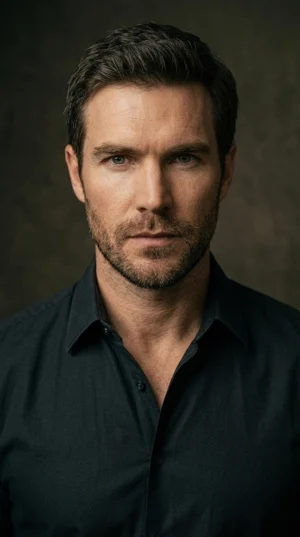
He was thirty-seven. He had a narrow, closed face and gray eyes and dark hair cut short, and he sat at that table as still as a man in church, not moving anything he didn’t need to. In front of him was a short glass of tea in a metal holder, not vodka. He hadn’t touched his two cards since they were dealt. He didn’t need to. He’d looked once and remembered.
The dealer was a kid with a gold tooth. He burned a card and turned the next one.
A king.
My father laughed out loud.
The kid burned another and turned the last.
A two.
“Showdown,” the dealer said.
My father didn’t wait. He slapped his nines face up on the felt, one, two, and spread his hands. “Nines full! Nines full of fours, Lev! Let’s go!” He turned to Ritchie, delighted. “I told you. Didn’t I tell you?”
Ritchie wasn’t looking at him. Ritchie was looking across the table, and his smile had gone very fixed.
Lev Sokolov reached out with two fingers and turned his cards over.
A four.
And a four.
Four fours.
The air conditioner dripped into the coffee can. On the avenue below, a car alarm started up and stopped. My father stared at the board, and then at the two little fours, and then at the board again, with the same stare he’s given bank statements for twenty years, waiting for the numbers to apologize and rearrange themselves.
“Quads,” the dealer said, quietly, because even he seemed to feel bad about it. “Mr. Sokolov wins.”
Eleven paychecks. Forty-one thousand dollars. Three hundred and forty thousand in markers, it turned out, though I didn’t know that number yet. And a napkin.
I’d like to tell you I fought. I didn’t. I stood in the doorway holding my car keys so hard they left teeth in my palm, and I counted the cards on the table, five and two and two, because if I was counting I didn’t have to feel anything.
Lev Sokolov let the fours lie there a moment. Then he turned them face down again, and slid them across the felt to the dealer, into the dead cards.
“I fold,” he said.
The kid with the gold tooth blinked. “Sir. You can’t fold. You won the hand.”
“I know what I did.”
“The pot’s yours. The marker’s yours. The…” The kid didn’t look at me. “All of it.”
“I’m not collecting on this hand,” Lev said. “Nobody is. Mark it a fold.”
There was a silence in that room like the silence in our warehouse after a pallet goes over, when everybody’s waiting to find out if anyone was under it.
“So I win?” my father said. His voice cracked in the middle. “Lev. So I win?”
“No. You lost.” Lev didn’t raise his voice. I would learn he almost never did. “You just don’t pay with her.”
The man with the hydrant neck had come in from the stairs. He stood at Lev’s shoulder with the ledger under his arm. “Lev Anatolyevich,” he said. “The markers. Three hundred forty. The Settling is in three weeks.” He looked at my father’s hands on the felt. Everybody did. “The old man will ask.”
“Write them to me,” Lev said.
“All of them?”
“All of them. Tonight.”
My father had found me again with his eyes. He was gray under the lights, gray as the flour that gets into the creases of his knuckles and never comes out.
“Gina,” he said. “Sweetheart. It was a bluff. You know that, right? Everybody knows the Sokolovs don’t take…” He waved a hand at the room, at the felt, at me. “Ritchie said. It was a bluff.”
Ritchie said nothing. Ritchie was studying the carpet.
“You wrote my name in capitals, Dad,” I said. “Like it was going on a pallet.”
He opened his mouth and nothing came out of it. Twenty-nine years, and that was the first time I ever saw my father with nothing to say.
Lev Sokolov stood up. He was taller than I’d thought, sitting. He reached into the middle of the table, picked up the napkin with my name on it, folded it once more along my father’s crease, and put it into the breast pocket of his shirt.
The same pocket. Four years ago, in an office downstairs, a man had put my change in that pocket, eighty-seven dollars and forty cents, like it was worth more than the money.
He came around the table. He didn’t hurry. Ritchie took his hand off my father’s shoulder and stepped back, and I saw that, and I filed it, because some part of me was already doing the books.
Lev Sokolov stopped in front of me. Close. He smelled of black tea and cold air from the vent, and he looked down at me, four seconds, five, and I hated him and couldn’t look away.
Then he put his hand at the small of my back, light as a dealer’s on a deck, and turned to the room.
“She comes with me,” he said. “You keep your fingers.”

What did you think?