Perrin — Thursday 26 November
Thanksgiving. The bird in at nine, Culver’s text about the bank on the desk, and before any of it, mine to do, the estate’s cash book.
Here is the estate, exactly in the order it comes out of the drawer.
The fields: three hundred and six acres, leased year to year to Hesketh at forty an acre, which is twelve thousand two hundred and forty a year. Less the lime, the ditching and the taxes the lease says we carry. In a wet year those come to more than the rent. This year they came to that and more, easily. Then the two cottages on the lane. One is rented. The other is empty and wants a tenant, and a tenant is six thousand a year once there’s a new bathroom in it.
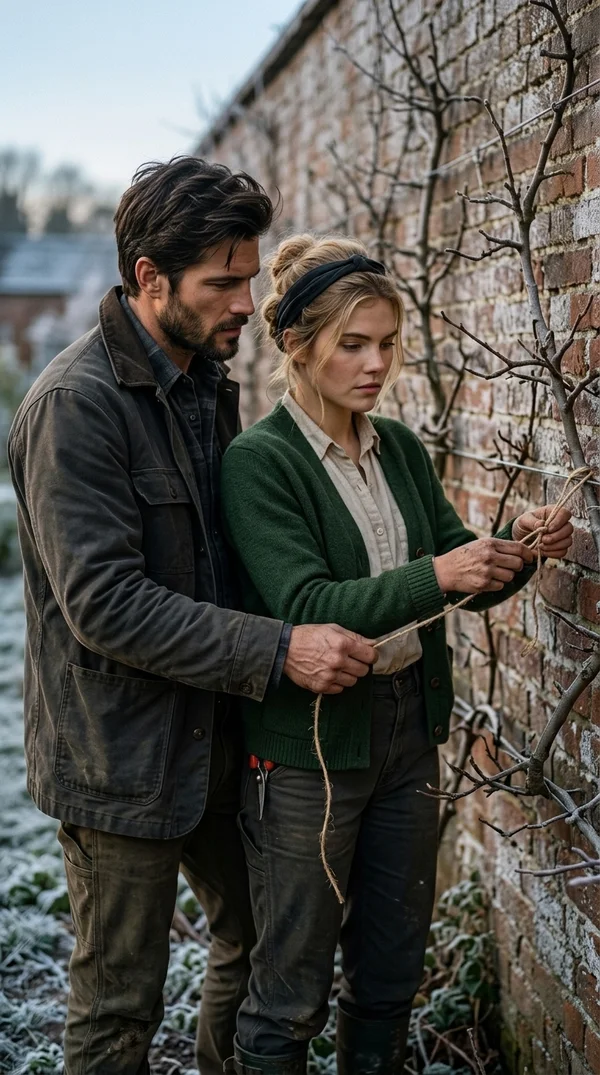
The woodlot: nothing. The marsh: nothing, the grazing on it rented only for grazing and always too wet for anything with a value. The house: a roof with the flashing gone in the north valley that wants thirty thousand, a boiler that wants eight, the clapboards. The insurance went up twenty-two percent after a burst pipe in the attic in March. The garden: four acres, a greenhouse, a bothy, one girl and a wage of fourteen an hour.
And under all of it, the number that mattered. Two hundred and thirty-eight thousand, four hundred and eleven, at a rate that had gone from six point one to seven point four in October. Fourteen and a half thousand a year was now seventeen thousand six hundred and forty. The fields were that much the wrong way, and the nursery was quietly paying the difference.
Since the second of June: ninety thousand of the nursery’s line of credit, and forty-one paychecks out of the same account. Culver has been asking, politely. What’s the honest answer? If the estate goes down, the bank takes the tunnels and the yard with it. Vaux’s paper on the estate and Vaux’s paper on the nursery are the same piece of paper, with two names on it.
So we don’t have a house. We have an exposure.
My father did the garden’s bones with forty-four thousand of it. Not the wall. The wall is 1908 and properly sound, and would stand another hundred years with lime on it. What he did was the bothy roof and the greenhouse sashes. New brackets under four hundred and ten feet of iron pipe that was already cold. Nine hundred and forty dollars of young pear trees from a specialist in the fall of last year — three of them alive now, and three dead in the box.
My mother did the pears before him. Thirty years of them, with a list in a book. The list has her hand in it, and the crossings-out in her hand. The last entry is the last week of September two years ago, in pencil, and it says: P. C. 14 — not yet. She never picked it.
I was the one who came out at four and found her under it. The pruners were still in her hand, the fingers still round them. Her mouth was barely open, and her eyes were on the brick. The bench was four feet off with her mug on it gone cold. The wall was green above her, because the pears don’t care.
That’s what the garden is. That’s what it’s always been. A place a woman just went out to at four in the afternoon and didn’t come back from.
The girl came on the third of October, sent up by a card on the board at Rendall’s. My father gave her a wage out of the estate’s own mouth and thought he was being clever. He was being clever. He was getting four acres cleared for hardly anything worth counting, and he was keeping his wife’s daughter in the village. And he was doing the thing he liked best, which was being kind at no cost and letting somebody else do the work.
And then he did the will. He did it on a Saturday in October, because Saturday was when Gorham could be had for nothing. He’d have had Ollis drive him in and sat in that front room, his chest bad, and finished on “right”. The room, the year, the condition, the nine thousand — all of it is a man saying: I know what’s coming, and I know what my son is, and I want this one thing kept.

 100 to start reading with.
What did you think?