Rain Delay, chapter 2 of Nobody Finds Out
“Look at her like you’d die for her,” said the photographer.
Teo looked at the bottle. It was the size of a grenade and the color of a whiskey sour and it was called VELA, in gold letters, and it was resting on a velvet plinth beside his naked shoulder in a studio in Dumbo with the Manhattan Bridge going by outside the window like a slow train.
“She’s a bottle, man.”
“She’s every woman who’s ever wanted you. Smolder at her.”
Teo smoldered. He was good at it. He’d been told so by a lot of photographers and one very drunk relief pitcher. He let his eyes go heavy and his mouth go soft and thought about absolutely nothing, which was the secret, and the shutter went like rain on a car roof.
“Gorgeous. Every woman’s weakness. Chin down. Gorgeous.”
On the far side of the lights his sister Marisol sat on a road case with her laptop, her phone, a second phone, and a cold brew the size of a vase. She was his agent, which nobody in the industry had thought was a good idea, and she had negotiated this contract up by forty percent by making a man from Vela’s parent company cry in a Midtown steakhouse, which everyone now agreed had been a great idea. All Vela had gotten in return was a conduct clause, which Mari had written herself and said she could drive a truck through.
“Five minutes,” she called, not looking up. “Then wardrobe, then the beach set, then we go home and you eat a vegetable.”
“I ate a vegetable on Tuesday.”
“Ketchup isn’t a vegetable.” She turned the laptop toward him across the room, as if he could read it from there. “Also you’re trending.”
“I’m always trending. I have a very trendable face.”
“You’re trending because the Boston Ledger thinks the Accountant is scared of you.”
The photographer said “Hold that,” because whatever Teo’s face had done, it had done it well.
By lunch it was everywhere. The chart was on two morning shows and four podcasts and on a giant screen behind the hosts of the sports talk station that came out of a speaker in the wardrobe room. They had a former catcher on the line, a man with a voice like a gravel driveway, who thought it was obvious.
“He’s scared of a brawl. Arriaga charged him once, broke his face open on national TV. You don’t want that again, you pitch him away, away, away. That’s a soft pitcher. That’s a pitcher who’s scared of a man.”
“Kell’s nose was already broken,” said Teo to the speaker, as a stylist buttoned him into a linen shirt that cost more than his mother’s first car. “It’s been broken since Double-A. I didn’t touch his face. I couldn’t reach his face. He’s six-four.”
“You’re talking to the radio,” said the stylist.
“The radio started it.”
He hadn’t touched Jonah’s face that night. He remembered it the way you remember a car accident, in pieces that don’t connect. The ball coming in and his body knowing before he did. The sound. Being on one knee and not being able to breathe, and looking out at the mound, and the pitcher standing there with his glove down at his side and his face as white as the chalk on the baseline, and Teo thinking, very clearly, oh, he’s scared, and then the next thing he knew he was running, because the other thing he knew was that if he stayed on one knee in that box for one more second he was going to cry in front of forty thousand people, and you could not do that and come back to Boston ever again.
So he’d run. And he’d landed on top of the man, and the man had said “No,” up into his face, quietly, like it was a secret. Like Teo was the only one who was supposed to hear it.
He’d thought about that No for a year.
The rest of it went like this.
Two Julys ago the All-Star Game was in Kansas City, and the manager for their league was a sixty-eight-year-old Texan with a sense of humor, and so in the clubhouse the locker marked ARRIAGA was right next to the locker marked KELL. The cameras loved that. Teo loved it too, at first; he’d hung a little paper sign on the divider between them that said DEMILITARIZED ZONE and the clip had run on every network. Jonah had not said one word. Jonah had dressed with his back to him like a man changing at the beach.
Then in the sixth inning, the sky opened.
It was the kind of storm they don’t have in Brooklyn. It came across the plains like it had somewhere to be. Lightning hit something past the outfield and the whole stadium went white and then the lights went out. Forty thousand people screamed and then laughed. The grounds crew ran. Two hours and eleven minutes of rain delay, the longest in All-Star history, and Teo ended up in the concrete tunnel behind the dugout with a towel around his neck, because the clubhouse was full of reporters and he didn’t want to be funny for anyone right then.
Jonah Kell was already there, sitting on an overturned bucket, reading the back of a sports drink bottle.
“It’s mostly salt,” Teo told him.
Jonah looked up. Then he looked at the bottle again. “It says electrolytes.”
“Electrolytes is a word for salt. Salt and blue.”
The lightning came again, and for a second the tunnel was so bright Teo could see the freckles on the back of Jonah’s hands. When the thunder came it was right on top of them, and they both flinched, and they both saw each other flinch.
“I’m not scared of lightning,” Teo said.
“Me neither.”
“I’m from Puerto Rico. We have real storms.”
“I’m from Ohio,” Jonah said, “and I am a little bit scared of lightning,” and Teo laughed so hard he had to sit down on the floor.
They talked for two hours. Or Teo talked and Jonah said four or five words at a time, but they were never the four or five words Teo expected, and by the end of the first hour Teo had stopped trying to make him laugh and had started trying to make him say a sixth. He found out Jonah’s mother had died when he was fourteen. He found out Jonah read with glasses and hid them in his shaving kit. He found out Jonah kept a book, a real one, a notebook, with every hitter in the league in it.
“Am I in it?”
“Everyone’s in it.”
“Am I in it a lot?”
Jonah studied the wet concrete. “I wrote you a letter,” he said instead. “After. It’s on the back of a parking ticket. It’s in my glove compartment in Boston.”
“What does it say?”
“It’s not finished.”
“Well, what’s the end?”
And Jonah Kell, who had broken two of his ribs and never said sorry on any microphone in America, looked at him in that gray tunnel and said, “It got away from me. I would never. I would never do that to you.”
Teo had not decided anything. He wanted that on the record. He had not decided to lean over. He just found that he had, and that Jonah’s mouth was cold from the drink and then not cold at all, and that Jonah’s hand had come up and closed around the back of his neck as if he’d been thinking about where to put it for a year.
The lights came back on with a bang. Somewhere a groundskeeper whooped.
That night in a room at the Larkspur Hotel, Jonah sat on the end of the bed in his undershirt with the hotel notepad on his knee and wrote rules. He actually did that. He wrote them in square capitals, numbered, like a lineup card.
1. ON THE FIELD IT’S REAL.
2. NEVER THE NIGHT BEFORE I PITCH.
3. NOBODY STAYS TILL MORNING.
4. NO NAMES IN PHONES.
5. NOBODY FINDS OUT.
“You’re very romantic,” Teo said. “Has anyone told you that?”
“I’m serious.”
“I know you’re serious. I’ve never seen anyone so serious. Give me that.” He took the pen and wrote, in his own terrible slanting hand under Jonah’s capitals: 6. no falling in love. And underlined it twice. And handed it back.
Jonah read it and went pink to the ears. Teo laughed at him and pulled him down into the sheets, and later, when Jonah was asleep for the forty minutes he allowed himself, Teo tore the page off the pad and folded it into quarters and slid it into his phone case, behind the San Judas Tadeo card his mother had tucked in there the day he got called up. Patron saint of lost causes. It had moved with the card from phone to phone ever since.
He’d been somebody’s secret before. That was the thing. In Double-A in Altoona there’d been a catcher named Cody, a big soft-spoken kid from Tennessee, and for most of one summer there’d been Cody’s hand finding his in the dark back of the team bus. And then Cody got called up, and married his high-school girlfriend, and when Teo got to the majors and played against him for the first time, Cody shook his hand at second base and said Nice to meet you, man. Nice to meet you. As if it were a joke they were both in on.
Teo knew how the secret thing went. He’d gone into Kansas City with his eyes open. He’d written rule six as a joke, so that if anyone ever broke it, it would be funny.
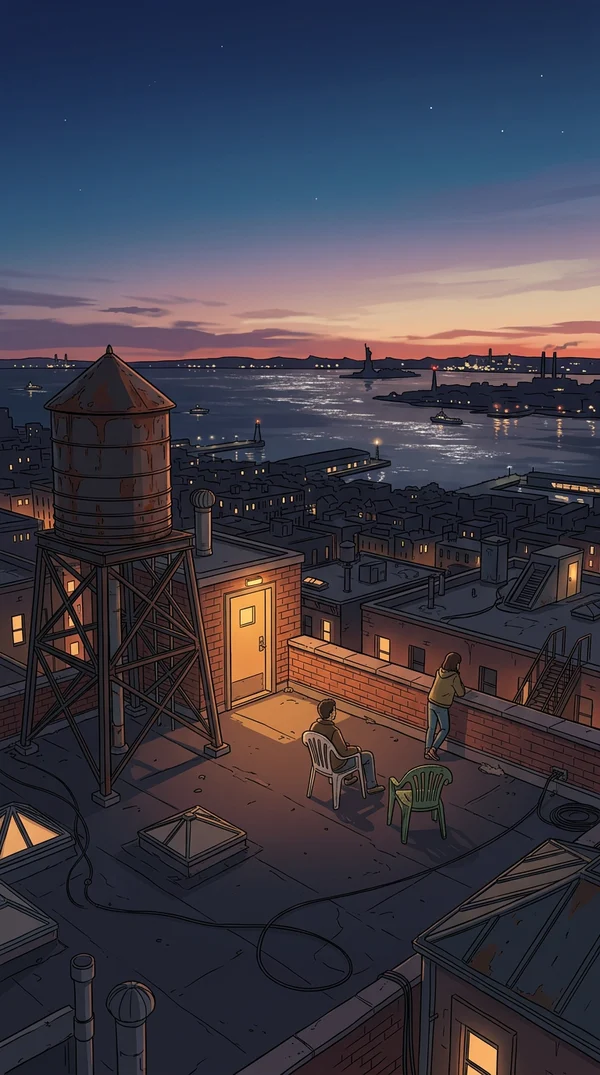
At eleven that night, home in his apartment on the top floor of a brick building in Sunset Park, he lay on the couch with his feet on the arm and his phone on his chest and watched the Ledger chart go around on a highlights show for the fifth time.
The phone buzzed.
Dentist: You’ve seen it.
He’d named Jonah “Dentist” two years ago because Jonah was the most painful hour of his month, and because he’d known it would make Jonah furious, and it had. Jonah had him in his phone as “Rain Delay.” He’d seen it once over Jonah’s shoulder and hadn’t said anything about it for a week, because if he had he’d have had to admit how much it got to him.
Teo: I’m famous for the size of the hole in your chart. Like a celebrity crater.
Dentist: It’s a coincidence.
Teo: 151 pitches is a pretty big coincidence papi
Dentist: Don’t.
Teo: Don’t what
There was a long gap. The three dots came and went, came and went. Teo watched them like a pitch he couldn’t pick up.
Dentist: Don’t call me that in writing.
Teo: It doesn’t have your name on it. Rule four. I’m a very good rule follower.
Dentist: We’re fine. It’s one column.
Teo: Are we?
Nothing. He put the phone face-down on his chest. On the television a man in a suit was pointing at the white column on the chart with a laser pen. It looked like a road through snow.
He hadn’t asked anything. He wanted that on the record too. All he’d said in two years was stay, one time, half asleep, which could have been a joke. Jonah had gone to throw a bullpen.
The Lamplighters were in Brooklyn next week. Three games. Jonah was scheduled to start the middle game, which meant the night before it belonged to rule two, which meant Teo would spend it on his couch, the way he always did.
Eight days later he was on his couch. The Lamplighters had won the opener at Wallabout Park, five to two, and Teo had gone one for four and been booed by nobody, because this was Brooklyn, and in Brooklyn they booed the Accountant on his behalf. He’d come home, eaten Mari’s leftover rice standing up, and lain down on the couch with a highlights show muttering on the television, because the night before Jonah pitched was the one night of the series there was nothing to wait for.
He was mostly asleep when the knocking started. Not the buzzer downstairs. The door. Four floors up, in a building with a lock on the street door that Teo had personally watched his super repair.
It was 11:40. Teo went barefoot in his gym shorts and looked through the peephole and forgot, briefly, how to do anything else.
Jonah Kell was standing on his landing in the Celtics cap, with his hands in the pocket of his hoodie and his shoulders up around his ears, under the bare bulb his landlord never replaced, looking at Teo’s door like it had a strike zone on it.
Teo opened it.
“You’re pitching tomorrow,” he said.
“I know,” said Jonah.

What did you think?