Kastel — Sunday, November 15, 7:10 a.m.
The barn’s far door had a yard behind it with a gate, and a lane beyond the gate, and she got as far as the gate.
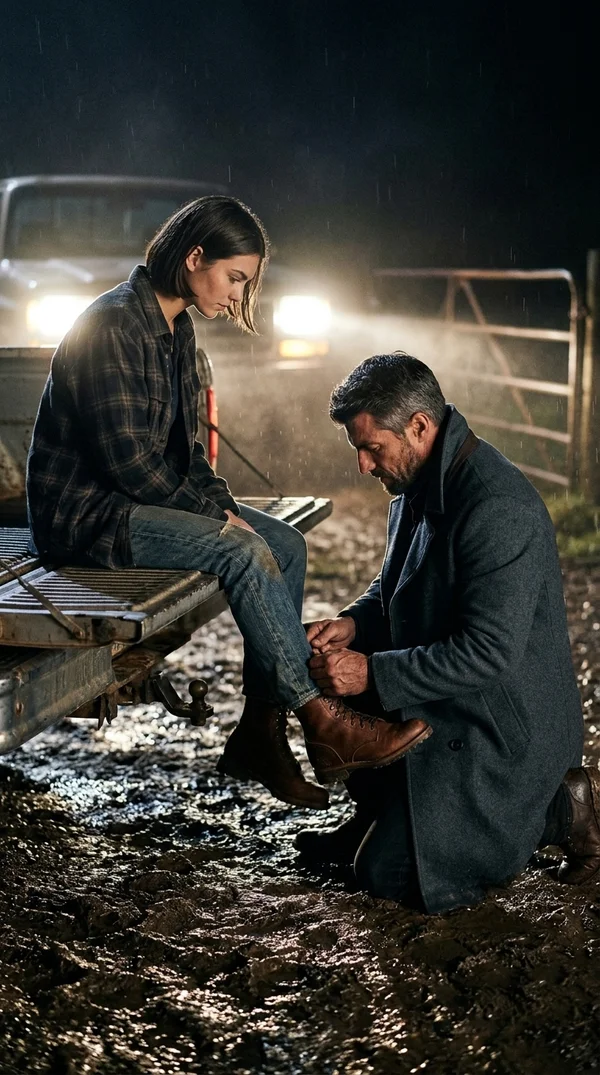
She went down on her palms in the lane. It took ninety seconds, and it was truly ugly. Nothing like the clean ripple the old ones talk about — a long fold down her back, and a noise out of her with no air in it. Perri Loftis was on her knees in the gravel telling her to keep her head down, that’s it, that’s it, oh shit, that’s it. Then there was a gray wolf in the lane in the ruins of a green dress, with its ribs going.
She was up on her feet inside four minutes, nearly steady. That’s fast. How was it possible? I had no idea. Fast is good and fast is frightening. She stood in the dark at the gate with her ears flat, shook herself all over like a dog out of water, and turned her head to me.
The eyes are the thing. Dark, with the amber only rimming them — the rim is the wolf’s and the rest is hers. Her eyes went to Perri, then to me, then to her own front feet, and the sound she made was four notes and meant well?
Bagley had the truck at the lane end. We got her onto the floorboard, and Perri rode with her, and I drove. Behind us the barn came out into the yard to watch, and Norine Ballard stood in the middle of them with her palm pressed to her chest. Shocked? Or counting?
The vet is a Balsam man with a practice in Kettler. He was at the house by eight with a bag and no comment, which is why the crown uses him, and he came down at half past nine. She was asleep. Nothing was broken and nothing was torn. She was eighteen, and it was a first shift and a fast one, and she’d be sore till Wednesday.
“How? A human, and a flat card, and four weeks.”
“It isn’t four weeks. It’s four years.” He set the bag on the table. “I looked at the old ring on her shoulder while she slept. The Tuck boy’s bite never failed. It stopped. Half a bite has sat in that girl since she was fourteen with nothing to finish it, and your mark finished it. I wouldn’t have believed it either.”
The rest he gave me plainly, briskly, as he packed up. Feed her, red meat if she’d have it. Keep her warm and off her feet today. She’d sleep about four hours and wake ravenous, then sleep again. That was a good sign, not a bad one. It was the ones that couldn’t eat after that you worried about. The next one would come tomorrow, likely. Then three nights, four. Then it would settle to about a week, then about a month, then to the moon if she had a mind to. He put his coat on. “You’ll want a chain for the yard and a door she can get out of. And somebody with her in the house for two weeks, not a man on his own, if there’s a woman can do it.”
A chain for the yard? For her?
Her friend was here, I offered, and the vet put his hat on. “Her friend’s eighteen.” And he went.
Ottis Ballard rang at a quarter to ten. The hall would sit next Sunday, the twenty-second, and not this afternoon. A pack doesn’t sit round a girl who was on four feet in a lane the night before. He made it sound like a kindness. Maybe it was one. It was also a week more before he had to stand up in front of Dovie Wray about the culvert.
Fitz came at ten. He stood in the hall with his eyes anxiously up the stairs. When I gave him yes, she was all right, he took it as the right morning for the other thing, and went out to the yard to wait for me in the cold.
The council had met at nine. They’d had the shift news by phone from Norine Ballard, who was, by Fitz’s account, a marvel. And they’d taken it as a change of circumstances. “Which it is, don’t pull that face at me, it is!” A flat card and a shift in four weeks was a change of circumstances, and they’d put a paper in front of him to put in front of me.
He got it out of his inside pocket. One page. I read it out, because he wanted it heard.
Terms on which the council will confirm a mate in the Deverell book: the King to be mated by the fifth of February; the mate to be of a house; the Balsam house offered and willing; the ceremony to be at the crown’s hall and the packs to be told two weeks before.
“A house? They’ve written a house.”
“They’ve written a house.” Fitz had the decency not to enjoy it openly. And they’d have it. There were four of them on that council, three of them older than the hill and one of them his mother’s cousin. “You can put a shift in front of them and a traverse and a whole ridge, and they’ll say a house and go to their dinners.”
“And a girl with no house in her name.”
Fitz put the page back in his pocket. A girl with no house in her name could be got at. I could get her at for a year, and the crown would be two years behind by the end of it, and the packs would say it had gone soft at the middle. Or I took the Balsam in February, and the crown was settled, and the girl was on the ridge with a scholarship and a sore neck and a story. “In four years you’re thirty-nine and she’s twenty-two, and nobody’s the worse.”
Nobody? My eyes went to the stairs.
“And your other thing. The second.”
Fitz’s eyes went to the house, and then slowly round the yard. A second would do it, he allowed. It had never been done, and it would do it. The council would fight it for a month and lose. The packs would talk for two years and forget, and I’d have a cradle in the book and the girl in the house. He turned his collar up. “And a second is a permanent insult to whichever one’s the second. Lena Crider wouldn’t take it if you asked her on your knees.” It would all have to be done by the fifth of February, too, with a council that hated it and a Balsam pack made smaller in front of the county. “That’s the sum of it, cousin. There isn’t a version where everybody’s pleased.”
“Then there’s nothing to add up. There’s only the fifth of February, and what a man’s willing to lose.”
She came down the stairs at eleven with the quilt round her, her hair flat to her head on one side and her feet bare. She stopped on the fourth step because her legs just weren’t sure yet.
Perri was soundly asleep in the chair with her mouth open. Jobeth had gone to the kitchen to make something. The house was quiet the way a house is quiet when three people have had a bad night.
Fitz had gone half an hour since, I let her know. Perfectly decent. He’d brought a paper.
She came down the rest of the steps carefully, one at a time, her fingers on the banister. At the bottom she stood in front of me with the quilt round her shoulders and her chin up. There was a bruise the size of a hand on her forearm from the gravel. “Tell me.”
So I gave her all of it. Ottis’s week. The council’s four, the word house, the fifth of February, the ceremony at the crown’s hall, Lena offered and willing. That a second was the only thing with a way out in it. That a second would be a fight with the council, and an insult to whoever was second. She listened, and her eyes went harder the longer I talked. What had I expected? She’d had a night of it.
“Then you’d better be quick, hadn’t you.”
“Quick about what?”
“About whichever of us you’re insulting.” She came off the last step into the hall and stopped close. “Because it’s Sunday. There’s a hall next Sunday and a board after that, and if you’re going to do a fight with a council you’ll want to have started it.”
I put my palm on the newel post beside her head. She didn’t step back. She was breathing quick and shallow, and the shift was still plainly on her skin — hot and new, like a struck match. “Say yes to something. Anything. It’s been four weeks of the law saying it for you.”
“Ask me something that isn’t the law.”
“Come upstairs.”
“Yes.” Then, with her fingers already in my shirt: “But slowly. I’ve been a wolf since last night and everything’s so fucking loud.”
The stairs took a while. Neither of us hurried them. I got the shirt off her on the landing. It was cold on the boards, and then it wasn’t. The amber was up in my eyes — I could feel it come — and I had to stop with my mouth against her shoulder and breathe. “Two weeks.”
“Two weeks of what?”
“Of a yard and a hall and a council and a card, and no hand on you in daylight.” I lifted my head. “You’ve had a shift and a card and a county board in the same month, and every one of them was done to you.”
“Not this one.”
“Not this one.”
I put my palm along her jaw and turned her face up, and then I stopped. I left it there, still. I didn’t kiss her. I didn’t do anything at all. I just stood on the landing with my thumb under her ear and waited, the way you wait at a gate for the stock to make up its mind. I let her see me wait. Would she want it now, from me, on her own say? I didn’t know. That was the point of waiting. She knew what it was. Her eyes went over my face, slowly, and her throat moved under my thumb.

 100 to start reading with.
What did you think?