Five days meant Voss needed a road.
The Throat sat at the heart of the Seam behind a reef of Choir machines, three cantors and a cloud of choristers anchored around the Ardent approaches like barnacles on a hull. Anything we sent at the Throat on Day 15 would have to go through that reef first. So that same afternoon, with five days on the clock, Voss sent Lantern and Wolf to break it, and he sent Lodestar in front.
I’d like to tell you I was nervous. I wasn’t. I was something else.
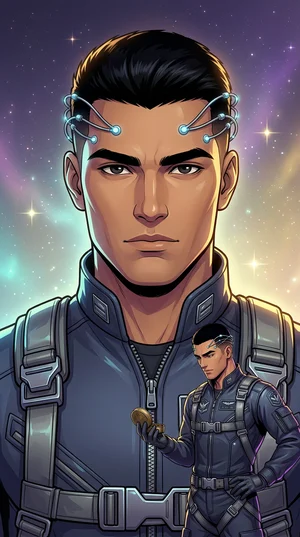
We strapped in. Our shoulders touched. The crown went cold and then warm and he arrived in the back of my head, and the first thing I felt from him, before the flight checks, before anything, was a kind of startled gladness, as if he’d walked into a room and found me already there.
Sync came up at eighty-nine. From cold.
“Huh,” said Pilar on the channel. That was all. Just huh. Like the deck chief, nine years ago, on the night of the chain.
Here is what it’s like to fly at ninety-three.
You stop thinking in words. Words are too slow. You think in shape: the shape of the space ahead, the shape of the thing coming at you, the shape of the gap that will be there in two seconds if you go now. And the shape is always shared. You see the gap and he’s already moving toward it. He sees the threat and your hand is already turning.
We hit the reef from above, out of the sun, and the first cantor never saw us. That’s not quite true; it saw us, it turned, it threw a wall of choristers up in our path like a fist. We went through the fist. I don’t mean around. I mean through, rolling, a corkscrew so tight the frame’s joints screamed, and I felt him grin. I’d never felt him grin before. It went off in me like a flare.
“Show-off,” I said.
“You did that.”
“We did that.”
“Then we’re showing off.”
The cantor’s heart was a bright knot in the dark crystal, and we put a burst into it from so close that the shards rattled off our canopy like hail on a wheelhouse roof. It folded. Its choristers went dim.
“Lodestar, Lantern Lead, that’s one,” said the squadron commander. Her voice had a strange note in it. Something like awe, and something like being slightly annoyed about the awe.
“Two’s coming up on your right,” said Priya. “Very big. Very rude.”
The second cantor was the one that had been talking. I could hear it on the open channel as we came around, the whole Choir singing in a hundred stolen voices: pilots I’d known, pilots I’d buried, a deck chief, someone’s child. Help me. Break left. I’m hit. Come home. It used to get into my head. On a Strider, alone, it got into everybody’s head.
Not today. Today there was someone already in my head, and there wasn’t room.
“They’re singing,” I said.
“Let them,” said Kade.
We killed the second cantor in eleven seconds. I counted on the log afterward. Eleven seconds, from first burst to collapse, and we never dropped below ninety-one. The third one tried to run back toward the Seam. Wolf Squadron caught it and pinned it and we came down on it from behind and put it out like a candle.
When we turned for home, the reef was a field of dim black glass, drifting, and the approach to the Throat was open.
We landed on the deck in a crosswind, and he set her down like a full cup of coffee, and I didn’t say a word about it.
The crew came out to meet us as they had after the first cantor, but quieter this time, as if they’d seen something they didn’t have a word for. Pilar stood at the foot of the ladder with her slate held against her chest and didn’t look at it. She looked at us.
“Ninety-three,” she said. “For forty-one minutes. Nobody’s ever held over ninety for more than five.”
“Is that good?” I said, pulling off my helmet.
“It’s never happened,” said Pilar, “so I don’t know yet.” She looked from me to him and back again, and her face did something complicated and kind. “Go and eat something. Both of you. And for God’s sake, whatever you’re doing, keep doing it.”
Kade came down the ladder behind me. At the bottom he held out his hand for my helmet, the way a wingmate does, and I gave it to him without thinking, and our fingers touched on the strap, and the whole deck crew pretended very hard to be looking at something else.
The Stall Board, that night, was empty for the whole sortie. Mbeki had written under it, in tiny letters: No entries. Suspicious.
The mess was loud. It always was after a good sortie; somebody had a guitar out, and Lantern and Wolf were trading insults across the tables like they’d been doing it for years, which they had. I sat with Priya. Kade sat across the room with two of the Wolf pilots. We were being, I thought, very professional.
“You’re being very professional,” said Priya.
“Thank you.”
“You’ve looked at him nine times since you sat down.”
“I have not.”
“Ten,” said Priya.
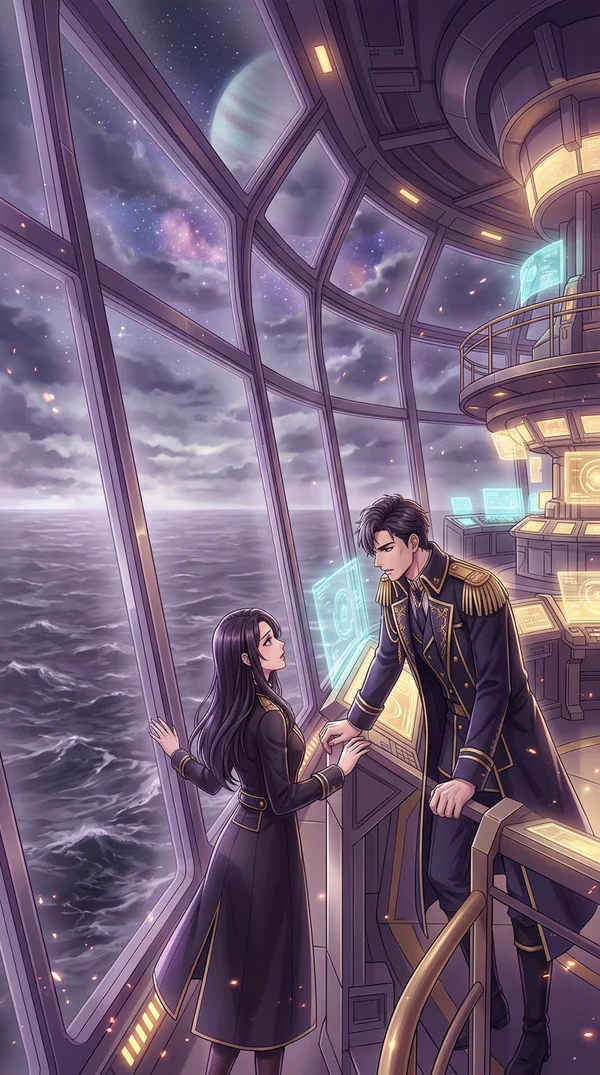
I wasn’t looking at him. That was the thing. I didn’t have to. We were forty meters apart across a crowded room and I could feel him, clear as a lamp behind a curtain, and what I could feel was that he was not listening to a word the Wolf pilots were saying. He was sitting very still, with his hands around a cup of coffee he wasn’t drinking, and his whole attention was on me. On the back of my neck. On my hand on the table. On my mouth when I laughed at something Priya said.

 100 to start reading with.
What did you think?