Marit Ojala came to the house at three, in a fur hat older than I was, with a tin of cardamom bread under her arm and her knitting bag over her wrist, and sat down at Edie’s kitchen table as if she’d been invited.
“You’ll go tonight,” she said. It wasn’t a question. “Wear her coat. They’ll know it.”
I made coffee. She watched me do it with her wet-slate eyes and didn’t say anything until I’d sat down across from her.
“Carys says you can feel him,” she said.
I put my cup down. “Carys talks too much.”
“Carys talks exactly enough. It’s the rest of us who don’t.” She took out the sock she was knitting and set to it, needles clicking. “Nora felt it. My grandmother knew her. Nora grew up on that ridge before there was any agreement, a little girl running wild in those cedars with the pups in April, and when she was grown she could feel the Alpha of her day the way you feel weather. Nobody had heard of such a thing before, and nobody has since. Until Carys came down off that hill the other week looking like she’d seen a moose in a church.”
“Why me?”
“I don’t know that it’s you.” Click, click. “I think it’s the ridge. I think it gets into a Halloran girl who sleeps near it young.” She looked at me over the needles. “Edie thought so too. That’s why she never let you up there, twelve summers running. She told me once. She said, If it never wakes in her, she can go home to Arizona and be happy and never know what she missed.” Marit’s mouth went thin. “Your grandmother decided a great many things for a great many people, Hazel. She was usually right. She wasn’t always.”
She finished the row and put the sock away and stood up, and patted my cheek with a hand that smelled of liniment.
“Six o’clock,” she said. “Sit in the middle. Let them look at you.”
By half past five the Beaver Moon had cleared the breakwall, fat and a little lopsided, and by six the net shed was full.
They’d moved the long tables against the walls and set the benches in rows, and every bench was packed, shoulder to shoulder, coats on laps. Old men in feed caps. Young women with babies asleep against their chests. Teenagers in the back, sullen and curious. Toivo by the door with his arms folded. Sixty-one of them, give or take a birth. I counted, because counting is what I do when I’m frightened, and I got fifty-eight grown and three too small to vote, and then I stopped, because Carys had come to sit beside me and was holding my wrist hard enough to hurt.
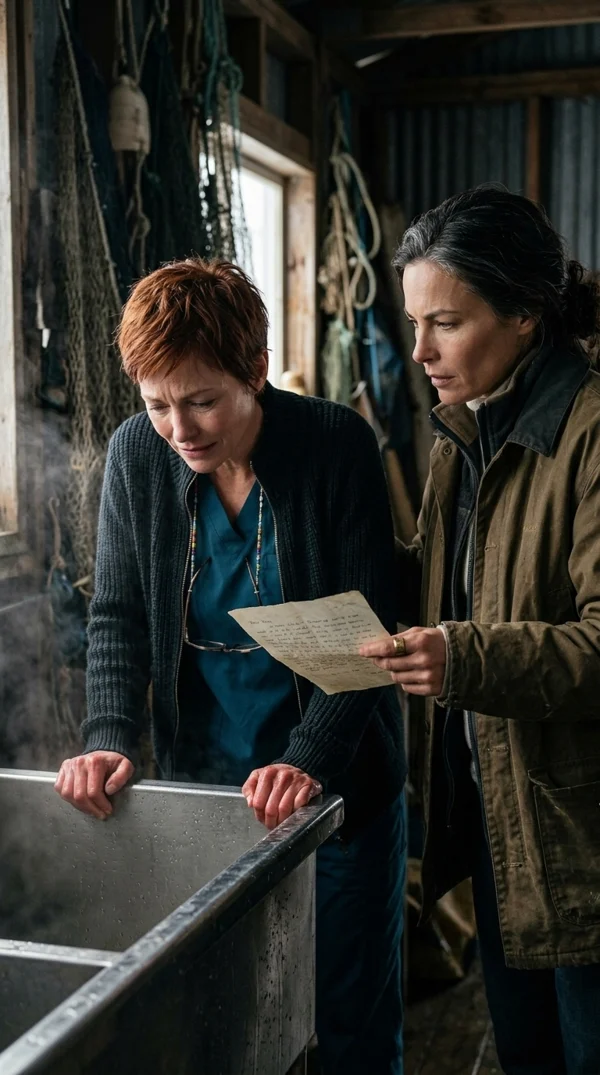
At the far end, under the gill nets, the council sat behind one of the tables. Marit in the middle with a sock on four needles. Raimo on her left, in a clean flannel shirt buttoned to the throat. On her right a man I hadn’t met: sixty-five or so, round and pink, with the expression of someone who’d been asked to referee a fight between his own brothers.
“Arvid Lahti,” Carys whispered. “Votes with whoever talked last. Don’t take it personally.”
Edie’s letter was in the inside pocket of her barn coat, against my ribs. I’d read it four more times since the vault. I kept my hand over it.
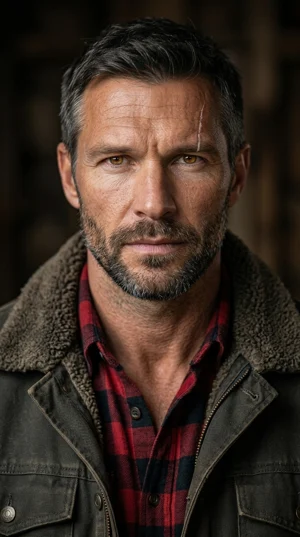
Bowen stood alone against the side wall, halfway down. He hadn’t come to sit with me, and I hadn’t asked him to.
Raimo stood up. He didn’t make a speech. He wasn’t a man for speeches.
“Edie Halloran died without standing her heir,” he said. “The keeping’s vacant. Every Alpha from here to Duluth knows it, and one of them was standing in our parking lot on Friday while the boathouse burned. I move that the den ground be deeded to this council, in the pack’s own name, to hold in trust. That’s all. Then nobody has to wonder what a woman from Phoenix will do with it when she gets an offer she likes.”
He sat down. The shed was quiet except for the stove.
Marit didn’t look up from her sock. “Bowen,” she said. “You’ll want to say something.”
He pushed off the wall.
I’d thought he might go to the front. He didn’t. He stood where he was, in the aisle, among them, with his hands at his sides, and he spoke loud enough for the back row and no louder.
“My bond woke twenty-one years ago,” he said. “That July. For Hazel Halloran, who was nineteen and didn’t know what I was.”
Nobody moved. Some of them knew. I could see it on the older faces. Some of them, the young ones, turned around on the benches to look at me.
“My father found out. He told me the law: she hadn’t been stood, so I couldn’t tell her, so I couldn’t keep her. He told me to let her go. I went to Edie and asked her to stand Hazel at the stone, and Edie said no.” He paused. “I’ve let people believe for a long time that that was the end of it. That I was ordered. It wasn’t the end of it.”
His voice didn’t change. His hands didn’t move.
“I was twenty-two. I had a truck and two hundred dollars. I could have gone down to that dock on the sixteenth of August and told her the truth and taken whatever came. I could have driven to Arizona. She wrote me seven letters. I read every one, and I answered none of them, and every time I didn’t answer, I chose it. Nobody tied me to that ridge. My father gave an order and I obeyed it because it was easier than losing all of you.” He looked down the rows. “That was me. Not him. Not Edie. You should know who you’ve had for an Alpha.”
Nobody coughed. Out past the breakwall the harbor ice ticked and settled.
I hadn’t known it would be like this. He’d said it to me in his house, with the tin in my hands, and it had gone into me like a splinter. But hearing him say it to sixty people, in that flat, careful voice, with no excuse in it anywhere, made it true in a way it hadn’t been on the stairs. He’d chosen. Seven times. Every August since I was nineteen he’d taken out my letters and read them and chosen it again.

 100 to start reading with.
What did you think?