I didn’t tell him.
I want that said plainly, at the start, because everything after it comes from it. On the morning of New Year’s Day I sat at Edie’s kitchen table with Jonas’s words still in the air and Carys asleep on the couch in the front room, and I picked up my phone to call Bowen, and I put it down again.
He’d say no. I knew exactly how he’d say it, in that flat careful voice, from his bed in the loft with three ribs broken and something under them still healing. And then he’d get up. He’d get up and drive to Hematite himself with a tube’s worth of hole in his side, or he’d tell me to stay home and go up the ridge on the twenty-second and die in the snow by the den, and he’d call it his choice, and he’d be right.
So I didn’t call. I woke Carys instead.
She sat up on Edie’s couch with her hair flat on one side and listened, and when I’d finished she was quiet for a long time.
“You should tell him,” she said.
“He’ll say no.”
“Yes.” She rubbed her face. “He will.”
“Will you drive me?”
She looked at me without answering. I watched her think about her brother, and about the snow on the ridge with his blood in it, and about the word dead, which she’d said herself, a week ago, by headlamp.
“I’ll drive you,” Carys said. “I’ll wait in the truck. And I’m going to hate myself for it.”
Hematite is an hour and a half south and west of Merriman Harbor, off the highway past Ishpeming, down a county road through second-growth aspen and then suddenly into a town that looks as if it were built in a single summer a hundred and twenty years ago and has been waiting ever since for somebody to come back. Company houses in rows, all alike, with steep roofs and narrow porches. A brick Catholic church. A bar with a Pabst sign. And everywhere, on the snow, on the roofs, on the plowed banks along the road, a faint stain of red, like rust or old blood, that came, Carys said, from a century of iron dust on the wind.
At the end of the main street, an old steel headframe stood over a mine shaft that had been capped since the sixties, black against the sky, like the skeleton of a windmill.
Beyond it, where a hill should have been, there was a hole.
Carys pulled over without my asking. We sat in the truck and looked at it. It was an open pit, a mile across, terraced down in red-brown steps like an amphitheater for giants, and at the bottom of it was a lake, frozen, the ice the color of dried blood.
“Red Hill,” Carys said quietly. “That was their den. Right there. Where the ice is.”
I looked at it. I tried to imagine sixty years of spring births in a place that was now a flooded hole three hundred feet deep. I couldn’t. And I understood, sitting there in the cold truck, something about Conrad Strake that I didn’t want to understand.
The union hall was brick, two stories, with MINERS’ HALL 1914 cut into a sandstone block over the door. Inside it smelled of floor wax and old coffee and wet wool, and it was empty except for a long table in the middle of the main room and three men at it.
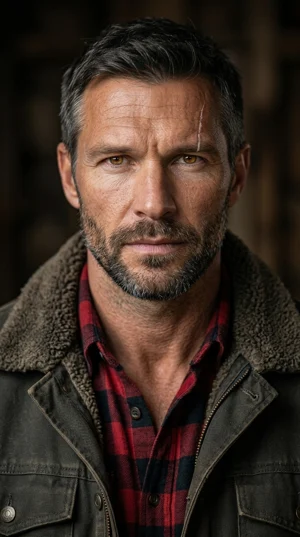
Strake stood when I came in. His arm was in the black sling. The cut along his jaw had been stitched, neatly, eight stitches. Beside him sat an old man in a cardigan with a fountain pen and a stack of paper, who introduced himself as Marvin Rautio, and whose name I’d been looking at on the bottom of a document for seven weeks. Jonas stood by the door with his arms folded, looking at the floor.
No Ida Koski. No old men. No elders at all.
“Thank you for coming, Ms. Halloran,” said Strake. “Coffee?”
“No.”
“Sit, at least.” He pulled out a chair for me with his good hand. “This won’t take long. I know you read fast.”
I sat. He sat across from me. Rautio slid the papers across the table, three documents, clipped, flagged with yellow tabs where I’d sign.
Strake didn’t threaten me. I’d expected him to, and he didn’t. He laid it out like a deal memo, plainly, point by point, as quietly as a man reading minutes.
“Three things,” he said. “One. Kurt Dahlberg is in the county jail for the fire. He’s a member of my pack, and he answers to me. He’ll make a statement to your detective that he went to your grandmother’s house on the twenty-fifth of October, alone, on his own account, and gave her the pills, and took the card from her camera. He’ll plead to it. Your grandmother’s killer goes to prison, and you never have to sit through a trial and watch a defense lawyer read that pathologist’s caveats out loud.”
“Alone,” I said.
“He’ll say so.”
I noted that. He’d said he’ll say so, not he did. I put it in the column.
“Two. I withdraw the challenge. Not just for the Wolf Moon. Forever. In front of my elders and yours, on the ridge, in the old words. Your Alpha never has to fight me again.” He looked at me steadily. “I’ve seen his sister’s face. I know what’s under those ribs.”
I didn’t say anything.
“Three. Black Spruce discharges the mortgage at closing and withdraws from your lawsuit. No more cloud. No more sale. No more Graham Pell’s signature in your chain of title.”
“And for all that.”
“The ridge.” He said it simply. “Not the house. Not the lake shore. Not the nine hundred acres. Two hundred and forty acres, the den ground and the hollow and the slope down to the two-track. Red Hill Holdings pays you nine hundred thousand dollars for it, which is more than it’s worth as timber, and you know it.” He tapped the third document. “And Red Hill leases it back to the Copper Lake pack for a dollar a year, for ninety-nine years. They den there in April, the way they always have. They run there for their dead. Nothing changes for them, Ms. Halloran. Nothing at all.” He paused. “Except whose name is on the paper.”
“Who holds the den holds the lake,” I said.
He smiled, a small tired smile. “Yes.”
“And if I say no?”
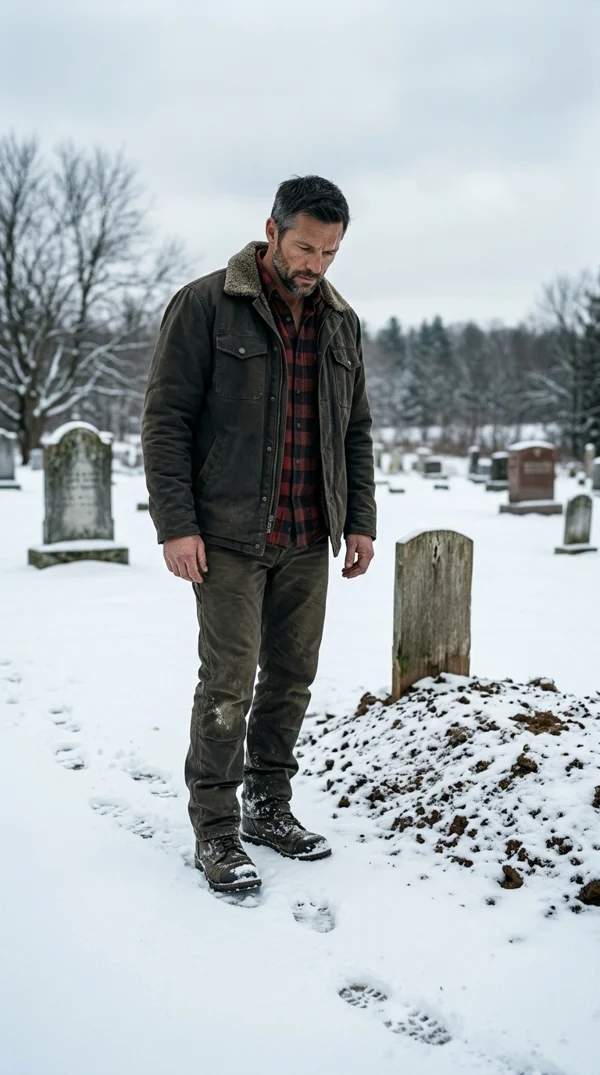
“Then I’ll be on your ridge on the twenty-second,” Conrad Strake said, “and on the twenty-first of February, and in March, and every full moon after that, for as long as the keeping is vacant. Which is as long as you are.” He didn’t raise his voice. He never did. “I’ve had to learn to wait. I’ve watched my pack drift away from a hole in the ground for twenty-eight years.” He looked past me, out the window, at the headframe. “Their children go to Milwaukee and stop changing. I’ve buried my mother and my wife and my brother in a cemetery between a gas station and a tailings pond, because we have nowhere to run for them. I want to hold something. That’s all. I want my people to hold something, before there’s nobody left to hold it.”
I believed him. That was the worst of it. I believed every word, and I knew he’d ordered my grandmother killed, and both things sat in me at the same time and didn’t cancel.
I read every line.
Three documents. A purchase agreement, eleven pages, for 240 acres described by metes and bounds from a surveyor’s plat I’d never seen, which meant they’d had it surveyed already, which meant they’d walked my grandmother’s ridge with a transit and chain while she was alive. A closing date of Thursday the fourteenth of January, at Lakeshore Title in Marquette. A clause making the sale contingent on Black Spruce discharging the mortgage at closing. And on page nine, a representation by the seller that she was entering into the agreement freely, voluntarily, and without duress.

 100 to start reading with.
What did you think?