Work Tape, chapter 4 of The Bodyguard My Ex-Husband Hired
There’s one lawyer in Nashville who ever beat Wendell Shaw in a courtroom, and she answered her own front door on a Saturday morning in a navy suit and white tennis shoes, holding an unlit cigarette like a pencil.
“Hattie Larkin,” Birdie Kincannon said. “I wondered how long it’d take you.”
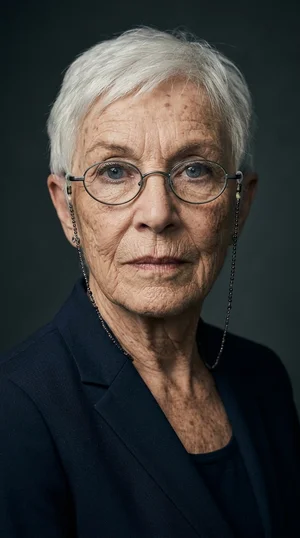
She was seventy-one and about five feet tall, with white hair cut short as a boy’s and reading glasses on a beaded chain, and her house in Belmont smelled like old paper and lemon furniture polish. In 2009 she’d taken a songwriter’s widow up against Highwater over a catalog Wendell swore the dead man had signed away, and she’d won, and the story on Music Row was that Wendell had sent her a fruit basket afterward and she’d mailed it back with every piece of fruit bitten once.
I’d remembered that at four in the morning, lying awake. I’d found her number by six.
She looked past me at Gabe on her porch steps.
“And who’s this?”
“He works for me.”
“Since when?”
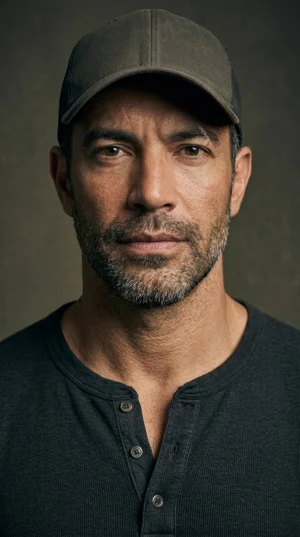
“Since yesterday morning,” Gabe said. “Before that I worked for Highwater.”
Birdie took the cigarette out of her mouth and looked at him over her glasses for a good while. Then she put it back.
“Well,” she said. “Y’all better come in.”
She sat us at her dining room table, which had disappeared under files sometime in the previous decade, and she listened to me tell it from the Country Honors forward without interrupting once. She made notes on a legal pad in handwriting like barbed wire. When I got to the bill, she stopped writing.
“You have it.”
“In a bank box. Since yesterday.”
“Good girl.” She tapped the cigarette on the pad. “Now I’m going to tell you something you won’t like, and then I’m going to tell you something you’ll like less, and then we’ll get to work.”
“Okay.”
“‘I wrote it’ won’t beat that NDA. You signed a contract that says you won’t say what you said. A judge will look at that and think: grown woman, had a lawyer, took the money.” She held up one finger. “So first, I need proof that isn’t you. Anybody who heard that song from your mouth before Dalton ever sang it. Anything with a date on it that you didn’t make yourself.”
“Junie Rucker,” I said. “I played it at her round at the Wren, February 2014. And Otis Grady cut a work tape with me in March. Guitar and vocal, in his back room. Dalton didn’t demo it till May.”
Birdie wrote both names and underlined them twice.
“Second.” Another finger. “I need to know if that settlement was clean. Because if it wasn’t, the whole agreement’s on the table, NDA and all. Men like Dalton don’t hide one thing, Hattie Larkin. They hide a closet. Was there money you didn’t know about?”
“I don’t know.” I thought about it. “I didn’t know about a lot.”
“Then we’ll find out.” She looked at Gabe. “You. You were in Highwater’s pocket two days. What do you know?”
“That Wendell wants the bill in his office bad enough to pay twenty thousand cash for it,” Gabe said. “And he’s got a man who’ll break in for less.”
Birdie nodded slowly, as if that were the most useful thing anybody had said all morning.
“Wendell’s selling Dalton’s catalog,” she said. “I heard it at the Palm two weeks ago. Copperline Capital, out of New York. They buy songs like other people buy apartment buildings. Forty million, I heard, and ‘Porch Light’ is the front door. Nobody pays forty million for a song with a woman in a kitchen saying it’s hers.” She put the cigarette down. “That’s why he’s scared, Hattie. Not the NDA. The sale.”
I sat back in my chair. All of it suddenly had a shape: the truck, the tracker, the man at my panel with bolt cutters. A song I wrote crying on an overdue bill was the front door to a forty-million-dollar building, and I was standing in it.
“What do you charge?” I said.
“A third of whatever we get back. And I want to be in the room when Wendell understands what’s happening to him.” She pulled a laptop out from under a file. “Now. I’m filing a counter-notice on that takedown before lunch. They’ll have to sue to keep it down, and they’ll have to say in writing that your own voice is theirs. I’d like to see them do it.”
Otis Grady’s studio was a brick house on a side street off Music Row with a hand-lettered sign by the door that said only GRADY, as if anyone who didn’t know already had no business knocking.
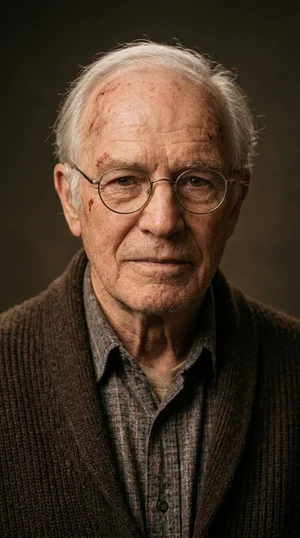
He met us in the hall in a brown cardigan with leather elbows. He was seventy-four and had been an engineer for fifty years, and he’d taken out both his hearing aids, which he did whenever he wanted to really listen to something, so he spoke a little too loud.
“Hattie! You look like hell. You look wonderful. Come in, come in. Who’s the large person?”
“Gabe,” I said, too loud back. “He’s with me.”
Otis looked Gabe up and down and nodded once, like a man approving a microphone.
Room B was the back bedroom of the house, carpet on the walls and old egg-crate foam on the ceiling, a console older than me, a couch where half of Nashville had slept off a session. It smelled like burnt coffee and solder and the inside of an amplifier. I hadn’t been in it in twelve years. I stood in the doorway and couldn’t make myself go in.
Gabe’s hand touched the small of my back. Just touched it. I went in.
Otis had pulled a drive off a shelf, an ugly gray brick with 2014 JAN–APR written on the side in grease pencil, and he plugged it in with the cable he’d had to hunt for, muttering. “Nobody keeps these. Everybody wants everything in the cloud now. I don’t trust the cloud. Can’t hold a cloud. I used to email every writer their mix the night of, you remember that? Back when I thought the internet was a fad.” He found the folder. He found the file. “March eleventh. Here we go.”
He pushed a fader up.
And there I was.
Not the kitchen woman in the memo, crying. Me six weeks later, thirty-one years old, sitting on a stool in that same room with my old Gibson. Clearing my throat. This is “Porch Light”, take two. A cough. A laugh at myself. Then the chords, and my voice, younger and rougher than I remembered and so sure of itself it made my chest hurt. In the bridge I went to the wrong chord, a minor where it should have been major, and stopped, and said no, wait, it’s the four, and went back and played it right. It was the four. It had always been the four. Dalton’s record had it the way I fixed it that day.
I didn’t cry. I just stood there with my arms crossed tight and listened to a woman I used to be, who had no idea what was coming.
When I looked up, Gabe wasn’t watching the console. He was watching me.
“That’s dated,” Otis said, tapping the screen, loud. “Session file, March eleventh, 2014. Two months before Dalton came in here to cut his demo, and he sang it in the same key you did. I’ll back it up tonight, two copies, and bring one to Birdie Kincannon myself on Monday. I always liked you better than him, Hattie. I’m going to enjoy this.”
The gray sedan picked us up at the light on Wedgewood.
I wouldn’t have noticed. I was staring out the window still hearing it’s the four. Gabe said, conversationally, “Hold on to something,” and turned right without signaling.
The sedan turned right.
He went left on a side street lined with bungalows and then right again, and the sedan did the same, two cars back, not trying very hard to hide. On the third turn he said a word I won’t put down here and floored it.
I’ve never been in a car chase. It turns out they aren’t fast so much as sudden: the truck heaving around corners under wet trees, a stop sign we rolled, a church parking lot cut through at an angle, the back end sliding on the leaves, the sedan’s headlights falling away in the side mirror and then gone. Somewhere in there I started laughing. I couldn’t stop. I was holding the grab handle with both hands and laughing so hard I was crying, because a week ago my biggest problem had been finding a rhyme for memory foam.
He pulled in under the interstate behind a closed tire shop, where the overpass kept the rain off, and killed the lights. The engine ticked. Traffic hissed overhead. My laugh ran out and left me breathing hard in the passenger seat, my hair in my face.
He was breathing hard too. He looked at me across the cab.
“You okay?”
I unbuckled my seat belt.
“It’s daylight,” I said.
He went very still.
“You said in the daylight,” I said. “And I’m not shaking.”
I was a little bit shaking. He could see that. He didn’t say so. He just looked at me with those tired eyes gone dark, and waited, and I understood that he would wait there under that overpass until the rain stopped and the tire shop opened on Monday if that was what it took. That it would have to be me.
So it was me.
I leaned across the console and kissed him.
For one second he didn’t move at all, and I thought, oh, God, I’ve misread the whole song, and then his hand came up into my hair, slow, and he kissed me back. Slow. Like he was learning it. Like we had all the time in the world and he intended to use it. His beard was rough against my chin and his mouth was warm and he tasted like the coffee from Otis’s, burnt and good, and he kissed me like a man who’d been thinking about it since a woman in a bathrobe hit his window.
Then it wasn’t slow.
I made a sound I didn’t know I could make. His hand fisted in my hair and he pulled back just far enough to look at me, his breath coming hard against my mouth.
“Say it,” he said.
“Say what?”
“What you want.”
“You,” I said. “I want you.”
He kissed me again, and this time I was half over the console, my knee on the gearshift, his other hand spread on my back pulling me closer, and my whole body had gone liquid and loud, like a chorus coming in after a long verse. I had my hands in his jacket. I had my hands in his shirt. He made a low rough sound against my throat and I thought, distantly, that I’d been married nine years and never once been kissed like I was the song.
A horn blared.
A tow truck was nosing in under the overpass behind us, headlights full in the back window, the driver leaning out to see what was blocking his spot. We broke apart. I fell back into my seat with my shirt half untucked and my hair everywhere, and I started laughing again, and so, for the first time since I’d met him, did he. A real laugh, low and surprised, like it had been rusted shut and had just come loose.
“Home,” I said.
“Yes, ma’am.”
“Gabe.”
He drove me home with one hand on the wheel and the other on my knee, and neither of us said anything, and the whole way there I could feel his thumb moving, very slightly, back and forth.
My phone rang at one in the morning.
I was asleep on the couch with Dobro on my feet. Gabe was in the armchair across from me, awake; he was always awake. The screen said OTIS GRADY and I grabbed it, smiling, ready to tell him to go to bed.
It wasn’t Otis.
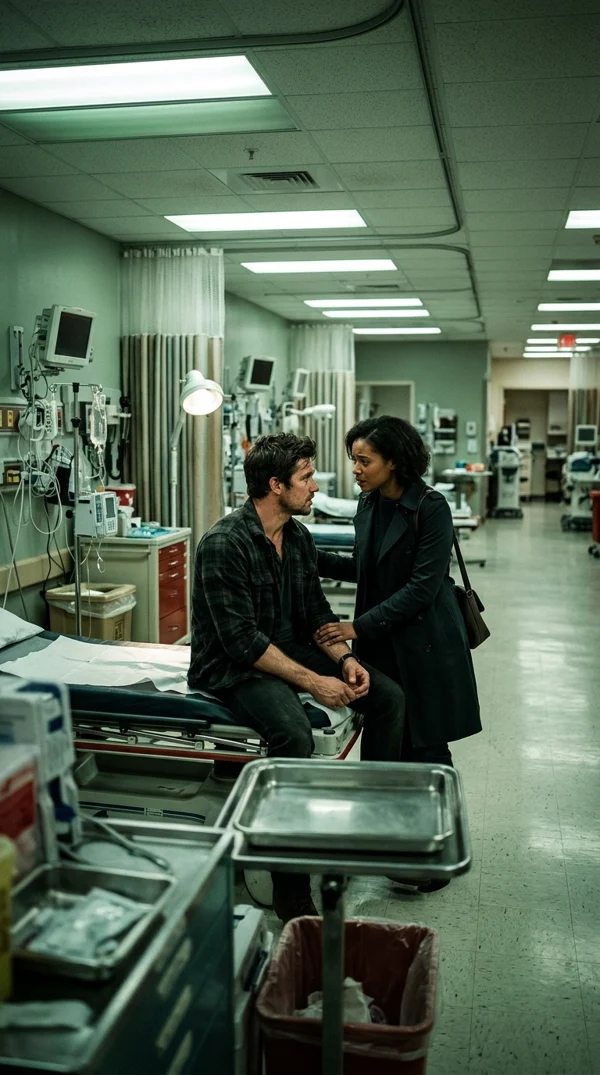
“Is this Hattie?” A woman’s voice, tired, kind, with a hospital behind it: a page over a speaker, a cart going by. “This is the emergency department at Vanderbilt. I’m sorry to call so late. We’ve got a Mr. Grady here. He’s been hurt, and he keeps asking for you.”
What did you think?