The Walk-In, chapter 3 of The Bride He Waited For
On Monday morning at six Calvin had the flat-top hot with nothing on it.
I could hear it from the back door, the tick of the steel coming up to heat, and I stood in the alley with my mother’s keys in my hand and the dumpster smell rising already in the dark and thought, he did this Wednesday, too, and Thursday, and every morning since Tuesday. Came in at five-thirty and fired the grill like she’d be through the door any minute wanting to know why the biscuits weren’t in.
“Morning,” he said, when I came in. He didn’t look up. He was wiping down a cutting board that didn’t need it.
“Calvin, we’re closed.”
“I know we’re closed.” He set the board in the rack. “Grill don’t know.”
I’d spent Sunday at my mother’s house on Pecan Street not sleeping, and I’d made a decision somewhere around three in the morning, sitting on the edge of her bed with her reading glasses still folded on the nightstand on top of a library book three weeks overdue. Before I signed anything or sold anything or drove anywhere, I was going to empty the walk-in. Somebody had to. There were four days of produce dying in there, and dairy, and whatever she’d had thawing for Thursday’s meatloaf, and I’d run kitchens half my life and I knew what a walk-in smells like when nobody’s minding it. I was not going to let my mother’s smell like that.
I also knew that was not why I was going in.
Luanne came through the back at six-fifteen with a sheet pan of biscuits under a dish towel and her readers on her chest.
“I made these at home, because I knew he’d have the grill on and nothing to put on it,” she said, and set them in front of Calvin, who took one without a word. Then she looked at me. “Well. You want the town or you want breakfast?”
“Give me the town.”
“Half of them say you’ll sign with the bank by Friday and be gone by Saturday.” She buttered a biscuit for me without asking and pushed it across the steel. “The other half say you’ve got the Whitcomb boy back on a string and you’re fixing to marry into that bank.”
“I’ve been home five days.”
“Honey, in Merritt that’s a courtship.” She tipped her head. “And Lorraine’s circle met at her house Sunday after church, which they don’t do in summer. So she’s working.”
My phone went on the steel table and all three of us looked at it. STERLING VAIL, with the picture he’d chosen for himself, the one from the magazine, arms crossed in his whites.
“You going to get that?” said Luanne.
I took it out into the alley.
“Adele.” Sterling always opened with my name, like he was reminding me of it. “How are you holding up?”
“I buried my mother Saturday, Sterling.”
“I know, and I’m so sorry, I sent the flowers, did they come? Listen, I hate to do this. Thursday’s tasting for the Ballantyne space. They’re asking for you. I told them we’d have the full menu costed by Thursday.”
“Who’s we?”
He laughed, the warm one. “Come on. You know what I mean.”
I did. I had known for eleven years. I watched a cat go along the top of the alley fence, very carefully, like it had somewhere to be.
“I need two weeks,” I said.
“Two weeks.” The warm went out of it. “Adele. Sweetheart. I can’t run four kitchens and open a fifth with you sitting in a diner in Georgia.”
“You ran them for fifteen years before you met me.”
“And look how that went.” He meant it as a compliment. It was the closest thing to one I’d had from him in a year. “Monday. Can you do Monday?”
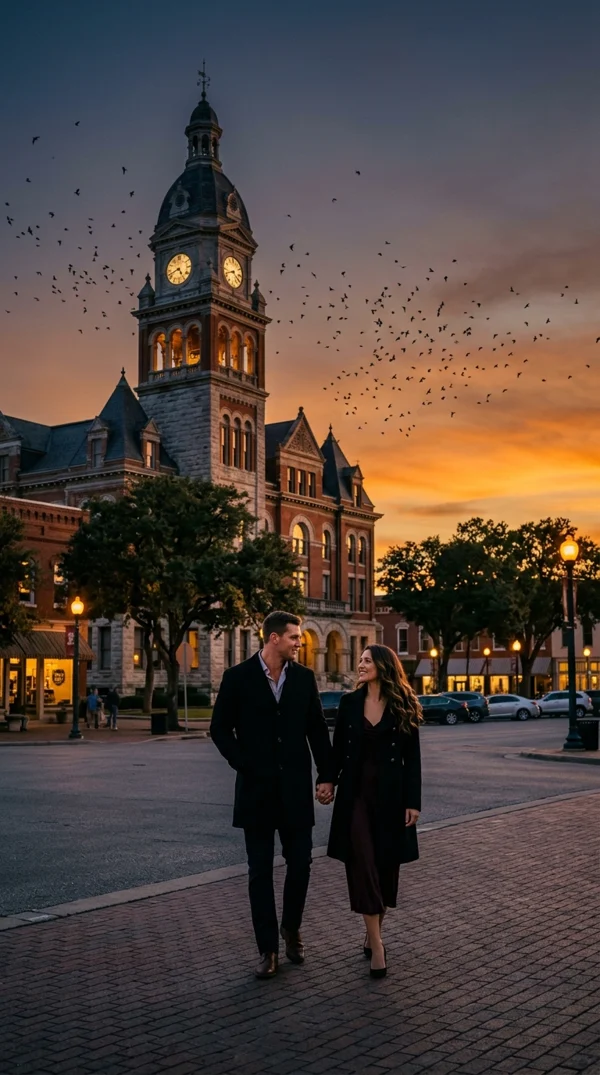
“I’ll call you,” I said, and hung up, and stood there in the alley with the phone hot in my hand and the sky going gray over the courthouse roof.
When I went back in, Beau Whitcomb was standing in my mother’s kitchen with a biscuit.
“Darnell saw your light at five-thirty,” he said, before I could ask. “He drives the square on nights. He tells me things.”
“Who’s Darnell?”
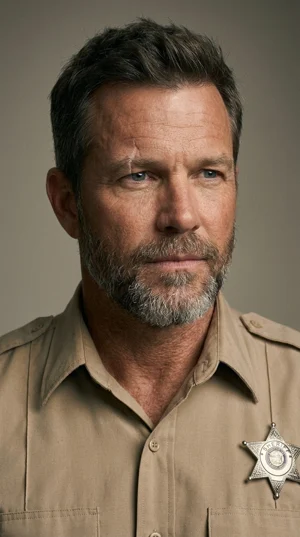
“My chief deputy. He also tells me when your mama’s walk-in compressor’s been running four days with nobody in the building.” He looked at Calvin, then at me. “You’re going in.”
“I’m emptying it. That’s all.”
“All right,” he said, and finished the biscuit, and didn’t leave.
I went to the door.
It’s a dumb steel door. I have been in a thousand of them. I have stood in walk-ins in Charlotte at midnight with a clipboard counting cases of romaine while a line cook cried about his girlfriend, and I’ve kissed a man in one, once, before I knew better, and I’ve hidden in one to scream into a side towel on a Saturday night when the dish machine went down. It’s a box with a fan in it. It’s the most ordinary room in any restaurant.
I put my hand on the latch, and my hand wouldn’t do it.
It just stayed there. I could feel the cold coming off the steel and up my arm. I could hear the compressor running on the roof. I told my hand to pull the latch and it stayed where it was, and the thing that came up my throat was not a sob, it was worse, it was a laugh, the kind that comes when your body has stopped taking orders.
Beau came and stood beside me. He didn’t touch me.
“I’ll go first,” he said.
He opened the door. The cold came out over our feet in a slow white roll, and the strip curtain swung, and he propped the door wide with the rubber wedge my mother kept on the floor for exactly that, and went in, and started talking.
“Top shelf, left. Buttermilk, two gallons. Sweet milk, four. Eggs, three flats. Somebody’s going to need to throw out these tomatoes.” His voice was flat and even, the way I imagined he talked on a radio. “Second shelf. Cabbage. Collards in a bag. A pan of something with foil on it says MEAT LF THURS. There’s a box of peaches here look like they’ll still go.”
I followed his voice in through the curtain.
The cold was a hand on my face. It smelled like it always had: wet cardboard and onions and the faint sweetness of the peaches, and under that, metal. The light was one caged bulb. The floor was the same diamond-plate steel I’d mopped ten thousand times, and at the back, by the dairy, by the drain, there was a place where somebody had mopped very recently and very hard.
That was all. A clean place on a floor.
“Dell,” Beau said.
I’d put my hand over my mouth. I don’t remember doing it.
“She was in here by herself,” I said through my fingers. “She was in here by herself, and it’s cold, Beau, and she hated the cold, she used to make Calvin come in and get the butter so she wouldn’t have to—”
He had me before I finished. He took two steps across the walk-in and put his arms around me and pulled me into his chest, and I went. He was so warm. That’s what I remember, that the whole room was forty degrees and he was a wall of heat in a cotton shirt, and I put my face in his neck and shook, not crying exactly, just shaking, while my breath went white past his collar and his hand moved up and down my back, slow.
“I’ve got you,” he said into my hair. “I’ve got you.”
I don’t know how long we stood there. Long enough for the compressor to cycle off and the fan to stop and the walk-in to go so quiet I could hear his heart. Long enough for the shaking to turn into something else. I knew it when it turned. I knew it the way you know when a sauce is about to break, a second before it does.
I lifted my head.
He was looking down at me with the caged light behind him and his breath going white, too, between us, and his hand had stopped on my back.
I kissed him.
I want to be honest about this, because it matters later. He didn’t start it. I took a fistful of his shirt and pulled his mouth down to mine and kissed him like I was angry, because I was, and he stood still for one second and let me, and then he didn’t stand still. His hand came up into my hair and closed. He turned us, and my back met the cold steel edge of a shelf, and the peaches rocked in their box, and he kissed me back like a man who has been thirsty for a very long time and is trying, and failing, to drink slowly. Nineteen years went out of me in the sound I made against his mouth. I had forgotten that I made sounds. I had forgotten what it was to be wanted by somebody who wasn’t calculating anything, who just wanted, with his whole body, with his hand in my hair and the other spread wide on my lower back pulling me up into him like he could close whatever distance was left between us by force.
I put both hands on his chest and pushed.
He let go at once. He stepped back until the shelf on the other side stopped him, and stood there breathing, white breath, one hand still half-raised like he’d forgotten to put it down.
“I don’t know yet,” I said, “if you’re a liar.”
He looked at me. Behind him the fan kicked back on.
“Then find out,” he said.
I turned around before I could do anything else stupid, and reached up to the top shelf, the back corner, behind the buttermilk, and my fingers found the gray steel cash box where Calvin had said it would be. It was cold enough to sting. I set it on the shelf beside the peaches. The key was on my mother’s ring, a little brass one I’d been carrying since Wednesday without knowing what it opened.
Her deed was in it, and her will in a funeral home envelope, and her good pearl necklace in a sandwich bag. And on top, a long white envelope, addressed to me in Charlotte in her round blue capitals, with two stamps on it. Under my name, smaller, in pencil, she’d written: or for when you come home.
It wasn’t sealed.
There was a sheaf of her stationery inside, folded, which I didn’t open. Not in there. Not yet. But clipped to the front of it with a paper clip were two things I didn’t need to unfold to know.
One was a sheet of yellow legal paper that had been torn into eight pieces and taped back together on the back with Scotch tape gone brown at the edges. I knew it by the shape of the tears. I’d made them.
The other was a guest check off one of my mother’s green pads, number 4471, soft as cloth with age. On the back, in pencil, in a hand I hadn’t let myself remember, it said: Friday. 9 sharp. Don’t be late, Tolliver. And under that, one letter. B.
Across the top of the taped letter, in the same pencil, my mother had written a single line.
It isn’t his hand, baby. Look at the B.

What did you think?