April Ninth, chapter 5 of The Cowboy Who Bought My Ranch
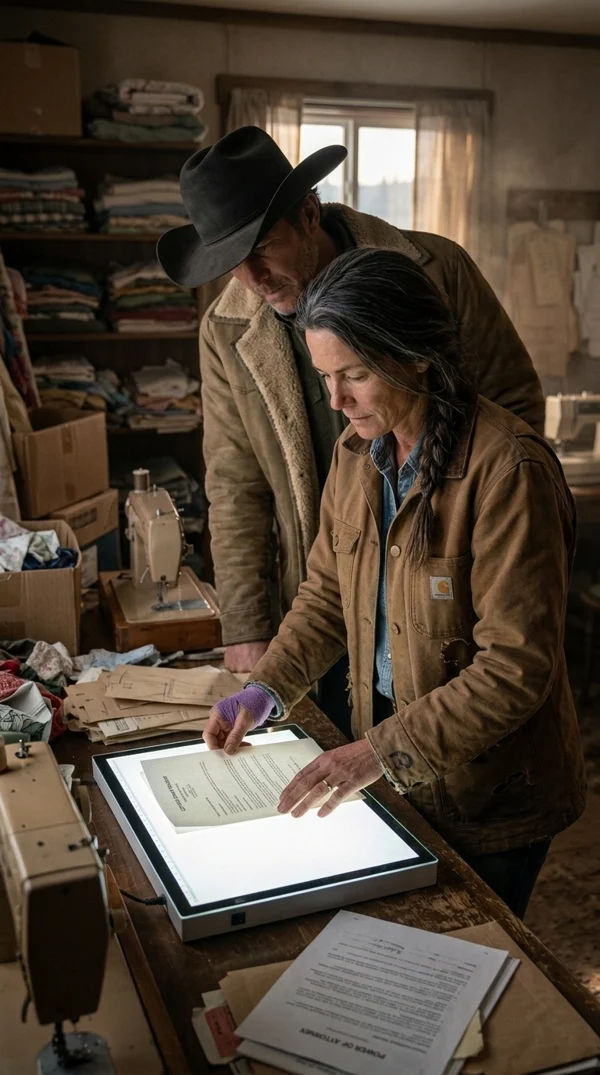
According to the power of attorney, I had stood in front of Shayla Ostler at Goose Valley Title on the ninth of April and signed my name.
I’d been staring at that date for two days. I knew calving season the way some women know their children’s birthdays, by heart and by what went wrong. I knew we’d started the heifers on the twentieth of February and the cows the first week in March. I knew we’d lost two calves in the blizzard on the seventeenth of March and I’d sat up with one of them in the kitchen in a laundry basket by the stove and he’d died anyway around four in the morning. I knew the mud season had been bad.
The ninth of April, I didn’t know. It was a Thursday. It was in the middle of everything.
“Then ask somebody who writes it down,” Wade said on Wednesday night, over the Rafter G’s checkbook, which was every bit the mess I’d said it would be.
“I write it down. I write everything down. It’s in my day book.” I put my head in my hands. “My day book’s in the mudroom at Seven-Bar.”
“Then ask somebody else who writes it down.”
I looked up.
There’s a vet in every county out here who the ranchers call at three in the morning, and in Sheridan County it was Marnie Haskins.
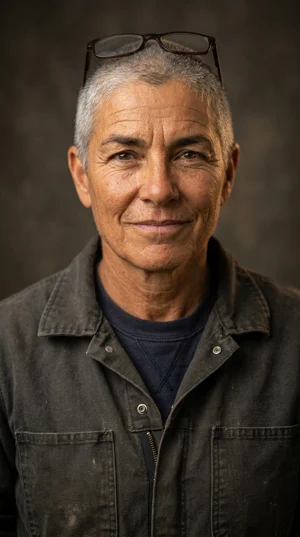
Her clinic was out on the north end of Sheridan, a steel building with a chute out back and a parking lot full of stock trailers and a sign on the front door that said NO DOGS IN THE LOBBY UNLESS THEY ARE SICK OR VERY GOOD. Marnie was fifty-four, five foot one, with a gray buzz cut and forearms like a blacksmith, and she’d delivered more calves than anybody in northern Wyoming. She swore the way other people breathed. She was also, as far as I knew, the only person in the county who’d laughed out loud when she heard what Peg Arnaud had been saying.
“Planned it,” she said, pulling the big green clinic ledger down off the shelf behind the front desk. “Jesus H. Christ, Jo. You couldn’t plan a surprise party for a goat. You’d tell the goat.” She thumped the book open. “April what?”
“Ninth.”
She ran a thick finger down the page. Stopped.
“Well, hell,” she said, and turned the book around.
4/9. Seven-Bar (Kessler). 1st calf hfr, malpresentation, C-section in barn. Arr 10:40 a.m. Dep approx 1:15 p.m. Live heifer calf. Owner assisted.
And under it, on the clinic’s carbon invoice clipped to the page, my signature. Fast. Downhill. A little smeared, because my hands had been wet.
I remembered it now, all at once, the way a smell brings a thing back. Sleet coming sideways through the open end of the barn. The heifer down in the straw, a little black-white-face, all eyes. Marnie on her knees in a coat of blood to the shoulder, swearing at the calf, at the weather, at the heifer, at God, and me holding the drop light and the tail for an hour and a half until my arms shook and I couldn’t feel my feet. The calf coming out of her like a wet sack of tools and shaking her head and sneezing. Marnie sitting back on her heels and saying, Well, she’s a keeper, and me starting to cry from pure tiredness and pretending it was the sleet.
I named the calf April. She was in my replacement pen right now with a yellow tag in her ear.
“You weren’t in no notary’s office, honey,” Marnie said. “You were up to your elbows in a heifer.” She leaned on the counter. “You want me to say that to a judge?”
“Would you?”
“I’d say it to the Pope.” She pulled the invoice off the clip and went to make a copy. “And Jo. I keep these books ten years. Nobody’s burning this one but me.”
I didn’t tell Wade I was going to Seven-Bar.
I could say I forgot. I didn’t forget. I knew exactly what he’d say, and that he’d be right, and I didn’t want to hear it, because the day book was mine and the mudroom was mine and the house was mine and I was tired of asking permission to walk into my own kitchen.
Marnie had heard at the clinic that Grant drove into Sheridan every Thursday morning now, to meet a man for breakfast at the Holiday Inn. A man from Billings, she’d said, with a look. So on Thursday at nine I drove out of the Rafter G the back way, along the section line, and in through the stock gate on the north side of Seven-Bar where nobody ever came.
The house was empty. The kitchen door was unlocked. It always was.
It would have been easier if it looked different. It looked exactly the same. My grandmother’s linoleum, the red-and-white checkerboard worn gray in front of the sink. My handwriting on the calendar by the phone, still on October: preg-check w/ Marnie, ship steers, Gran’s bday. My blue mug in the drainer.
It was the small things. A pink razor on the edge of my bathroom sink. A bottle of perfume on my dresser that smelled like a candle store. And on the piano in the front room, where it had stood since the day of her funeral, my grandmother’s picture, the one of her on her gray horse at the Big Horn rodeo in 1961, lying on its face.
I stood it back up. My hand was very steady.
The day books were on the shelf in the mudroom above the boot dryer, where they’d always been: sixteen years of them, the cheap brown kind from the farm store, one a year, held together with rubber bands. I pulled this year’s down and opened it to April.
Thurs 4/9. Sleet. #14 hfr calving wrong. Called Marnie 9:30. C-section. Live hfr. Named her April. Marnie stayed for coffee. G in Sheridan all day.
G in Sheridan all day.
I’d written that. I’d written it in my own hand and never once thought about it.
I was stuffing the day books into a feed sack when I heard the car.
Not Grant’s truck. Something lighter. A door. Boots on the porch, quick. And then Shayla Ostler was standing in my mudroom doorway with her car keys in her fist and a Goose Valley Title lanyard around her neck, staring at me like I was a burglar.
Maybe I was. I didn’t know anymore.
“You can’t be here,” she said.
“It’s my house.”
“Grant said you’d—” She stopped. She was pale. Up close, without the puffer vest and the phone and the audience, she looked tired. She had on a wool coat that was too thin for November and boots that were too nice for the yard. “He said you’d moved out.”
“He said a lot of things.” I tied the top of the feed sack. “He said I signed a paper in your office on April ninth.”
Her chin came up. “You did.”
“Did you see me?”
“He said you agreed.” Fast. Like something she’d said to herself in the mirror. “He said you’d signed it at home, at the kitchen table, and you were too busy calving to come in, and it was just a formality, everybody does it out here—”
“Shayla,” I said. “Did you see me?”
She didn’t answer.
I looked at her the way I’d look at a heifer that was about to try the fence. Where she’d put her weight. Which way she’d break. She was twenty-seven years old and she’d stamped something she shouldn’t have for a man who called her baby, and somewhere in her, under all that pride, she’d known it the whole time.
“I was in my barn that day,” I said quietly. “With the vet. Pulling a calf. I’ve got it written down, and so does she.” I picked up the sack. “Whatever he’s promised you, honey, he promised me first. And I had a ranch.”
I walked past her. She didn’t stop me.
Halfway down the lane I saw Grant’s truck turn in at the cattle guard.
I didn’t think. I swung the wheel and went off the lane and across the bottom pasture with the day books bouncing on the seat beside me, along the creek through the frozen ruts, and out the north stock gate, and I didn’t stop to close it behind me, which my grandmother would never have forgiven. In the mirror his truck had stopped in the lane. He didn’t follow. He just sat there.
Then I remembered what else I’d seen.
The desk drawer in the front room. I’d opened it looking for a rubber band. There’d been a letter on top, a single page, and I’d read it without meaning to, the way your eye goes to your own name.
It wasn’t my name. It was his.
Mr. Grant Fallon. RE: Note dated 3/2/2023. Principal and interest due: $640,000.00. Final demand. Payment in full is required no later than December 1. Failing which we will proceed.
Signed by somebody named Kurtz, on letterhead from Billings. I’d folded it into my coat pocket without deciding to.
Billings.
Wade was in the yard when I pulled in.
He was standing by the barn with his hands at his sides, not doing anything, which was how I knew. Wade Garrity was never not doing anything. He walked to my truck before I’d stopped it and opened my door.
“Where were you.”
“Seven-Bar.” I got out. “I got the day books. And Marnie’s—”
“Alone.”
“Yes, alone, I’m a grown—”
“His truck went up that lane at nine-fifty,” he said. His voice was low and very even, and his hand on my door was white at the knuckles. “Royce saw it from the hay barn. I’ve been standing here for forty minutes trying not to drive over there.”
“Why didn’t you?”
“Because you’d have hated me for it.”
I opened my mouth to say something cutting, and he was too close, and he was angry, and he was scared, which I’d never seen, and in my whole marriage nobody had ever been afraid for me, only of what I’d cost, and I don’t know which one of us moved.
He had me back against the truck door. The steel was cold through my coat and he was hot all down the front of me. His hand was in my hair and my hands were inside his open coat, spread on his ribs, feeling him breathe, and it was nothing like the porch. It was hard and fast and almost angry, his mouth on mine, my teeth on his lip, his hip pinning mine to the door, both of us saying something with it we didn’t have words for yet. I heard myself make a sound I didn’t know I could make, and felt him answer it.
Headlights swept the yard. Royce, coming back from the hay barn in the feed truck, slowing down, then speeding up very fast and driving off toward the calving shed like he’d remembered an appointment.
Wade stepped back. We were both breathing hard. He touched my lower lip with his thumb, where I’d bitten it, and looked at it like he wanted to say something and then didn’t.
I reached into the cab for the feed sack and held out the letter I’d taken from Grant’s drawer.
He read it. I watched his face go still.
“Closing’s the Monday before Thanksgiving,” I said. “And this is due December first.” My voice was steadier than I was. “He didn’t sell my ranch to run off with her, Wade. He sold it to stay alive.”
What did you think?