Under My Protection, chapter 2 of The Lycan King's Human Mate
They went.
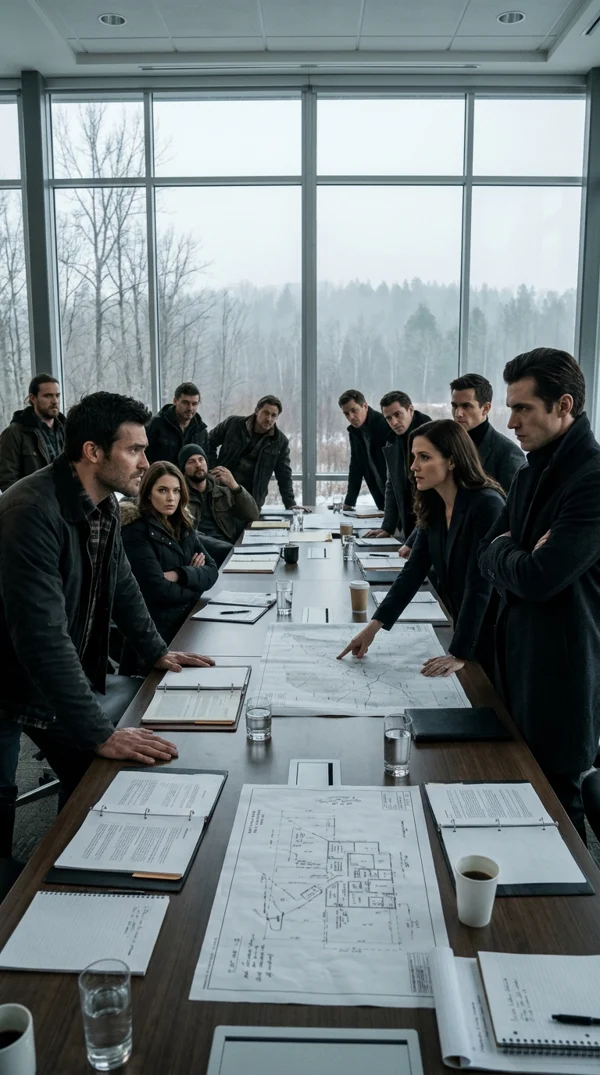
Not the way people leave a meeting, gathering phones, making faces at each other over the chairs. They went the way water goes down a drain. Edith Corbin left her reading glasses on the table. One of the Duval lawyers left a shoe, I swear to God, a single brown loafer under his tipped chair, and didn’t come back for it. Adrian Marrok was last. He capped his pen at the door, gave me a small, apologetic, families look, and pulled the door shut behind him so gently the latch barely clicked.
Eleven people. Four seconds.
I stood up.
I hadn’t planned to. I stood up because every cell in my body had heard out and wanted to go, and I’m a contrary woman, and I’d be damned if I’d go just because a stranger said so in a good suit. So I stood, and I put my palms flat on the agreement, and I said, “How did you do that?”
“I told them to.”
“I told them to sit down. They looked at me like I was a fern.”
“You don’t have the Word.” He said it the way you’d say you don’t have a passport. A fact, not an insult. “I do. It works on wolves. It doesn’t work on people.” He tipped his head a fraction toward me. “You’ll have noticed.”
I had noticed. I had noticed that when he said out my feet had wanted to move and I’d held them where they were out of pure spite, and that it had been the most effort I’d made in a conference room since the bar exam.
“I’m going to need you to back up,” I said, “about three hundred years.”
The corner of his mouth moved. It wasn’t a smile. It was the place a smile would go, if he used them.
“Sit,” he said, and then, after a pause I felt in my teeth, “please.”
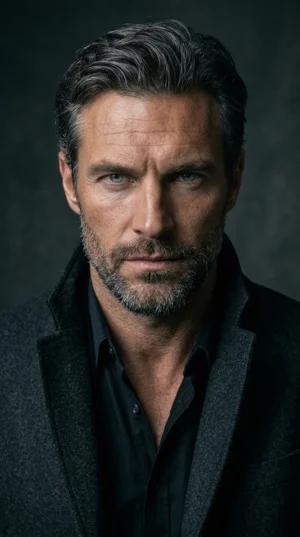
We sat. He took Margaux’s chair, across from me, and sat in it the way large men sit in small chairs, carefully, so as not to break the furniture or the mood. Up close he was older than I’d thought and also not old at all. The gray at his temples was real gray, but the skin around his eyes wasn’t lined the way it should be for a man with that much gray. He looked forty-five the way a cliff looks forty-five. It was a guess, and it didn’t fit.
“Ask,” he said.
I’ve done a thousand intakes. When you don’t know what’s happening, you ask the questions on the form. So I took the legal pad I’d been keeping notes on all afternoon, turned to a clean page, and clicked the borrowed pen.
“Name.”
“You have it.”
“Age.”
He considered. “Older than the state. Older than the city. I was on this river before there was a St. Paul.” A pause. “I stopped counting the year your country had its civil war. I’d seen enough of them.”
I wrote older than Minnesota and underlined it. My hand was perfectly steady. I was proud of that.
“What are you?”
“Lycan. The old line. There are wolves, and there are a few of us. They age like people, more slowly. We stop.” He said it without drama. “The packs on this river, from the headwaters to the Iowa line and the North Shore, are mine to keep. The Falls. Pepin. Six smaller ones. When they make law between them, I seal it. When they make war, I end it.”
“In 1826,” I said, “you ended one.”
“I did.”
“By marrying off a twenty-two-year-old girl.”
That landed somewhere. I watched it land. He didn’t look away from me, which most people do when you hit the bruise. He let me see it.
“Josette Duval,” he said. “She cried the whole way up the aisle and she held her chin up the whole time she did it. I sealed it. I’ve sealed eight since, every generation, the last one eleven years ago. I didn’t go to it.” He looked at the agreement under my hands. “I came to this one. I wanted to unmake it myself.”
I wrote that down too, because if I didn’t write something down I was going to have to look at him, and I’d begun to understand that looking at him was its own kind of problem. Something was happening in my chest that I didn’t have a column for. There was fear in it, but mostly it was the feeling of a room you know well with one piece of furniture moved: you can’t see what’s different, but your body walks around it.
“What you said,” I said to the pad. “At the door.”
“Yes.”
“Explain it like I’m a human. Since I am.”
“A wolf knows his mate,” he said. “On sight. We call it the knowing. It isn’t a choice and it isn’t a feeling. It’s closer to weather.” His voice didn’t change, but his hands, which had been resting on the table, stopped moving altogether. “I’ve walked this river for a long time, Avery Sutter. I stopped expecting it. I decided it was the price of Josette. And then I opened a door in a building I’ve never been inside, and there you were, holding a pen out to a bride.”
I laughed. It came out of me like a cough, short and wrong. “That’s insane.”
“Yes.”
“You don’t know me. I could be awful. I could be a Packers fan. I could put ketchup on eggs.”
“Do you?”
“That’s not the point.” I put the pen down. “Here’s my question, and I need you to answer it like a party, not a king, because I’ve been lied to by a man in a nice suit fairly recently and I’m not doing it twice in a month. Do I get a say?”
He didn’t answer at once. I liked him better for that.
“The knowing is mine,” he said. “It’s one-sided. It changes nothing for you unless you want it to. A bond is sealed by one thing. The mate answers. Freely, aloud, once. It can’t be taken. It can’t be ordered.” His eyes didn’t leave mine. “My Word doesn’t work on you. If it did, I wouldn’t use it. I’ve sealed nine marriages nobody chose. I won’t make you the tenth.”
The heating ticked. Thirty-one floors down, a plow went by on Sixth Street, scraping, its orange light rolling across the ceiling.
I’d mediated three hundred and eleven divorces. In maybe twenty of them, somebody said a thing so plainly that the whole case turned on it. You learn to hear it. It’s never the loud thing. It’s the thing said in an ordinary voice that a person can’t take back.
“Okay,” I said. I had no idea what I was agreeing to. “Okay.”
The door opened.
Adrian came back in first, which I noted. Behind him, Edith Corbin and Bastien Duval, and behind them, in the hall, the rest of the room, standing in a loose crowd by the elevators like people outside a hospital room. Adrian had the grace to look sorry.
“Forgive me, Uncle,” he said. “We’ve a problem, and it can’t wait.”
“Then say it.”
“Ms. Sutter.” Adrian turned to me, gentle. “Pack law is old and not always kind, and I’d rather you heard it from me than from a stranger. A human who knows what we are has to be under somebody’s protection. A pack’s, or the crown’s. Until tonight, you were under the treaty’s: you were its mediator. The treaty is about to end.” He spread his hands, the cold pale hands I’d shaken that morning. “And a dozen wolves from two packs just heard the king name a human as his mate. By dark, every pack on the river will know. Some of them,” he said carefully, “have long memories about human queens.”
“The Old Blood,” Bastien Duval said, as if he’d spat it.
“I’ll be frank,” Edith Corbin said to Lucan, ignoring me entirely. “If anything happens to her in my city, it’s a war you’ll lay at my door.”
Lucan stood.
He didn’t do it fast. He stood the way the weather turns over Superior in November, the whole sky deciding at once. Edith took a step back. Bastien’s chin came up, and then down.
He looked at me.
“Mine,” he said. Not loud. He didn’t need loud. “You’ll finish this hearing under my protection, and then you’ll come north.”
I’ve thought about this moment a lot. About what a different woman would have done. I think a woman in a book would have melted, or slapped him, and I think both of those would have been more satisfying than what I did, which was pick up the borrowed pen.
“No,” I said.
The room went still all over again.
“Here’s what’s going to happen,” I said, and I turned to a fresh page on the legal pad and started writing, and I read it aloud as I wrote it, the way I do when I’m putting a term in front of two parties who don’t trust each other. “One. This hearing isn’t over. It’s adjourned to Monday at nine, this room, my rules. Two. You don’t speak in my hearing unless I ask you to. Three.” I paused. “I’ll accept protection. I’m not stupid. But I’m not anybody’s luggage. If I come north I come as a guest. My own room. The lock on my side. Four. I leave when I want to, and nobody stops me. Five.” I looked up. “I’m nobody’s mate until I say so. Not yours, not the packs’, not the Old Blood’s. Until I say so, I’m the mediator.”
I tore the page off and held it out to him across the table. My hand shook a little, now. Let it.
He took it. He read it, and then he read it again. Nobody spoke. Edith Corbin, I’ll say for her, looked at me for the first time with something like interest.
“You want my signature,” Lucan said.
“It’s the only thing anybody in this room has wanted all day.”
He held out his hand. It took me a second to understand, and then I gave him the pen. He set the page down on top of the dissolution agreement, on top of two hundred years of other people’s weddings, and signed it. Big, slanted, unhurried letters, the hand of a man who had learned to write with a quill.
He slid it back to me.
“Monday at nine,” he said.
A man named Lindgren drove me home. He was about the size of a chest freezer and he called me ma’am, and when I told him he could stop he said, “Yes, ma’am,” and didn’t. The Suburban smelled of coffee and cold leather. There was a paperback western face-down on the dash with its spine cracked in four places.
I live in Northeast, in two rooms over a hardware store on a street where the bars have Polish names and the sidewalks are never fully shoveled. When we pulled up the store was dark, the window full of snow shovels and bags of rock salt, and across the street a man was standing in the mouth of the alley with his hands in his pockets.
“Ours,” Lindgren said, before I could ask. “There’ll be one on the back stairs, too. You won’t see him.”
“That’s not comforting.”
“No, ma’am. It isn’t meant to be.” He looked at me in the mirror. “He’s never asked any of us to stand on a street for anybody. In my time. I’m sixty-one.”
I went up. I locked the door and put the chain on and stood in my kitchen in my coat. The radiator was knocking. The Ziploc bag was still in the drawer by the sink, where I’d put it the night Brandon handed it to me, folded flat, because I don’t throw things away and because I’d wanted, I think, to keep some evidence.
My work phone buzzed in my pocket.
It was from Harlan Ferris, our managing partner, sent at 6:12 p.m., subject line Treaty matter.
Avery: Spoke with the client’s office. Given today’s development, they’ve asked that the firm add counsel to protect everyone’s interests. Brandon Galloway will join you on the matter as firm counsel starting Monday. Please loop him in tonight. Thanks, kiddo. H.
What did you think?