Terms, chapter 2 of The Mate He Refused at Court
I stop.
The doors at the far end have swung shut. The hall is empty except for the two of us, the dust turning in the light from the dome, and a long dark smear of wine down the dais step.
I turn round. I take my time about it.
He hasn’t moved. He’s standing in front of the throne with the ruined glove held a little away from his body, the way you hold a hand you’ve just burned, and he’s looking at me as if I’m something he dreamed and doesn’t trust.
“You’re bleeding, my lord,” I say.
Out in the arcade, something goes tink. A lamp. I know that sound in my sleep.
“It doesn’t matter.”
“It matters to the floor.”
He looks down at the step, at the wine and the splinters and the blood, and seems only now to notice any of it. Then he comes down off the dais, one step, two, and stops. There are still a good ten paces between us, and I can feel heat coming off him from here, the way you feel a furnace through a wall.
He doesn’t come any closer.
Good, I think. Stay there.
I hold up the letter. “I’m the envoy of the Seven Free Cities of the Glass Coast, my lord. I’ve come to renew the Midsummer Compact.”
“I know who you are.”
“Then you’ll know the terms.” I break the seal myself, since there’s nobody else to do it, and read them out in my envoy voice, which is my ordinary voice with the warmth scraped off it like slag off a gather. “The Sunsands reopened to the free cities from this day. Sand at the old price, by the old weight. The Compact renewed for seven years. Compensation for the…”
“Yes.”
I look up. “I haven’t finished.”
“Finish,” he says. “The answer will be yes.”
I have been preparing this for three weeks. I’ve read every Compact back to the first one, which is written on calfskin and smells like a wet dog. I have a list of everything the Glass Coast can offer and a second list of everything it can threaten, and I practised both in the mirror at the coaching inn while Wilf played the High Lord, which he did by sitting very still and looking constipated.
“Yes,” I repeat.
“Yes.”
“To all of it. Without hearing it.”
“Yes.”
Something hot goes up my throat. It isn’t relief. It ought to be relief.
“The dunes have been shut for a year,” I say. “The price tripled the winter before. Do you know what that’s done? There are men on Furnace Row who’ve sold their pipes. There’s a family at the end of the Row burning their own shelving, because a glassmaker with no sand can’t buy coal either. Six envoys came, my lord. Your gatehouse sent them home.”
“I didn’t know.”
“You didn’t know.”
“I have not been,” he says, very carefully, “attending to the court.”
“Then who has?”
He doesn’t answer. He can’t lie, so when there’s something he won’t say he simply stops. I’d forgotten that. I’d forgotten what it looked like on him.
“Your court has been starving my street,” I say, “while you sulked, my lord.”
Tink. Another lamp in the arcade, a small sharp sound, and then a hiss as the fire finds its way out.
He shuts his eyes.
The little door behind the throne opens, and an old woman comes through it with a pewter cup in one hand and a broom in the other.
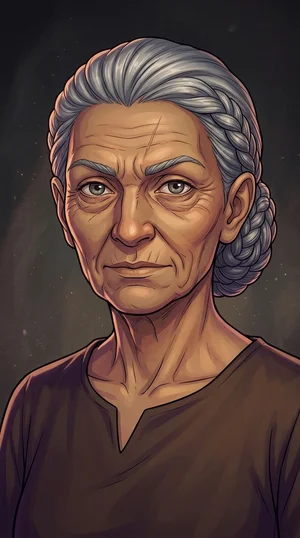
She’s fae, so old means she looks sixty and is probably older than the lake. She’s small for Summer, grey-haired, in a plain brown gown with a ring of keys at her belt the size of a cartwheel. She walks straight past me to the dais without a glance, sweeps the broken glass into a neat heap in three strokes, and puts the pewter cup into the High Lord’s good hand.
“Pewter, my lord,” she says. “I’m not sweeping up another.”
“Dervla.”
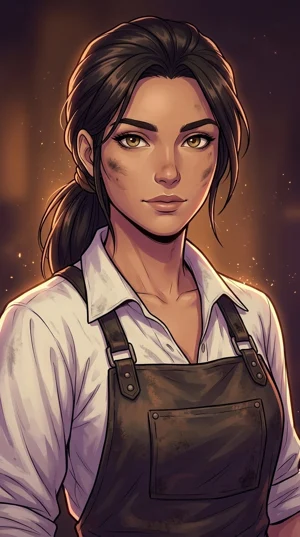
“Lampwarden,” she tells me, as if I’d asked. “I keep the lamps and the cups. Lately that’s the same job.” She looks me over properly then: boots, coat, the sand I can never quite get out from under my nails. “You’re the glassmaker.”
“I’m the envoy.”
“Mm,” says Dervla, and takes up a position beside the throne with her broom, a sentry with a pike.
The doors open again. Lord Cathal comes back in without his goblet, a clerk behind him carrying a box.
“Forgive me, cousin,” he says. “I couldn’t let the envoy be sent off without the law explained. It would be a discourtesy to the free cities.” He bows to me. “The Midsummer Compact, Mistress Glass, is sealed at Midsummer. In the light, before the court, with the envoy present. It always has been. The first Compact says so, if you can bear the smell.”
So he’s read it too.
“Then I’ll stay until Midsummer,” I say.
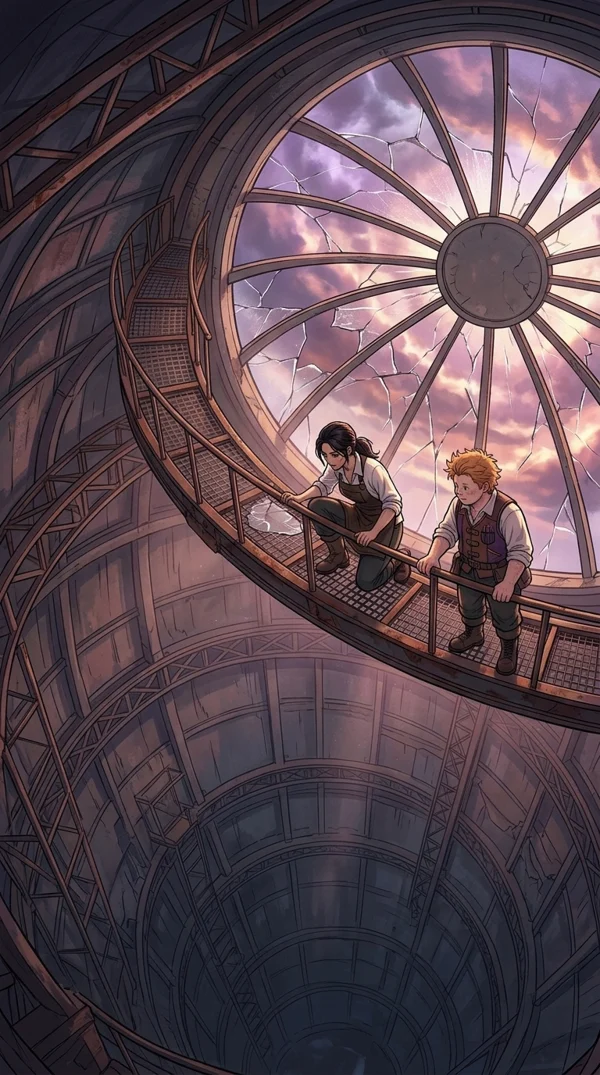
“There’s a difficulty.” Cathal looks up, and I look up with him, at the star in my lens, and for a moment he forgets to be smooth. “I was in the hall, you know, the first Midsummer it hung up there. I’ve seen four hundred Midsummers, and I’d never seen the light stand up like that, a pillar of gold. I was sorry to see it crack, Mistress Glass.”
He means it. I can hear that he means it, and it throws me.
Then he goes on in his ordinary voice. “The court was told it was lightning, last Midsummer. There was no Walking. Without the Sunglass there is no light, and without the light, I’m afraid, there’s no Compact.” He spreads his hands. “Eighteen days to Midsummer. And the only living glassmaker who has ever worked on it is standing in this hall.”
“No,” says the High Lord.
He doesn’t raise his voice. He doesn’t need to. Dervla stops leaning on her broom.
“She goes home tonight,” he says. “I’ll seal it by my own hand. The dunes open in the morning.”
“You can, of course,” says Cathal gently. “It’s your right. But a seal set outside the light, by a High Lord who hasn’t sat in council for three years…” He lets that hang. “The court won’t honour a seal made in a sickroom, cousin. You know they won’t. The first time the free cities’ wagons came up the dune road, someone would stop them, and they’d be inside the law to do it.”
Sickroom. I look at the gloves. I look at the coat that doesn’t fit.
The High Lord says nothing, which is how I know Cathal is right.
So there it is. I can go home tonight with a seal worth less than its wax, or I can climb back up into the dome I built and live under this roof for eighteen days with the man who stood in my light and refused it.
I think about the family at the end of the Row, burning their shelves.
“I’ll mend your glass, my lord,” I say. “Then I’ll take my Compact and go home, and you’ll never have to look at me again.”
He looks at me then. Straight at me, for the first time since the dais, and I wish he hadn’t.
“That is not,” he says quietly, “why I don’t look at you.”
Nobody speaks. Cathal’s clerk moves his box from one arm to the other.
“Eighteen days,” I say, and curtsey, and go.
They give us rooms in the guest wing, with painted ceilings and beds the size of Wilf’s mother’s whole house. Wilf lies down on his, says, “I’m going to live here,” and falls asleep in his boots.
I can’t. I go out to the arcade to look at the cracked lamp, because if I can’t do anything else tonight I can at least work out how long it has.
Not long. The crack has grown since the morning. You can see the fire moving along it like a fish trying to find the hole in a net.
“Look who’s come back for seconds.”
There’s a knot of courtiers at the end of the arcade with their wine, young lords in green, the kind who are four hundred years old and behave nineteen. The one who spoke has yellow hair and a face like a wedding cake: white, tiered and mostly sugar.
“Lord Ruarc,” he says, bowing, which answers the question I didn’t ask. “We were all so hoping you’d come. Nothing has happened here in ages. Tell me, Mistress Glass, do they make you take a number? Do you have to stand in the light again, or can the refused just queue at the back?”
His friends laugh. It’s a lovely sound. Summer laughs in tune.
I’ve been laughed at by better. I’ve been laughed at by five hundred of them at once. I open my mouth to tell him that in Gullmouth we have a word for men like him, and it’s the same word we use for the muck at the bottom of the pot.
I don’t get the chance.
The air at the end of the arcade goes strange. It bends, the way air bends over a furnace on a cold morning, and the far pillars waver. Ruarc’s glass cracks in his hand, a neat line from the rim to the foot, and wine runs over his fingers.
The High Lord is standing behind me. I didn’t hear him come.
“She is the envoy of the free cities,” he says, “and a guest of my house. Speak to her like that again, Ruarc, and you’ll be speaking to me.”
Ruarc goes the colour of skimmed milk. His friends discover they have business elsewhere. In half a minute the arcade is empty except for the two of us and the leaking lamp.
I don’t turn round. I can feel him at my back like the door of a kiln left open.
“I don’t need you to protect me, my lord.”
“I know you don’t,” he says. “That has never been the problem.”
When I do turn, he’s already walking away.
It’s Dervla who finds me, a while after, still standing under the lamp. She’s carrying a lantern of her own, an ordinary oil one, which feels like a remark.
“You’ll want to see where you’re working,” she says. “Come on.”
She takes me down the back stairs of the east wing, past the kitchens, where the smell of bread comes up warm and ordinary and makes my chest ache for no reason I’ll admit to. Her keys clank. She walks fast for somebody the age of a lake.
“He’s not to be called by his name,” she says, out of nowhere, halfway down. “You’ll know that. Summer custom. Only his blood and his mate say it. The rest of us say my lord, and mostly we mean it.”
“I know.”
“The cousin says it a good deal,” says Dervla, “for a man who’s only one of the two.”
I think about that. Then, because it’s dark on the stair and she isn’t looking at me and I’ve carried it long enough, I say, “He asked me to, once. In the workshop. Before.”
Dervla stops dead.
She stops so suddenly I nearly walk into her. She stands with the lantern held up and her back to me, and doesn’t move, and doesn’t say a word. Then she starts down again, faster than before.
The workshop is under the east terrace, at the end of a stone passage that smells of cold ash. Dervla unlocks the door with the biggest key on her ring and stands aside.
I go in.
It’s exactly as I left it.
The furnace, laid ready with kindling, cold. My marver, the steel polished so bright the lantern swims in it. The lehr along the back wall with its door shut. My pipes on the rack, which I left behind because I walked out of the hall that day and never came back for anything. My jacks on their hook. My old leather apron on its peg, stiff from hanging. The bench, the shears, the cold-sand bin, the quench tub full of clean water. The three leaded windows in the lake wall, which I glazed myself that spring because the old ones let the wind in.
And the floor. Swept. Not a grain of sand on it, not one flake of scale. I never left this floor that clean in my life.
“Who’s kept this?” I say.
“Himself,” says Dervla.
I turn round.
“He sweeps it himself. Every morning, three years. He won’t let the girls in.”
She nods at the broom standing by the door. It’s a good one, birch twigs bound with wire, and the handle has been worn pale and smooth in two places, a hand’s width apart, where the same two hands have held it every morning since.
“I’ll leave you the lantern,” says Dervla, and goes, and shuts the door.
What did you think?