Hiring Day, chapter 1 of The Omega Nobody Claimed
Nissa took my book out of the flour tin and put it down on the desk before the pack.
A half inch of flour in the bottom kept the pages dry and left them smelling faintly of bread. My mother’s lined bank book. The home’s entries after hers, cold snaps and boiler hours. Then mine, from eleven years old, in pencil, in the hand a person has before anybody teaches them one.
Twelve of us sat on the bench in our good clothes. The Redmayne party stood in the doorway with the light behind them. And Nissa Ovard, nine years my sister in that house, sat back down like a girl who had done something clever.
Bagby read it out.
“Fourth of May. Coley Munn. Hot iron, off a whetstone. Wind southwest.” She turned the page with a wet thumb. “Twenty-third of May. Taken up the fire road. Said accident. Was not an accident.”
The old man in the doorway held his hat to his chest and wore a shut-gate face, his eyes on the book. The woman beside him had a gray braid and one hand pressed hard to her mouth.
“Whose book is it.”
“Mine.”
I had just turned eighteen, nine days before. It was the last hiring day of the year at the Harrows County Children’s Home, and after it the home would place me where it liked.
A pack comes to Pale Street twice a year for an omega, hired by the season, returnable. Ninety dollars a week to the home, a bed and a wage to the girl. An omega in a pack is somebody’s daughter. An omega with no pack is a service that comes round yearly, like the boiler man, and three yards had already sent me back.
The rest of the book was the Sourwood co-op dock. I fetched the home’s flour there daily at four, and every pack in the county loads at that dock. Nobody minds a home girl standing in the wind.
I had the Redmayne party before they were properly through the door, because the front room has a gap under it and the corridor holds air like a jug.
The old one was coal smoke and tobacco and, under it, sound as a bell — cold water over stone. The woman with the braid was surgical soap and dog and a green note like a cut stem on her fingers.
And the one in the light. Alpha, and hot, and under the heat a fire banked down, a coat hung wet, the inside of a truck. Nine days of no sleep on him. I had smelled that once before, on a man at the dock. I wrote it and I was right, and what fucking good did that do? It killed him in nineteen days.
“Miss Bagby. Hew Kettridge.” The old man tipped his hat brim stiffly left, then right. “Sib Crayle, our healer. Orpha Sparr, our kennel manager.” He did not introduce the one in the light.
Bagby went down the bench the way you go down a shelf. “Bett Sizemore, good with poultry. Dell Combs. Lila Penn, light hands…” Her pen came neatly to rest on the next line. “Nissa Ovard, nineteen, omega. A summer in the Carmody house over at Ransome. She’s quiet and she’s clean and she’ll do a table.”
Nissa sat with her hands in her lap and would not lift her eyes. That was the worst of it.
“Can you ride?” Hew asked her.
“I can be taught, sir.”
He liked that. It was exactly the right answer, in the voice that gets a bed in a good house. I was glad for her and I hated her, and the two went along without touching.
Orpha Sparr looked down the bench with her mouth pulled to one side, her sleeve gone thin at the elbow. “I want a hand. Not a clerk.”
Then Hew turned his head a quarter inch. “That’s the book, is it.” And Bagby, God damn her, just passed it to him.
He read slowly, the way a warden reads, which he had been, with his left thumb keeping the place.
“The fourth of May. Hot iron. On a whetstone.” His eyes came up. “Was it.”
“It was.”
“Coley Munn was my sister’s boy.” The room got very small. “Twenty-seven, the pack’s marshal, and in May we took him up the fire road and did what a pack does. In June the vet put it in the file as a dog bite gone bad.” He shut the book on his thumb. “So… you’d have had us say it.”
“I’d have had somebody say it.”
He let that sit until Bagby coughed nervously. “A packless girl with a book is a complaint with a spine in it. The yard will not thank you.”
Then Bagby took my right hand and turned it palm-up in the air between us, and held it there like a fish she was pricing.
It is not a pretty hand. The side is blue-black with ink to the wrist bone. The palm is callused straight across, from a broom and a bucket handle, not a pen.
“There’s your clerk! Ink to the elbow.”
Orpha leaned in to look at the callus, not the ink. “Can you lift?”
“Forty pound of feed. On the shoulder.”
“Show me when we get there.” That used up nearly all of her interest.
Three wolves in a doorway had asked Nissa three questions and me none. I stood with my inked hand out and my face hot to the ears. What the hell had I expected? By nine I would be the smell in a shed.
Then the man in the light came out of it.
He was taller than the doorframe wanted. He had stood so still that the stillness had a weight. He came down the bench and stopped squarely in front of me, and the room filled with the smell of him. It went into my chest like a hand, and my breath shut on it in my throat.
“You had us before we were through that door.” His voice came low and rough from his throat, barely used yet that morning. “What do you smell now.”
“On who, sir?”
“On me.”
Nobody in that room breathed. Bagby’s pen stopped.
There is a party-trick way to do this, and an honest one, and I did the honest one.
“Banked fire. Wet coat. Truck. Nine days with no sleep on it, and the last two you’ve had an hour at a time.” I made myself finish. “And under it, iron. Not the wh—”
Not the whetstone. Not yet, not near it. And was I going to say a thing on my first day that could be checked against me? Like hell I was.
“An old iron. Off a farm gate. It’s been there a while.”
His eyes were the gray of a rain barrel. The front room had gone the color of the inside of a bucket.
“Say your name.”
“Una Trant.”
“Take the Ovard girl for the house,” Hew said from the doorway. “She’s had a table and a nursery and she’ll not need teaching twice.”
“She’s not the one with the nose.” The man did not turn round to say it.
“The nose’ll be no use to you in a bed, Levi… and a bed’s what the yard pays the home for.”
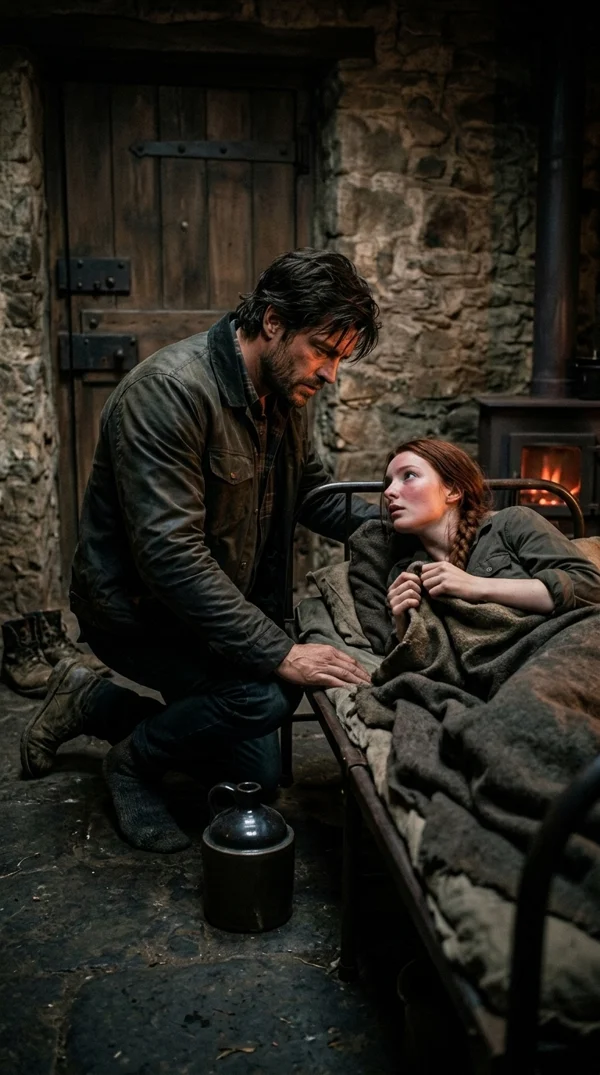
“A bed’s what the yard’s had.” He looked at Bagby. “Bottom rate, on trial, the kennels, the season. In my room, where I can smell her.”
Bagby wrote it, four strokes of the pen, and blotted it without lifting her eyes. Down the bench Nissa finally put her hand up and touched her lips, and I could not tell whether it was sorry or whether it was good, she’s had the worst of it.
Bagby shut the ledger of us. “Right. Get your things.”
“In the house,” Hew said. “Or in the sheds, because a hand sleeps over the—”
The man did not turn round. “In my room.”
What did you think?