What a Smell Is Worth, chapter 3 of The Omega Nobody Claimed
Sib came at nine with the clinic bag and a plate of eggs, shut the door behind her and stood looking at the bed.
The knot had gone at two in the morning and again at six. There was a wet patch and a blanket half off, and my hair was stuck damply to my neck. Levi was not in the room. There was a jug of water on the sill and the sheet had been pulled up over me, which was the only thing he had done before he left.
“Drink.”
“I’m all right.”
“Drink, and then put this on and stand up and turn round.”
I just stared at her. The this was a clean shift out of the box. She looked over my back and my wrists and the inside of my knees, and asked did it feel like a good heat or a bad one. I said a good one. She said then it was a good one, and why was I crying? Then the eggs came up, and she had the bucket under me before they were all the way out.
“Heats do it.” Sib held the bucket and my braid both. “It’s the drop. Four days of that and a person will cry at a bird and be sick on a clean plate.”
“When does the drop stop?”
“Two days. Three.” She put the plate firmly out of reach, sat on the bed’s edge and shook two pills out of a bottle into her palm.
“Suppressant?”
“Not now. You’re off the peak. Two days and then these if you want them for the sheds, but they’ll put you crooked for the next one.”
“How crooked?”
“Eleven days early isn’t crooked, it’s early. Crooked is when you’ve been on them a year and you come on at a bus stop.” She tipped the pills back. “You’ll want to know the other thing and you won’t ask it, so… There’s no bite on you. A knot and no bite. In a yard, that’s a promise. In a book, it’s nothing.”
Of course I’d known it. What else had my hand been doing at my neck all night? Twice it had gone up to my own nape, and the skin there was whole and unbroken under my fingers.
“What does he say it is?”
“Nobody’s asked him yet.” Sib stood up. “Wash at the trough and not in the sink — the sink’s for the kitchen. Nine-thirty and Orpha wants you, and if you fall over she’ll be all right about it, though she’ll not say so.”
The yard knew. Of course the yard knew; the yard had known by eight.
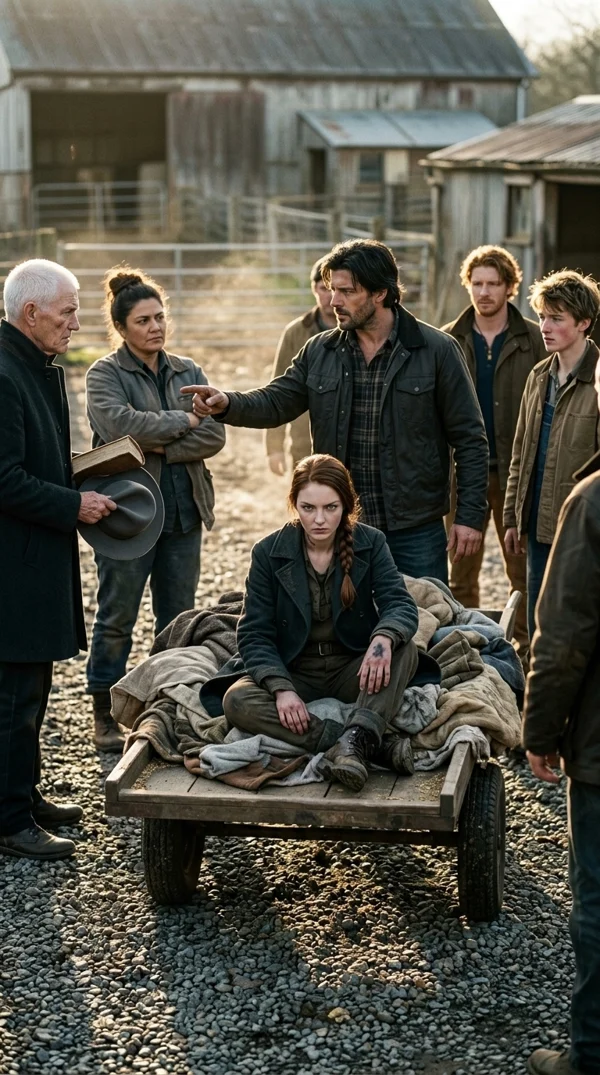
The laughing was fond, and being the reason a yard is fond is a worse place than being the reason it is sour. Miz Pirtle from the bottom row of the sheds came out with her fists on her hips. “Well, there she is! The smell girl, and no mark on her.” The whole trough turned round.
Orpha put me on light work. Coll did the heavy, and would not be thanked for it. “Don’t!” He went red up his throat and walked off with the buckets.
At ten Hew Kettridge came up the yard in his truck and stood squarely in the kitchen door of the old house. He did not come in.
“Here’s the position. There’s a heat and there’s a knot and there’s no claim, and by the pack’s book she’s a hire with a wet patch.”
The kitchen had four women in it, a stove, and a bowl of beans on the table. The women all found something to do with their hands, and my face went hot to the roots of my hair. A hire with a wet patch. Was that what the county was going to call me now, at the dock and the feed store and every damn table on the mountain?
“Now, I’ve no objection,” Hew went on, with his eyes on me and not the women. “Only let’s not call a thing by the wrong name. She came up here on a trial at the bottom rate and she’s been here a day and a half. A borrowed omega is a borrowed omega. She’s had a heat, not a claim.”
“She’s not borrowed.” Orpha did not turn from the stove. “She’s hired. There’s a difference and it’s two hundred a season.”
“There’s a difference and it’s the same difference. Hired’s still somebody else’s.”
Nobody argued. Why would they, when he was right? He got back in his truck and went off quietly, and the beans went on being stirred. After a while a woman called Miz Sparr spoke to nobody. She was Orpha’s aunt, it turned out; there were three Sparrs on the yard, and it was a mistake to have missed it.
“Well… it’s a start.”
A start. Well, fuck. I stood in the kitchen door with the smell of beans on me and understood exactly what a start was worth. Ninety a week to the home and eleven a day on the yard book. A knot in me and no mark on me. The word for that in the county was a start.
I had had four starts already. Four placements in four years, since I was fourteen and old enough to be hired out as a hand — shed and farm work only, because the home lends no omega to a house before eighteen. Two seasons at a hog farm over at Rope Creek. One at a yard that bred curs. One winter in a kennel room at Sourwood with my mother’s old bed in it. Returned from three, and the reasons all in Bagby’s book in Bagby’s hand: answers back. Keeps a book. Unsettled the yard.
A kennel woman put it to me once, the first week of the first placement: You’re a nose. Don’t get above it.
The trough at noon was the best lesson I had had in a year, and it cost me nothing but standing still.
Eleven wolves in a working yard is eleven base notes in a bucket of water, and they only come apart for a nose that takes its time. A nose that has been told all its life it is a fuss can start to believe it. So I stood at the spigot with the hose in my hand and did them one at a time, properly, the way my mother did. A full breath in through the mouth, then the smell taken slowly on the way out through the nose, so you get the shape of it and not the noise of it.
Pirtle was cut grass and cold iron and a chew. The two Sparr boys were the same note as each other, which is a family thing and no use to anybody. Orpha was feed sack and lime and, under it, a green note that was either temper or the cut stems off Sib’s hands. I put it down as temper and did not write it. Coll was eighteen and nervous and smelled of the soap the home issues. It was the same soap I had on my own skin, and the first thing in two days that smelled of home. Home. God help me, was that what I called Pale Street now?
Nothing on the yard was really hot. Not one of them had a whetstone on him, or an old gate.
Four months earlier I could have named the man who did. He was in the ground at the top of the fire road.
Bagby’s contract had a line under the wages in her own hand. I had read it in the truck and had not forgotten it.
Returnable: fourteen days’ notice either side. The home reviews the placement at two weeks.
Two weeks. Just two. It had been put there by a woman who has never once in her life run a risk she could write out of. It sat on the same sheet as my name. The two weeks ran out on the fifth of October, with a review at the home’s board and a form to fill in at the end of it.
Fourteen days of a season is not a season. It is a look at a girl, and what does a girl do with a look, except stand still for it?
That afternoon I sat on the step of the whelping house with the bank book open on my knees and read the last page of my mother’s entries.
She was twenty-nine when she died. She was on suppressants most of the year and she worked heat rooms in three counties. She died in a kennel room at a place off the Sourwood road, with the boiler going and the dogs barking, and I was six and asleep in the same bed. By the time anybody came in the morning, the sheet under her head was black.
A bleed, the doctor said. It happens. Does it? Does it just fucking happen, to a woman nobody in three counties is paying to watch?
Her last entry was four days before. Six pups, four live. Bitch good. Cold coming.
Her whole last page ran thirty-one words, and twenty-eight of them were about dogs. I read it with my thumb on the line, my eyes stinging and my breath held, the way you hold it for a pup that might not live.
So there is what a smell is worth. A woman with a good nose and a bad line on her can go her whole life in other people’s yards and be buried out of the county’s purse. The only thing that ever stood up for her was a page with a date on it.
I ruled the top line of the next page that night, in the room over the whelping house. I wrote the day before’s date, because that was the day it belonged to.
21 Sept. Warden Hollow. Then I stopped, because the next thing to write was a decision.
The easy entry was the yard’s story — dogs, water, the heat. The useful entry was the one that would be checked against me. At the trough at four the day before, the Alpha had come down off the porch to lift a feed sack out of Coll’s hands. At two feet the smell of him was banked fire and wet coat and, under it, the old iron off a farm gate. The iron had been plainly hotter at four than it was at eight.
Not whetstone. Not yet. But hotter.
I wrote it. Then I wrote the wind, because a nose without a wind is a guess, and the wind was southwest and steady.
Iron hotter than morning. SW, steady. Nothing under it yet.
Ten words, and the winter in them. I shut the book, pushed it under the mattress and just went down to the shed at dark.
Levi came to the door of the room over the whelping house at nine that night with two mugs, and stood outside it.
“You’re up here.”
“There’s a room.”
“There is.” His eyes went past me to it: a bed, a chair, a nail with a coat on it. “It’s over the whelping house.”
“So nobody else has to have it.” I said it to his mouth, because I could not hold his eyes, and his lips moved like he was trying not to laugh.
“It’s over the whelping house because the man who had it before slept over the whelping house.” He held a mug out. “That’s Otha’s room. That’s the hunt master’s room. You’ve been put in the hunt master’s room, and Rufe’s got the cottage at the bottom gate.”
“I know.”
“You do.”
“I read the yard book. The rooms are on the back page with the wages.”
He stood in the door for a minute and then laughed, low in his chest, and it was the second time and better than the first.
“Give me the entry.”
“Which entry?”
“The one you wrote tonight.”
“How do you know I wrote one?”
“Because you’ve ink on you and there’s no paper in that room.” He tipped his chin lazily at my hand. “The side of it. It’s fresh.”
I got the book out and turned it round and held it up. He read it in the light of the door, and he did not take it off me.
“Nothing under it yet.”
“Nothing under it yet.”
His mouth went flat. He read the page a while longer, slowly, the way Hew had read the first one at Pale Street. Did he know what he was reading? His eyes did not give me a thing. Then he gave me the mug and took his own off the step and went down the flags. At the corner of the shed he stopped, and did not turn.
“Hotter at four than at eight.” He said it like a man checking the time.
“Hotter at four than at eight.”
“Right…”
He went. The smell of him stayed on the step, banked fire and the gate, and I stood in the door with the mug going cold in my hand. What the hell had I just done?
He had read his own iron off my page.
What did you think?