Something Old, chapter 1 of The Truce Bride
I married Declan Mallory at four o’clock on a Saturday, in a church full of people who had spent five years trying to kill each other.
St. Brendan’s had never been so well attended. The Bellandis took the left side of the aisle and the Mallorys took the right, and both sides kept their coats on, which in October in Ashport could have meant the heating. It didn’t. Father Keane had asked for the guns to be left in the cars. I knew for a fact that my uncle Sal had left one in the car, because he’d shown it to me in the parking lot as a kind of comfort.
“Anything happens,” he said, “you get down.”
“Anything happens at my wedding,” I said, “I’m suing the caterer.”
I walked up the aisle on my mother’s arm, because my father was three years dead and my uncle was needed on the end of the pew where he could see the doors. The dress was my grandmother’s, let out and taken in and let out again, ivory gone the color of milky coffee. My cousin Frankie, my maid of honor, had pinned the veil on me in the vestry with a mouthful of bobby pins and said, around them, “If he’s mean to you, I’ll put laxatives in his cannoli.”
“He’s not going to be mean to me. He’s not going to be anything to me. It’s a contract.”
“Everything’s a contract with you.”
“Everything is a contract, Frankie. Most people just don’t read them.”
I had read mine. I had written mine. It was eleven pages long, and I had drafted it at my kitchen table over three nights with a box of wine and a highlighter. Separate bedrooms. My job, my apartment lease and my own bank account. A divorce, uncontested, after one year, with the terminal deal untouched by it. Clause four, the one my uncle had fought me on and lost: as the Bellandi family’s accountant, I would audit the books of the new joint venture, both families’ contributions, every dollar in and out. Declan Mallory had insisted on that clause too, which had surprised everyone, including me.
And clause seven, which I had typed last and stared at longest: No one touches the bride without her consent.
I had not expected a Mallory to read it. When the agreement came back from their lawyer it was signed on every page in a hand like a row of fence posts, and under clause seven, in the same black ink, someone had added a line.
Anyone who does answers to me.
I’d held it up to my desk lamp and looked at it until the bulb ticked. It wasn’t a legal sentence. It wasn’t enforceable. It was, if anything, a threat in a document that was supposed to prevent them, and I had initialed it anyway, because I wanted to see what kind of man wrote that.
He was waiting at the altar now, with his back to me.
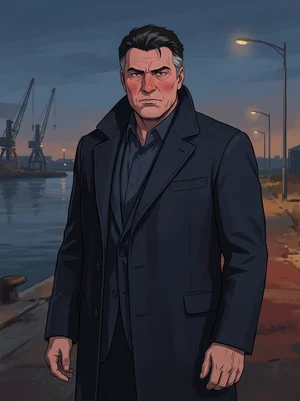
Declan Mallory was thirty-three, and taller than any of the Mallory men in the right-hand pews, and he stood the way a pillar stands. Dark suit, no flower in the lapel. His father, Cormac, was beside him as best man, which was either an honor or a precaution. Behind them sat the rest of the north shore: the port, the trucks, the unions and the men who ran them, and a cousin named Conor who was already looking at my side of the church as if pricing it.
Declan turned when I was halfway up the aisle. He looked at me once, top to bottom, the way I look at a balance sheet, and then he looked at the doors over my head, and he didn’t look at me again until Father Keane made him.
I didn’t mind. I was looking at the doors too.
We said the words. I want to be accurate: we said them well. My voice didn’t shake, and his didn’t do anything at all. When Father Keane said you may kiss the bride, there was a pause in the church like a held bid at an auction.
Declan bent his head. He stopped an inch from my mouth.
“Clause seven,” he said, too low for anyone else.
It took me a second. Then I understood that he was asking, and that he was asking in front of three hundred people who were all waiting to see if a Mallory would take what was his.
“Yes,” I said.
He kissed me the way you sign something you have read carefully. Brief, deliberate, final. His hand was at my jaw and it didn’t move. When he lifted his head, the Mallorys applauded, and the Bellandis, after a delay you could have measured, applauded too.
My grandmother, in the front pew, said loudly, “He’s tall, at least.”
The reception was at the Harbor Grand, which the Mallorys owned, which was the first concession my uncle had made and the one he complained about all night. The ballroom had a wall of windows over the black lake and two bars, one at each end, and nobody needed to be told which was whose.
“Look at them,” Frankie said, at my elbow, with a glass of something pink. “It’s a middle school dance where everybody’s killed somebody.”
“Frankie.”
“I’m saying. Your husband’s cousin has been staring at my neckline for twenty minutes, and I can’t tell if he wants to dance or have me buried.”
“Conor,” I said. “Avoid him. He wanted to be the heir.”
“How do you know that?”
“His expense reports.” I’d seen exactly two of them, during the negotiation, and they had told me everything I needed to know about Conor Mallory: he bought rounds for everybody and tipped like a man who wanted to be remembered.
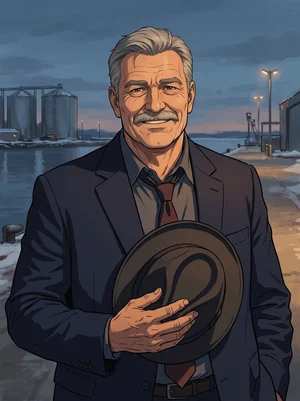
My uncle gave a toast. It went on too long and ended with “to peace, God help us,” and he drank the whole glass as if to get the taste out. Cormac Mallory gave a better one, short, about his late wife and about how she would have liked me, which was kind and also impossible to verify. Ray Doyle, Cormac’s right hand for forty years, came round the tables with his tie loosened, shaking hands on both sides of the room as if the room were one room. He had a big gray mustache and a laugh that started before the joke did.
“Mrs. Mallory,” he said to me, and kissed my cheek. “Welcome to the family. Don’t let this one scare you. I taught him to ride a bike. He cried.”
“I did not cry,” said Declan, beside me, the first full sentence he’d said since the church.
“He cried,” Ray told me. He pressed a keycard into Declan’s hand. “Top floor. I’ve had it cleared, the whole floor, no neighbors, nobody to bother you. Eddie’s on the elevator all night. You two get some sleep.”
“Thank you, Ray.”
“Least I could do.” He squeezed Declan’s shoulder, and Declan’s face changed for him. Not softer. Younger.
Then my godfather came for me.
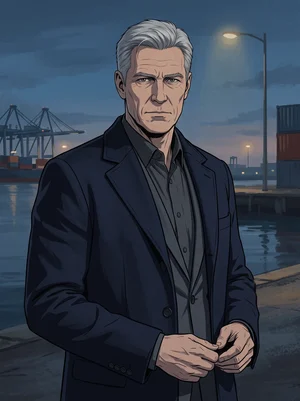
Paulie Gaeta had kept the Bellandi books since before I was born, the real ones, the ones I had never been allowed to see. He was sixty-eight and wore the same brown suit to every wedding, funeral and christening, and he smelled of bay rum and pencil shavings. He had taught me long division. He had taught me to balance a checkbook at my mother’s kitchen table when I was nine, and I had loved him for it more than I’d ever loved anyone who wasn’t my brother.
He took my hands. In one of them he pressed a long, narrow box.
“For the bride,” he said. “Something old.”
It was his fountain pen. Black lacquer, gold nib, worn pale on one side by fifty years of his thumb. I had never seen him write with anything else.
“Paulie, I can’t take this.”
“You can. You’re the one who’ll be keeping the books now.” He closed my fingers over it. His own hand was trembling, which I put down to the champagne. “Remember what I told you. Every number tells on somebody.”
“I remember.”
“Good girl.” He kissed my forehead. Then he went to the bandleader and tipped him, and I watched him count it out, a ten, a five and two ones, the way he had tipped every waiter, cab driver and altar boy for as long as I’d known him. Seventeen dollars. He said it was for luck. He said the extra two was for God.
Declan and I had one dance. It was required. He put one hand at my waist and held my right hand at the correct height, and we turned in a slow circle while three hundred people watched to see if anyone would get stabbed.
He didn’t look at me. He looked over my shoulder, at the doors, at the windows, at the bars.
“You can relax,” I said. “My family’s searched for weapons. Mostly.”
“Mostly.”
“Nonna has a knitting needle. She won’t use it unless provoked.”
That corner of his mouth again. “Why did you write clause seven?”
I hadn’t expected the question. “Because I’ve read about men like you.”
“Where?”
“Police reports. Newspapers. My uncle’s face when your name came up.” I turned with him. “Why did you add your line?”
“Because I’ve met men like me,” he said.
The song ended. He let go of me at precisely the moment it was polite to, and stepped back, and in the second before he turned away I saw him look down at my hand, the one he’d been holding, as if checking it for something.
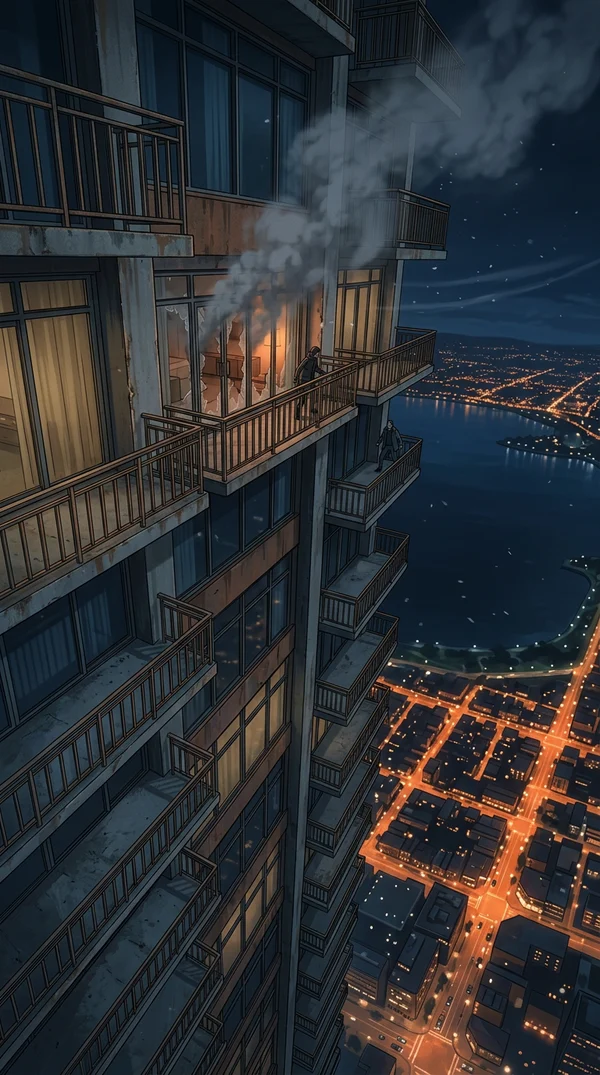
The suite was on the fourteenth floor, at the end of a long hall with nobody in it. Ray had been as good as his word. Eddie, a big quiet man in a Mallory security blazer, nodded to us at the elevator and stayed in it when the doors closed.
The suite had a sitting room and a bedroom and two balconies over the lake, and a bottle of champagne on ice on the coffee table, with two glasses and a little card propped against the bucket in a florist’s copperplate.
From both houses, with love. Drink to the peace.
“That’s ominous,” I said.
Declan was taking off his jacket. Under it he wore a shoulder holster with nothing in it, as if out of habit. He took that off too, and laid them both over a chair, and loosened his tie with one hand. He poured two glasses and held one out to me.
“To the peace,” he said.
I took the glass. I looked at him, standing in the middle of his family’s best hotel suite in his shirtsleeves, with my grandmother’s veil on the floor between us where I’d dropped it, and I thought about separate bedrooms and one year and every Bellandi who had ever stood at Nico’s grave.
He drank his glass in two swallows.
I walked to the potted fig by the window and poured mine into it.
He watched me do it. “Was that for me or for the peace?”
“Yes,” I said. “I’m taking the bedroom. Per clause one.”
“Per clause one,” he agreed, and sat down heavily on the sofa, and rubbed his eyes with the heels of his hands, and said, in a slightly different voice, “It’s warm in here.”
It was. I’d noticed it too, and put it down to the dress. I went to open the balcony door, and that was when I smelled it, sharp and chemical and wrong, and turned, and saw the gray smoke curling flat and patient under the door to the hall.
I crossed the room and put my palm to the handle.
It was hot. I pulled anyway. It turned, and the door moved an inch and stopped dead against something on the other side.
“Declan,” I said.
He was trying to stand up. He got halfway.
I went to the phone on the desk and lifted the receiver, and there was nothing in it at all. No tone. Just a silence that had been paid for.




What did you think?