Handoff, chapter 1 of The Vampire's Night Nurse
The day nurse had my name on her badge.
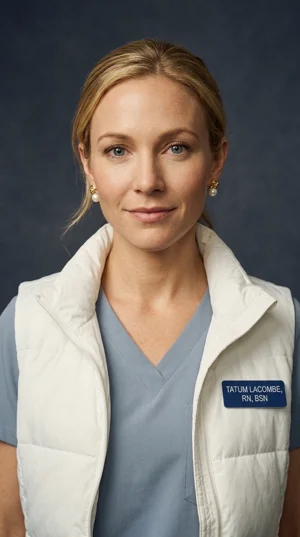
TATUM LACOMBE, RN, BSN. White letters on navy plastic, clipped to a pair of ceil-blue scrubs that fit her the way scrubs have never once in my life fit me.
Eight years ago I trained her. She was twenty-three, a new graduate on the cardiac ICU at Trinity Coastal, so scared of nights that she threw up in the staff bathroom before her first code. I held her hair. I taught her how to titrate a drip, how to talk to a family at four in the morning, and how to listen to a heart.
Two years ago she took my job. Night charge nurse. It had been mine for nine years.
Fourteen months ago she took my husband.
And then, because apparently that wasn’t enough, she took my name.
“Bernie! Oh my gosh.” She smiled at me across the front hall of the biggest house I had ever been paid to walk into. “Curtis said you’d gone to nights.”
“I’ve always worked nights.”
“No, I know, I just mean…” She tipped her head, sorry for me. “He says it suits you. Fewer people to look at you.”
I am forty-seven years old. I have done chest compressions in a hallway while a man’s wife screamed his name. I have told a thousand families the thing nobody wants to hear. I was not going to cry in a stranger’s front hall in front of Tatum Lacombe.
I held out my hand for the chart.
VASSE, AURELIEN. Date of birth 1936. Ninety years old. Dementia, end stage. Refusing all food and fluids. Hospice. Comfort care only. Do not resuscitate.
And under that, six days of Tatum’s notes, every one the same. Patient unresponsive. No change.
She had never once been in that house after dark.
Neither had I. Yet.
The Vasse house sat on the north side of Rutledge Square like a woman who had been beautiful for two hundred years and saw no reason to stop. Butter-yellow stucco, iron balconies, every shutter closed. The live oaks in the square were so heavy with moss that the streetlights came through them green. Somebody across the square already had a skeleton in a rocking chair on the porch, and it wasn’t even the second of October.
I’d parked my old Honda behind a silver Mercedes and a white Lexus with a Trinity Coastal parking sticker in the windshield. I knew the Lexus. I’d made the payments on it for three years before the divorce.
“Mrs. Lacombe?”
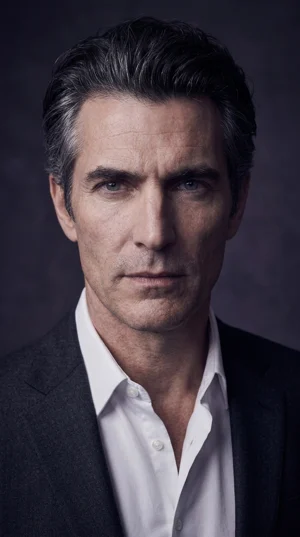
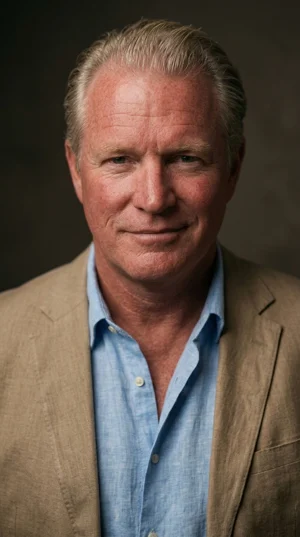
A man came out of the parlor with a drink in his hand. Mid-fifties, linen jacket, loafers without socks, a tan that was mostly golf and a voice like a bourbon commercial. He looked from me to Tatum and back.
“I’m told there are two of you,” he said, amused.
“Bernie,” I said. “Nights.”
“Thornton Vasse. I’m his great-nephew. I hold his powers of attorney.” He didn’t offer his hand. His eyes went over my navy scrubs and my clogs and the old canvas bag on my shoulder, and filed me. “I’ll tell you what I told the agency. My uncle has made his wishes very clear. No heroics. Nothing by mouth. He wants to go, he wants to go at home, and this family is honoring that.”
“Yes, sir.”
“We’d be grateful for discretion. It’s an old family. People talk.”
“I don’t,” I said.
He smiled like he’d heard that before and been disappointed. “Tatum will get you settled.”
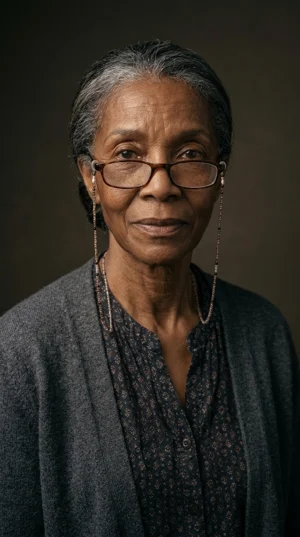
On the curve of the staircase above us, a tall woman of about seventy stood with one hand on the banister, watching me. Reading glasses on a beaded chain. A gray cardigan in October heat. Hands that kept smoothing the rail as if it had a wrinkle in it.
I had the feeling I’d met her. You get that in hospice. After three years every tall woman with reading glasses on a chain looks like somebody’s sister.
“That’s Ozella,” Tatum said, already on the stairs. “Housekeeper. She’s been here since, like, the Civil War. Don’t let her give you coffee, it’s tar.”
Ozella Haygood looked at Tatum the way you look at a stain. Then she looked at me, a long time, and nodded once, as if I’d arrived on time for something.
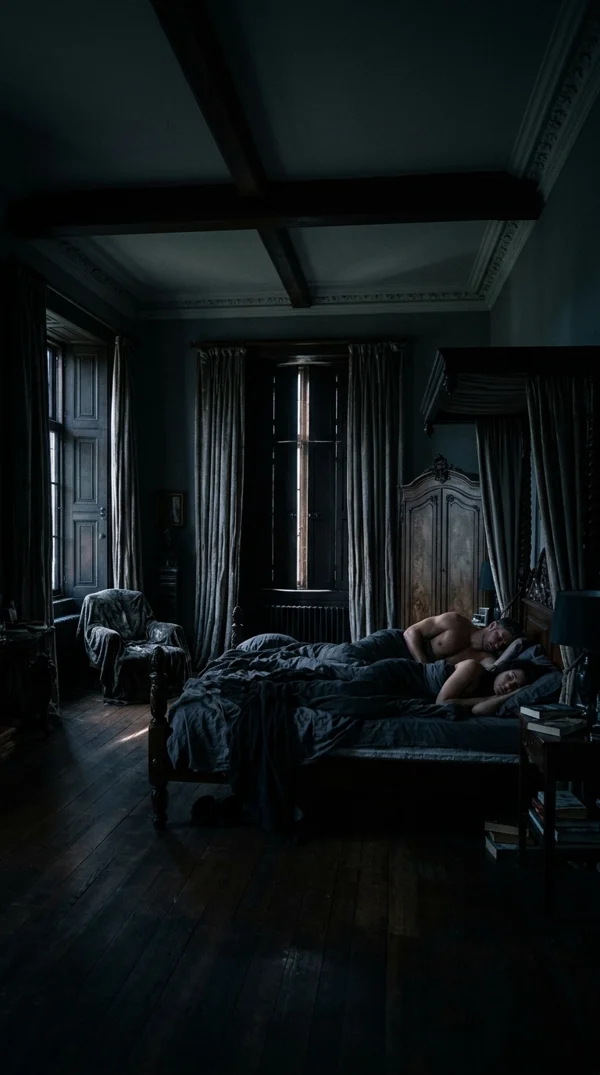
His room was on the second floor at the back of the house, facing north, and it was cold.
Not air-conditioning cold. The whole house was close and damp with the last of a Georgia September. This was something else. Walking into that room was like walking into a church in January: stone and old beeswax and a stillness that went all the way up to the ceiling. The interior shutters were bolted. Velvet drapes hung over them. The only light was a lamp on the dresser with a silk shade gone brown with age.
There was no hospital bed.
“The family won’t let us bring one in,” Tatum said. “It’s a whole thing. So you can’t raise him, you just have to, like, haul.”
He was in a four-poster the size of my kitchen, under a quilt, and there was almost nothing of him.
I’ve seen a lot of dying. You learn the look. The skin goes thin and the bones come up underneath it like the frame of a house when the plaster falls. His was the worst I had ever seen on a living man. White hair, long, fanned on the pillow. A face like paper laid over a carving. His hands lay on the quilt like two bundles of kindling, and somebody had wrapped a strip of white tape around the gold ring on his little finger so it wouldn’t slide off.
That somebody had been kind. I didn’t think it was Tatum.
“Okay, so.” She read from her phone, not the chart. “Ninety-year-old male, end-stage dementia, he’s basically gone. Hasn’t opened his eyes once on my shift. Nothing by mouth, family declined IV fluids. Mouth care, turn him every two, whatever. Don’t bother with vitals. The family doesn’t want them, it upsets the nephew.”
“Pulse?”
“Unable to obtain. He’s like ice. Honestly, I think his heart’s just…” She made a little fluttering gesture with her fingers, a bird leaving.
I looked at her.
Dying hearts are shy, I’d told her. Eight years ago, on the unit, at three in the morning, standing over a man in bed nine with my hand over hers on the stethoscope bell. They make you wait. You listen a whole minute. Then you listen again.
She’d written it on an index card. I’d seen it taped inside her locker for a year.
“Did you listen a full minute?” I asked.
Tatum’s smile went thin. “Bernie. He’s on hospice. Nobody cares about his heart rate.”
“I do.”
“Oh my God.” She laughed, and then she did the thing she used to do on the unit when she wanted somebody to like her: she lowered her voice and leaned in, like we were friends. “Look. I know this is weird. Okay? It’s weird for me too. But Curtis says you always got too attached. To patients. He says it’s why you…”
She stopped.
Why you couldn’t hack charge. That was the rest of it. I’d heard him say it, on the phone to his brother, the week I left the unit.
Here is what happened, since you’re wondering, because everybody wonders.
For our twentieth anniversary Curtis was at a cardiology meeting in Napa. He sent me a pair of pearl earrings from Coleman’s on Broughton Street, in the little gray box, with a card that said Next year, babe, I promise. Four months later Tatum Lacombe, who was then Tatum Kessinger, came on shift wearing the same earrings. Same pearls. Same little gold knot. And because I am my mother’s daughter and was raised to say what I see, I said, in the break room, in front of two nurses and a respiratory therapist: “Those look familiar. Did he give you the receipt, or just the box?”
She cried. She filed a complaint. Hostile work environment. Curtis was medical director of the unit by then. He recused himself in writing and then made three phone calls, and for the good of the unit I was reassigned to days on a medical floor with a forty-minute commute to the far parking deck.
I quit. Tatum got charge. Curtis got the house in Ardsley Park, the Lexus and the life we’d built for twenty-two years. They got married on a dock at Sea Island and posted the pictures, and I learned a valuable lesson about making scenes.
You keep your head down. You do your job. You go home.
“Okay,” I said to Tatum. “Thank you for report.”
She blinked. She’d wanted a fight. She’d been ready for one since she saw my car.
I put my bag on the chair by the bed and sat down on the edge of the mattress. I always do. The quilt was cold through my scrubs. I took his hand. It weighed nothing. It was colder than any hand I had ever held, and I have held a great many hands in the hour after.
But it wasn’t stiff. And it wasn’t the waxy, settled cold of the dead. It was the cold of something that had been left outside.
I leaned down so my mouth was near his ear.
“Mr. Vasse,” I said. “I’m Bernie. I’m your night nurse. I’ll be here till morning.”
I say it to every one of them. All three years. It’s a promise and I keep it, and I’ve never once had a patient argue.
Behind me, Tatum laughed. “He can’t hear you.”
“Hearing’s the last thing to go.”
“That’s, like, a hospice myth.”
“It’s on the poster in your break room,” I said. “I put it there.”
She went to get her bag.
I looked at the clock on the dresser. It was a brass carriage clock, old enough to have its own opinions, and its hands said six minutes past seven. Somewhere beyond the shutters and the velvet and the moss, the sun was going down over the Savannah River. I’d driven across the Truman Parkway into it, the whole sky the color of an orange left in a hot car.
Seven minutes past.
Tatum came back with her keys, her water bottle and the white puffer vest she wore in all weathers, and stood in the doorway checking her phone.
Seven minutes past seven. Then the minute hand moved.
The room changed.
I don’t know how else to tell it. The cold didn’t go anywhere, but it turned, the way the tide turns: nothing you can see, and then everything is going the other way. The old house made a sound around us, a long settling creak from the floorboards to the roof, like a big animal lying down. The lamp’s silk shade stirred, though there was no air.
The hand in mine closed.
It closed on my wrist, slowly, and held on, and the cold of it went up my arm like the bell of a stethoscope left all night in a car in January. Not a grab. A grip. There was strength in it that there was no possible way a man that size had left in him.
My heart did something I’d have charted.
“Bernie?” Tatum looked up from her phone. “Why are you…”
The man in the bed opened his eyes.
They were gray. Not the clouded gray of the very old, but a clear, pale, terrible gray, like rain on slate, like the river in February. They opened and found the ceiling and then moved, very slowly, to the doorway where Tatum stood with her mouth open and her keys in her hand.
He looked at her. He looked at the badge on her pocket, the name on it, for as long as it takes to read a name twice.
Then he looked past her, at me, and his grip on my wrist tightened until I felt my own pulse knock against his fingers.
His voice was dry as paper and as old as the house, and there was France in it, somewhere very far back.
“Not her,” he said. “You. Only you.”
What did you think?