A Full Minute, chapter 4 of The Vampire's Night Nurse
On Sunday his hair was coming in dark at the roots.
I saw it at handoff, before Tatum had finished reading me her report off her phone. A quarter inch of iron gray at the part, under all that white, like a stain coming up through paint. His face was fuller. The bones were still there but they’d gone back under the skin where bones belong, and his hands on the quilt looked like hands again, long-fingered, with the gold ring sitting snug on the little finger and the tape gone.
Somebody had taken the tape off. It hadn’t been me.
He looked seventy. A sick seventy. But seventy is not ninety, and I’ve spent my whole working life learning to see the difference across a room.
“Unresponsive,” Tatum read. “No change. Heart rate unable to obtain.” She’d copied it forward from Thursday. I could see the cursor in her app blinking at the end of yesterday’s sentence.
“No change,” I said.
“Nope.” She put her phone in her vest. Then she looked at the bed, and kept looking, and her mouth pinched. “Does he look… I don’t know. Different, to you?”
“He looks rested.”
“He looks younger.” She laughed, too high. “That’s crazy, right? I’m so tired. Curtis is taking me to Charleston Thursday for my birthday and I swear I’m going to sleep the whole time.” She glanced at me sideways. “He said to tell you, by the way, the Lexus needs a transmission. In case you ever want to feel better about anything.”
I’d been married to that man for twenty-two years. He’d never fixed anything in our house himself, but he could always find the thing that was broken in you and hand it back with a bow on it.
I got the Doppler out of my bag.
“Come here,” I said.
“Bernie, I’m off at seven.”
“It’s six fifty-six. Come here.”
Something in my voice must have reached back eight years, because she came. I put gel on the probe and put it in her hand and put her hand on his chest, left of the breastbone, the way I’d done on bed nine at three in the morning when she was twenty-three and terrified.
“Dying hearts are shy,” I said. “Listen a whole minute. Then listen again.”
She listened. I watched her watch the clock on the dresser. I watched her get to thirty seconds and decide.
“There’s nothing.” She pulled her hand back. “Bernie. There’s nothing. Okay? I don’t know what you think you’re…”
“Thirty seconds.”
“He’s on hospice!”
“Hearts don’t know that.”
She put the Doppler on the quilt like it had bitten her and walked out. I heard her on the stairs, and the front door, and her car.
I picked up the probe and put it back where it had been and waited.
At forty-one seconds: whoosh.
By day, under, he ran about two beats a minute. You could miss one in thirty seconds. You could miss a man’s whole life.
At sunset he woke as he always did: the long creak of the house first, and then his eyes.
“You came back,” he said.
“I work Thursday through Sunday.”
“You came back,” he said again, as if I hadn’t spoken. Then, “I want to stand up.”
So I got my gait belt out of my bag, the wide canvas one with the steel buckle, and cinched it around his waist over his nightshirt, and got his feet over the side of that enormous bed and into a pair of old leather slippers Ozella had left by the nightstand. I’ve stood up a thousand patients. You count, you rock, you go on three.
He went on two. He was impatient.
He stood. He swayed and I held the belt and took his weight, and there was so much less of it than there should have been for a man that tall, and he put one long hand on my shoulder and stood there breathing, which he did now, I’d noticed, more than he used to. Not because he needed to. I think because he’d started to like it.
“The window,” he said.
We walked it. Twenty feet, with standby assist. I’d chart that later, and I’d chart it with pleasure.
I let go of the belt long enough to unbolt one shutter and open it a few inches. There was no glass behind the velvet, just the old wavy panes, and the night outside, and Rutledge Square under the oaks with the moss hanging still in the heat, and the streetlights green.
At nine o’clock a trolley came around the square. Open sides, a striped awning, twenty tourists in shorts holding go-cups, and a woman in a black cape with a microphone.
“And on your left,” she said, her voice coming up through the oaks, “the Vasse house, one of the most haunted homes in Savannah. In 1821 a young bride, jilted on her wedding day, hanged herself from that curving staircase. And to this day, folks, the master of the house has been seen standing at that very window, looking for her…”
Twenty phones came up. Twenty little lights pointed at us.
I stepped back. He didn’t.
“Nobody ever hanged herself on my stairs,” he said mildly. “The house was built by a cotton factor named Bascom, who drank. His widow sold it to me in 1893. In 1907 the cook’s boy fell off the roof chasing a cat and broke his arm and I set it in that kitchen. That’s the whole of the tragedy.” He watched the trolley pull away. “They come every night. They’ve been telling lies about this house since before your grandmother was born. I’ve grown fond of them.”
“You’ve been in this house a hundred and thirty-three years.”
“Give or take.”
“And nobody noticed.”
“I die every forty years or so.” He said it like a man mentioning he changes his oil. “A small notice in the paper. My nephew Aurelien inherits, a quiet man, never goes out. Mr. Ledbetter’s firm takes care of the paperwork. They’ve done it for three generations of Ledbetters.”
“That’s…” I thought about death certificates. I thought about everything that had to go right, and how many signatures, and how much money. “That’s a lot of paperwork.”
“You have no idea.” His mouth moved. “Do you know, I think that’s the worst part of being what I am. Not the sun. The forms.”
I laughed. I hadn’t meant to. It came out of me like something that had been stuck.
He turned his head and looked at me. The streetlight came through the gap in the shutter and lay across his face, and in it his eyes flashed silver and went gray again.
“Why nights?” he asked. “You could work days. You’re good enough to work anywhere.”
I told him the truth, because it was three in the morning in my body even if it was nine on the clock. My mother, Leola, died in hospice three years ago, at home in Pooler, of the cancer that had been in her pancreas for a year without telling anybody. Curtis was at a conference in Scottsdale. I’d been a nurse for twenty-one years by then and I’d never been the family, and I didn’t know how to do it. A night nurse came. A heavyset woman named Glory with reading glasses on her head and a thermos. She sat with me in the kitchen at two in the morning and told me what was happening and what would happen next, and at four she woke me up and said, It’s time, baby, come hold her hand, and I got there in time.
“I started picking up hospice nights two months later,” I said. “Per diem, on my nights off the unit. When I quit the unit, I went full-time. I thought, somebody ought to do that for people. Somebody ought to stay.”
He didn’t say anything for a while. Then he said, “And who stays for you?”
I didn’t have an answer. I got him back to bed.
At one in the morning I charted: Alert and oriented times four. Ambulated twenty feet with gait belt and standby assist, steady. Skin warm to touch. And at seven I called the hospice case manager’s line and left a message. This is Bernie Lacombe, night private-duty nurse for Aurelien Vasse. I’m requesting a review of his hospice eligibility. Patient’s condition has significantly improved. He’s only awake at night, so I’m requesting the visit be done after sunset. Please call me back.
Then I drove home and slept like the dead, and dreamed about nothing at all.
Monday was my night off.
At eight-thirty I was standing in my bedroom in front of the closet with my hair still damp, looking at a green dress.
It was a wrap dress. Deep green, the color of the moss in the square after rain, soft jersey that tied at the waist. I’d bought it two and a half years ago for our twentieth-anniversary dinner, at a place on River Street with white tablecloths that I’d booked four months ahead. Curtis cancelled it from Napa. The dress still had the tag on, in the back of the closet, behind the scrubs, the way you keep the good china in a box in the attic for a life you’re not going to have.
I took the tag off with my teeth.
I’ve always made my decisions that way. Not slowly. You’d think a nurse would be careful, and I am, with other people. With myself, I do it like pulling off tape. Fast, and don’t look.
At nine I parked on Rutledge Square behind the oaks. The trolley was just pulling away. I walked up the steps in the green dress and a pair of heels I’d had to dig out from under the bed, and I rang the bell, and my heart was going so hard I could feel it in my teeth.
Ozella opened the door.
She looked at the dress. She looked at the heels. She looked at my face.
Then something happened at the corner of her mouth that, on any other woman, I’d have called a smile.
“He’s up,” she said, and stood aside.
He was in the chair by the fire.
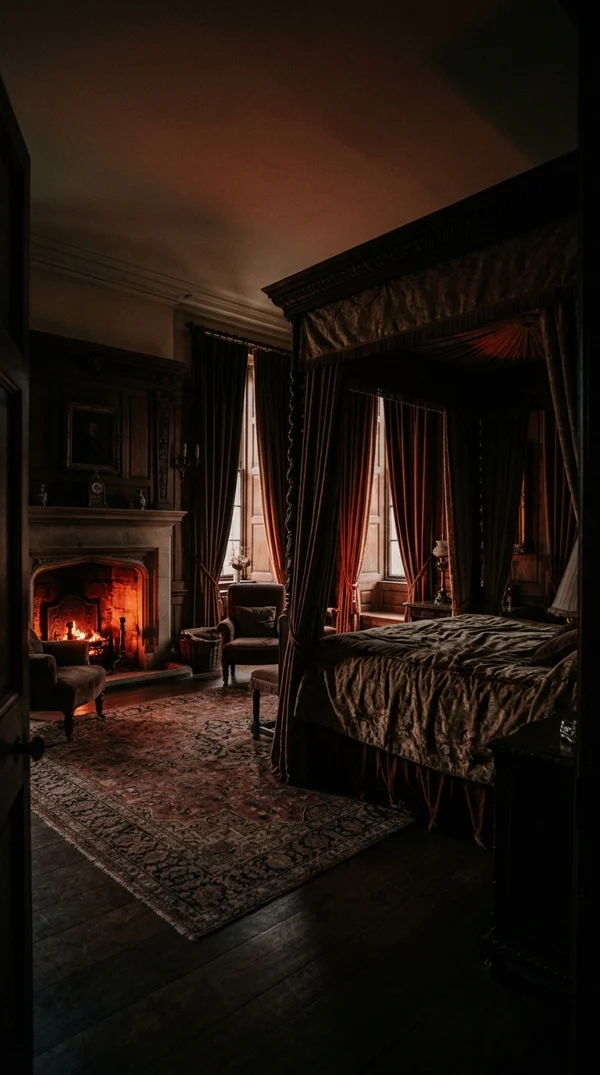
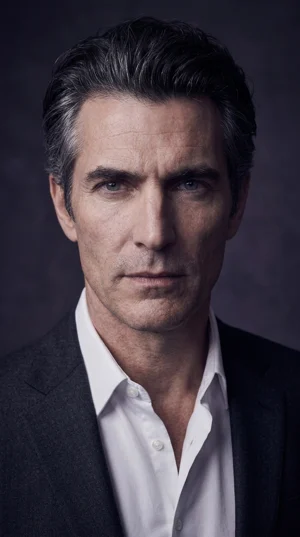
Ozella had lit it, and the room was warm for the first time since I’d known it, gold and shifting, the velvet drapes red in the light instead of brown. He wasn’t in his nightshirt. He was in a white shirt open at the throat and dark trousers and a waistcoat of some old, deep-blue wool, and his hair was brushed back from his face, more iron in it than white now, and he looked sixty. A lean, hard sixty. A man who’d been ill and had decided to stop.
That cup had kept working all week, the way a good antibiotic keeps working after the last dose.
He stood up when I came in. On his own. He didn’t hold on to anything.
For a while neither of us said a word. He just looked.
“Are you here as my nurse?” he asked.
“No.”
“Then what do you want, Berenice?”
I opened my mouth and nothing came out.
You have to understand: nobody had asked me that in years. Curtis never asked. He told me where we were going to dinner and what we were doing for Christmas and when he’d be home, which was late. Patients don’t ask, they need. Families need. The agency needs a body on Thursday through Sunday. I was very, very good at knowing what everybody needed.
I didn’t know how to say what I wanted out loud. I’d never had the practice.
He waited. He didn’t come closer.
“Ask me for it,” he said quietly. “I won’t guess. I’ve had centuries of guessing what people wanted from me, and I was wrong nearly every time.”
The fire popped. Out in the square somebody’s dog barked twice and stopped.
“I want you,” I said. My voice shook. I made it stop shaking. “I want you to take this dress off me.”
He crossed the room. Not fast. One step, and then another, and then he was in front of me and the fire was behind him and I had to tip my head back to see his face. He was taller than I’d understood, lying down. He smelled of woodsmoke now, and under it the cold stone and beeswax of him, and he lifted his hand and laid it at my waist, where the tie of the green dress was knotted.
His fingers found the end of it.
And stopped.
“Say it, Berenice.”
“Yes.”
The tie came loose.
What did you think?