Ten Candles, chapter 1 of The Wife He Signed Away
He waited until the cake was on the table.
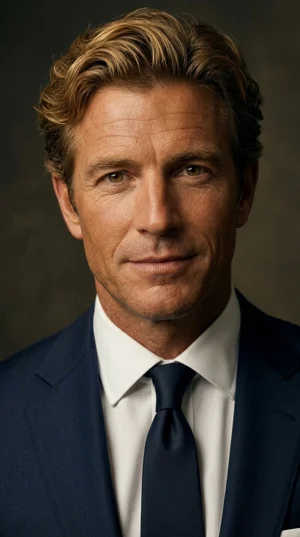
That’s the part I still can’t forgive. Not the envelope. Not the pen he slid across the tablecloth like a tip. He let my pastry cook set down the cake she’d stayed late to make, and he let her light all ten candles, and he smiled at her and said, “Beautiful, Ana, thank you,” and waited until she’d gone back through the kitchen door.
Then he put the envelope beside my plate.
“Happy anniversary, Jules.”
It was cream, heavy, the good stationery from his office. I thought it was a card. For one stupid second I thought it was a trip.
“Divorce papers,” Trent said. “I wanted to do this properly. In person.”
The candles kept burning. Ten little flames, one for every year.
“I’m marrying Brielle,” he said. “I know how that sounds. But she wants a family, Jules. She wants children. And I’m finally ready.”
Finally ready.
For ten years I had asked, and for ten years he’d said not yet. Not while the company was growing. Not while the hotels were being renovated. Not yet, babe, not yet. I was thirty-eight years old and I’d stopped asking two birthdays ago.
Brielle was twenty-eight. She was his assistant. She was sitting outside my restaurant, right now, in the back of his car, with the dome light on so she could see her phone.
“The settlement’s generous,” Trent said. “Two million, clean. You sign tonight and nobody has to get ugly.”
He uncapped the pen for me. He’d always been a gentleman about small things.
And God help me, I picked it up.
You should know where we were, because it matters.
We were in Verbena. My restaurant. Forty seats on Jane Street in the West Village, nine years old, two stars from the critics and a line out the door on Fridays that I’d built one plate at a time. We closed to the public on our anniversary every year. That was my idea. I cooked for him, and the staff stayed to eat what was left, and we all got a little drunk on the end of a case of Barolo.
This year I’d made the burnt-honey chicken, my grandmother’s, the dish people flew in from Chicago to eat. I’d made it for him at the stove myself, with Renzo watching from the pass, because Trent liked to say I’d cooked my way into his heart and I’d liked to believe him.
The chicken was still on the table. He’d eaten all of it.
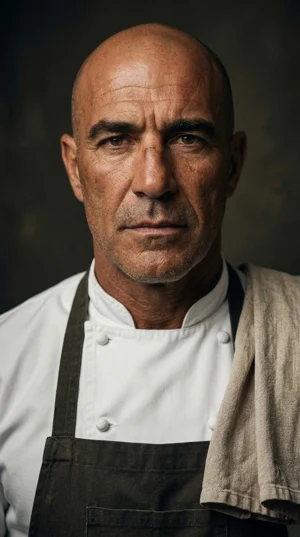
Renzo was still at the pass. I could see him through the round window in the kitchen door, his white jacket, his big shaved head, the towel over his shoulder going very still.
Behind the bar, my bartender had stopped polishing a glass.
I was being divorced in front of my own staff, and I was holding the pen.
“Read it if you want,” Trent said. He leaned back in the banquette I’d had reupholstered in green velvet last spring. “Carl drafted it. My new guy. It’s all very standard.”
I turned the pages.
I want to tell you I read them. I didn’t. The words went past like traffic. Petitioner. Respondent. Irretrievable breakdown. A paragraph about the apartment on Central Park West, which belonged to the company and so had never belonged to me. A paragraph about the two million, payable in thirty days. A paragraph headed Intellectual Property, which assigned “the name Verbena, its menus, recipes and associated goodwill” to Wolcott Hotels Group.
I stopped on that one.
“You’re taking my restaurant.”
“I’m taking the brand,” he said, patiently, the way he spoke to waiters. “You keep your talent, obviously. Nobody can take that. But the building’s mine, Jules. It always was. The lease ends with the marriage. And the name has real value for the Park Avenue relaunch. We’re building a restaurant concept in the flagship.”
“With my chicken.”
“With a chicken.” He smiled. “Brielle has some fresh ideas.”
Through the front window I could see her, a pale face in the glow of her phone. She had a blowout that cost more than my line cooks made in a week. She’d eaten here a dozen times on his company card, always the chicken, always asking for extra sauce, always sending back the bread because she didn’t do carbs.
Something hot and steady climbed up my throat. It wasn’t tears. I’d have died before I cried in that room.
It was pride.
I knew exactly what he wanted. He wanted me to make a scene. Then later, at the Wolcott SoHo, on the rooftop, he could tell her how hard it had been, how I’d screamed, how I’d thrown the cake. He’d look tired and brave. She’d stroke his hair.
I wasn’t going to give him that. If he wanted me gone, I would go so cleanly he’d wonder if I’d ever been there at all. I would sign his papers with his pen and I would hand them back across the table and I would blow out my own candles.
Two million dollars. I could open somewhere else. I’d started with twelve stools and a hot plate once. I could do it again.
I found the flag on the last page. Sign here.
The pen was heavy. Expensive. The kind he gave clients.
I put the nib to the paper.
The front door opened.
Cold March air came in, and rain, and a man in a long dark coat who didn’t stop to shake it off. He didn’t look at the bartender or the empty tables or the candles. He looked at me. Only at me, the whole way across the room, and I knew who he was before I’d lifted my head because there was only one person on earth who walked into a room like he’d already bought it.
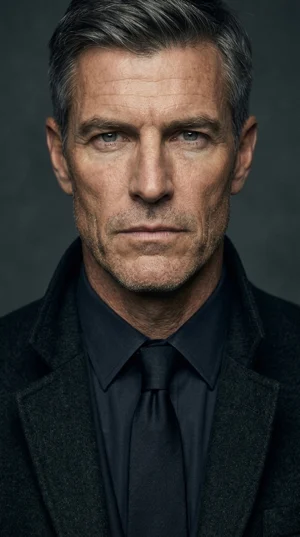
Gideon Wolcott. Trent’s older brother.
I’d seen him perhaps a dozen times in ten years. Christmas at their mother’s, where he arrived late and left early. Their father’s funeral, where he stood at the back. He was forty-six, taller than Trent and harder, gray at the temples, with a face that never seemed to need to move. He’d left the family company before I ever met Trent and built something of his own, real estate and bridges and power plants, and Trent liked to say at dinner parties that his brother was “the boring rich one”. That was a joke, because Gideon was richer. Much richer. Everyone knew it and nobody said it in front of Trent.
He had a folder under his arm. It was cream. Heavy. The good stationery.
“Gid,” Trent said. His voice went up half a note. “What the hell are you doing here?”
Gideon didn’t answer him.
He stopped beside my chair. Rain was dripping off the shoulders of his coat onto my clean floor, and I remember thinking, absurdly, that I would have to have someone mop that before service tomorrow. Then he reached down and closed his hand over mine.
Over the pen.
His hand was cold from outside and very steady. He didn’t pull. He just held my hand where it was, the nib a quarter inch above the line, until I looked up at him.
“Don’t,” he said quietly.
It was the first word he’d ever said to me in a voice that low.
“This is a private conversation,” Trent said. “Between my wife and me.”
“Your lawyer sent me a copy this afternoon.” Gideon still hadn’t looked at him. “The share clause needs my waiver of first refusal. I read it.” Now he looked. Just a glance, the way you’d look at a dog that had barked. “All of it, Trent. Which I’d bet my life you didn’t.”
Trent laughed, too loud. “Carl drafted it. It’s standard.”
“It’s very clever. Carl’s earning his money.” Gideon’s thumb moved once, slowly, over my knuckles. I don’t think he knew he did it. “And it’s the most expensive mistake you’ve ever made.”
“What are you talking about?”
Gideon slid the pen out of my fingers. He capped it. He set it down on Trent’s side of the table, next to the empty plate where the chicken had been, and he gathered up the papers, mine and the envelope and every flagged page, and put them inside his coat.
“Those are mine,” Trent said.
“They’re your proposal,” Gideon said. “She doesn’t have to accept it. And she won’t be accepting anything tonight.”
I found my voice. It came out thinner than I wanted. “Gideon. I don’t need you to…”
“I know you don’t.” He looked down at me, and something in his face did move then, very slightly, around the eyes. “Humor me. Ten minutes in the car, and then you can tell me to go to hell.”
“She’s not going anywhere with you,” Trent said. He was half out of the banquette now. “Jules. Babe. This is between us. Gid’s just…”
“Babe,” Gideon repeated softly.
Trent stopped.
There was a silence in my dining room. The candles were burning down. Wax had begun to slide onto Ana’s white icing. I looked at the cake and thought, ten years, and thought, finally ready, and thought about Brielle in the car with the dome light on, and something in me that had been holding a pen very carefully for a very long time let go of it.
I stood up.
My legs were fine. That surprised me.
Gideon took his coat off and put it around my shoulders, over my good black dress, as if it were the most natural thing in the world, as if he’d done it a thousand times. It was warm on the inside and wet on the outside and it smelled of rain and cedar and something expensive I didn’t have a name for.
I leaned over the table and blew out my own candles. All ten. One breath.
Behind the round window, Renzo was grinning.
Trent stared at his brother. “You can’t just walk in here and take my wife.”
“I’m not taking anything,” Gideon said. “I’m giving her a choice. You should try it.” Then he turned to me, and put one hand very lightly at the small of my back, and lowered his voice so only I could hear it.
“You’ll sign nothing until my lawyers read it. Get in the car.”

What did you think?