The gala was Constance’s idea. That was the joke of it.
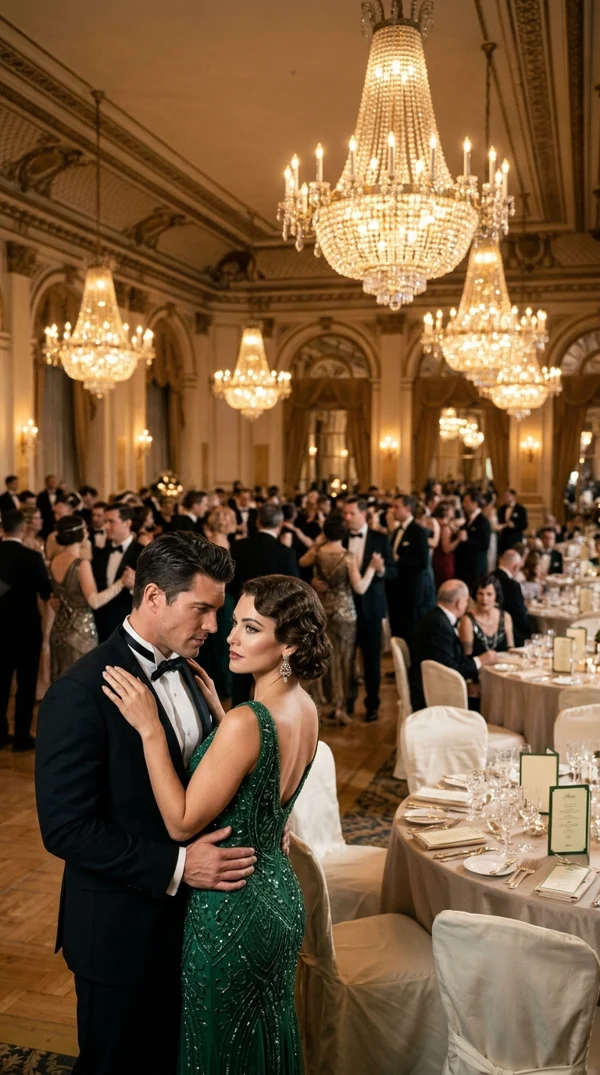
Not the gala itself. The gala was Trent’s: four hundred guests in the newly gilded ballroom of The Wolcott on Park Avenue, lenders and press and every hotel investor on the East Coast, champagne, a string quartet and a speech in which he would unveil the flagship’s new restaurant concept. Jane. With my chicken.
But the dinner was Constance’s. She had chaired the Wolcott gala committee for thirty years, since before either of her sons could walk, and the flagship’s own kitchens were still under plastic sheeting from the renovation. Someone had to cater it. And on the first of May, Constance Wolcott, in her pearls, rang her younger son and told him that the most elegant thing he could possibly do, after the spring he’d had in the papers, was to have the dinner cooked by his former wife’s restaurant.
“It shows grace, darling,” she told him. “No hard feelings. The press will eat it up.”
Trent thought it was a brilliant idea. He thought it was his.
“He said yes in under a minute,” Constance told me afterward, on the phone, sounding very satisfied. “He said it would be wonderful publicity for Jane. He thinks you’ll be cooking his menu.”
“I’ll be cooking mine.”
“Yes, dear,” she said. “I rather assumed.”
So for two weeks in May, Verbena cooked for four hundred.
We’d never done anything that size. Renzo drew up the prep lists on butcher paper and taped them to every wall in the kitchen. We borrowed ovens from a bakery on Hudson Street. We hired twelve extra cooks and a fleet of refrigerated vans. Ana made four hundred tiny almond cakes in a test run and cried when the first batch fell, and then made them again, and they were perfect.
And I had the menus printed.
Heavy cream card, a deep green border, the color of my banquettes. At the top, in plain black letters: Dinner by VERBENA. 41 Jane Street. Underneath, every course, and in the middle, the chicken. Burnt honey, bitter orange, thyme. From the recipe of Annunziata Pellegrino, 1931 to 2019.
Not Jane. Not anywhere.
I had them delivered to Constance’s apartment in a locked box and told nobody else.
Trent came to Verbena on the eighth of May, at half past three, between lunch and dinner, carrying a cake.
I was at the bar going over the gala orders. Renzo was in the back. The dining room was empty and full of afternoon light, and I looked up when the door opened and there was my husband, my almost-ex-husband, the man whose shares would be a fifth lighter in a week, holding a white bakery box in front of him like an offering.
“Jules,” he said. “Hi. Don’t throw me out. Five minutes.”
I didn’t answer. He took that as a yes, which he always had.
He set the box on the bar and opened it.
It was a cake. Vanilla, white icing, with ten candles stuck in the top in a ring. It wasn’t Ana’s. It was from a fancy place on Madison where the icing tastes like sugar and nothing else.
“I wanted to do it over,” Trent said. “The anniversary. I know that sounds insane. But I keep thinking about that night, about how I did it, and I wanted to… I wanted you to have a better memory. Of the cake.”
He took a lighter out of his pocket and lit the candles. One. Two. Ten.
Then he took a small velvet box out of his other pocket and opened it and put it on the bar beside the cake.
It was my ring. The three-carat cushion from his mother’s jeweler. I’d had Renzo send it back to his office by courier, the week after I’d dropped it in the tip jar.
“I’ve been an idiot,” Trent said. “I’ve been the biggest idiot in New York. I know that now. I know what I had. Let’s stop this, Jules. All of it. Before the transfer. Before the gala. We can still stop it. We’ll tell everyone it was a rough patch. You can still have the building. Have the second room. I’ll give you anything you want.”
The candles were burning down onto the white icing.
“You’ll give me the building,” I said, “that a judge is about to give me anyway.”
“I’m trying here.”
“I know you are.” I almost felt sorry for him. Almost. “You’re trying very hard, Trent. You’ve never tried this hard for anything in your life. And it’s because you’ve finally read something.”
His face changed.
Behind him, the front door opened again.
Brielle stood in the doorway in a camel coat and big sunglasses. She’d clearly come straight from somewhere. She’d clearly followed him. She looked at the cake, and the candles, and the open ring box on the bar, and then she looked at me, and she took the sunglasses off very slowly.
“Well,” she said. “Isn’t this sweet.”
“Bri,” Trent said. “Babe. This isn’t…”
“Don’t.” She walked in. Her heels were very loud on my floor. She came right up to the bar and looked at me across it, a long, hard look, from my bare face to the gray at my temple I’d stopped dyeing in March to the old burn scar on my arm.
“Look at you,” she said softly. “You’re old, Juliet. You’re old and you smell like onions and you’ve got nothing but a building he’s letting you keep. Whatever this is, he’ll get bored again. He’ll come crawling back to me in a week. He always does. You know he cried on my shoulder for an hour after your little dinner? About how awful you’d been to him?”

 100 to start reading with.

What did you think?