Lot Fourteen, chapter 1 of Auctioned Off by My Husband
My husband sold me at eleven-forty on a Saturday night, somewhere between a week in Gstaad and a signed set of golf clubs.
It was the fun part of the Pelican Ball. After the serious lots are gone and the room is three bottles deep, Kip Lassiter reads out whatever the men have scribbled on cocktail napkins. A round of golf with a judge. A ride in somebody’s seaplane.
This year Kip unfolded a napkin and laughed before he’d read it out.
“Lot fourteen,” he said. “From our own Blake Thayer. Dinner with my wife. She’ll redecorate your life. God knows she’s redecorated mine.”
The ballroom roared.
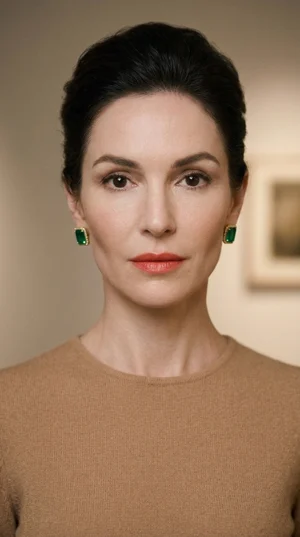
I was at table six in midnight-blue silk with my hands folded in my lap. I had done that ballroom. I had done most of the houses the people in it would go home to tonight. I had chosen the coral of the napkin in Kip’s hand.
“Opening at one dollar!” a voice called from the committee table, and I turned and saw Sienna Lowery on her feet with a paddle in the air, laughing, and my husband’s hand low on her back.
Not on her waist. Lower. The way he hadn’t touched me in years.
Sienna had been my junior designer for six years. I had taught her how to hang a painting. Looking at that hand, I understood she had been his for a while.
“One dollar,” Kip said. “Do I hear one dollar for the lovely Mrs. Thayer?”
Nobody bid.
The laughter thinned, and curdled, and went out like a pilot light, and three hundred people looked down at their plates.
A chair scraped back.
It came from Table One, where nobody had sat in ten years.
“One million.”
He stood up. “She’s worth more,” he said. “I’ll start there.”
I knew who he was as everyone on the island did: by his house.
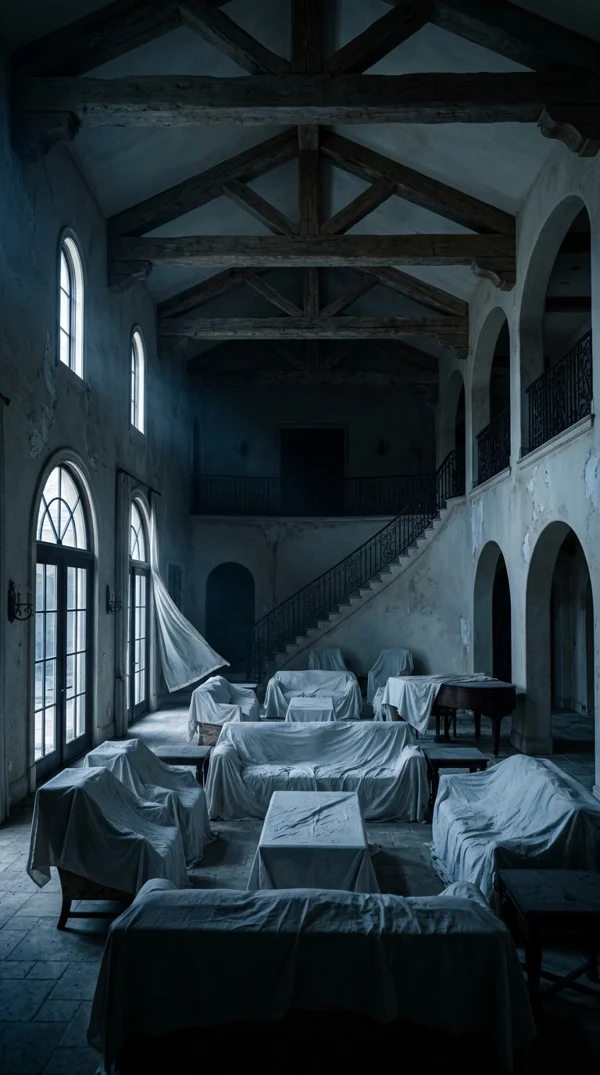
Ventana sits at the north end of Palm Beach, where the island narrows to a finger between the lake and the ocean, and it has a hundred windows, and for ten years not one of them had been lit after dark. People drove past it on their way to the inlet just to look at it not being lit. There were stories. He had a wife who’d died. He had a wife who’d left. He was disfigured, or bankrupt, or living in the boathouse with forty cats. He’d come to two balls, the year he bought the house, and stood at the back of both, and never come again. He bought Table One every year anyway, and every year the committee laid it for ten and set out his place card, because a table that pays in full and never eats is the best guest a gala ever has.
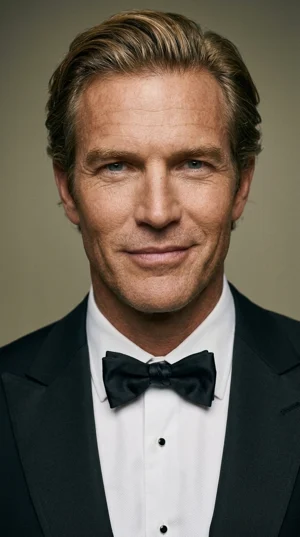
He was not disfigured. He was fifty, and tall, and gray at the temples, and his dinner jacket was the only one in the room that fit the man inside it rather than the man’s idea of himself. He stood very straight with one hand resting on the back of his chair, as if he’d been standing there for some time and could go on standing there for as long as it took.
Kip Lassiter’s mouth opened and shut.
“Mr. Ashdown,” he said. “That’s, ha. That’s very generous. The lot’s a bit of fun, you understand, it’s not…”
“A million dollars for the children’s wing is also a bit of fun,” said Roarke Ashdown. He had a low, unhurried voice with the faintest Florida flatness under it, the kind you only hear in people who grew up on the other side of the bridge. “Do I have it, Mr. Lassiter?”
Kip looked at the committee table. The committee table looked at Blake.
Blake laughed. Blake always laughed first; it was his gift. He had an old island name and a sailor’s tan and a laugh that told everyone in a room that nothing serious was happening, and for as long as I’d known him I had watched that laugh get him out of everything.
“Ashdown,” he called across the tables. “Come on. It was a joke.”
Roarke Ashdown didn’t look at him. “Then the joke is on you,” he said. “And I’d like my dinner.”
Kip’s gavel came down because Kip’s gavel always came down. “Sold,” he said, faintly. “To Table One.”
Nobody clapped.
He walked across the ballroom toward me. It took a long time, or it seemed to. Tables turned to watch him the way sunflowers turn. I saw Muffy Langstaff, whose morning room I’d done in yellow toile, put her hand over her mouth. I saw Sienna’s paddle come slowly down. I saw my husband start to get up and then decide, as Blake decided things, that it would look worse if he did.
Roarke Ashdown stopped beside my chair.
“Mrs. Dufresne,” he said.
Not Mrs. Thayer. I had kept my own name when I married, for the business, and nobody on the island had ever once used it at a party. He said it like a man who’d been practicing it in his head and wanted to hear how it sounded out loud.
“Mr. Ashdown.” My voice came out level. I was proud of that later. “That was a very expensive thing to do.”
“It was a very cheap thing they did,” he said. “The lot says dinner. It doesn’t say when.” He held out his hand, palm up, and didn’t reach for me. He just held it there between us, steady, the way you hold a hand out to a horse. “I haven’t eaten.”
I could stay.
I could sit at table six with my napkin in my lap while three hundred people I’d chosen paint colors for decided whether to laugh at me again. I could wait for Blake to come over and kiss my cheek and tell everyone I was a good sport. I was very good at being a good sport. I had been one for twenty-two years.
I was forty-six years old, and I put my hand in his.
He walked me out through the middle of the room.
He could have taken me around the side, past the service doors, where it would have been quick. He didn’t. He took me down the center aisle between the tables, under the chandeliers I’d had rehung at their original height in the fall, and he put his hand at the small of my back.
He didn’t push. He didn’t steer. He just left it there, warm through the silk, a hand on a bannister you know will hold. I could feel each of his fingers. I could feel that he was keeping them very still.
Three hundred people watched us go. Not one of them laughed.
At the door, without turning his head, he said quietly, “Breathe out, Mrs. Dufresne. They can’t see your face anymore.”
I breathed out. My ribs ached from how long I’d been not doing it.
His car was an old dark Bentley that a gray-haired man in a gray suit was already holding open. “Emmett,” Roarke said, by way of introduction, and Emmett nodded at me like we had met before and he’d liked me then, too.
I got in. Roarke got in on the other side. The door closed with the sound good doors make, a soft heavy chock, and the ballroom and the band and the palm trees in their uplights went silent on the other side of the glass.
“Where would you like to eat?” he asked.
I opened my mouth to say wherever you like, and stopped.
Nobody had asked me that in twenty-two years. Blake chose. Blake’s mother had chosen, before she died. Clients chose. I chose for clients: I chose everything, every day, the lamp, the rug, the exact white of the ceiling, and I could not remember the last time anyone had asked me to choose anything for myself and then waited, as he was waiting now, as if the answer mattered.
“The Moonglow,” I said. “It’s a diner on Dixie Highway, across the bridge. They do a pecan pie.”
He didn’t blink. “Emmett.”
“I know it, sir,” said Emmett, and pulled out onto South County Road.
The Moonglow had red vinyl booths and a counter with chrome stools and a waitress in her sixties who looked at my gown and his dinner jacket and said, “Prom run late?” and gave us the booth by the window without being asked.
I used to come here when I was twenty-two, before Blake, when I rented a room over a frame shop in West Palm and fetched swatches for another woman’s clients and ate pie at midnight because it was the only meal I could afford that felt like a reward. I hadn’t been back since my wedding. Palm Beach people do not cross the bridge to eat.
“I choose where,” I said, sliding into the booth. “Apparently. Do you choose anything?”
“How,” he said.
“How what?”
“How this goes.” He put his phone face down on the table, then frowned at it, and turned and handed it out the window to Emmett, who was standing beside the car under a streetlight. Then he held out his hand to me.
I gave him mine. My phone, I mean. I gave him my phone. He passed it out the window too.
“Rules for tonight,” he said. “You eat first. Then you tell me one true thing. Then I’ll tell you why I’m here.”
“Those are very specific rules.”
“I’m a very specific man.”
The pie came. I ate it, in midnight silk, with a fork, and he watched me do it. He didn’t eat. He drank black coffee and watched me with an attention so complete that I felt it on my skin, the way you can feel a lamp left on in a room behind you. He wasn’t looking at my body. He was looking at me eating, and at nothing else in the room.
When I’d finished he said, “One true thing.”
I thought about lying. I’m good at polite lies; they’re half the job. Of course it’s not too much green, Mrs. Langstaff.
“I’ve done forty-one houses on that island,” I said. “And I live in his mother’s. With his mother’s furniture. In his mother’s taste. I’ve never been allowed to touch one room of it.” I put the fork down. “That’s the true thing. I make everyone’s house except my own.”
He was quiet. Outside, a truck went by on Dixie Highway with a load of sod.
“I’ve been in four of your rooms,” he said. “The Restoration Society’s house tour, last spring. I bought a ticket like everyone else. Nobody looked at me.”
“Nobody looks at anything on those tours. They look at each other.”
“Yes,” he said. “That’s what your rooms do. Everyone in them looks like they belong there.” He turned his coffee cup a quarter turn on its saucer, precisely. “I wanted to know what the woman who made them looked like when she wasn’t making anyone look good.”
I didn’t know what to do with that, so I said, “And?”
“And she eats pie like she’s been hungry for a long time.”
I laughed. It surprised both of us.
“You said you’d tell me why you’re here,” I said.
“I’m here because the lot was dinner.” He set his cup down. “That’s done. Now I’d like a month.”
The Moonglow’s refrigerator case hummed.
“A month,” I said.
“My house has been empty for ten years. You’ll do it. Name your fee.” He said it in the voice men use for I’ll get the check. “The days are yours and the work is yours. The evenings, from eight, are mine.”
“Yours to do what with, Mr. Ashdown?”
“You choose where,” he said. “I choose how. Every night, for thirty nights. And if you say one word, any night, about anything, it stops. All of it. No questions.”
My heart was going so hard I could see it in the silk at my wrist.
“Which word?”
“You’ll pick it.” Something moved at the corner of his mouth. Not a smile. The place a smile would be if he let it. “Think about it carefully. You only get one.”
“And what am I,” I said, “for thirty nights?”
He looked at me across the Formica, under the bad light, with my lipstick gone and my good silk creased from the car, and he answered as if he were reading out the terms of a contract he’d already signed.
“For thirty nights you’ll be the only thing I look at,” he said. “When they’re over, you decide whether I’m allowed to keep looking.”

What did you think?