Away Game, chapter 4 of Caught on the Kiss Cam
Domes are loud in a way that gets into your teeth.
The Ridgebacks’ place in Denver seats sixty-eight thousand and has a roof and a video board that costs more than our whole west stand, and by the second series the noise had settled into a single flat roar that made the headsets useless and the sideline signals a pantomime.
The flight out had been kind to the shoulder. At thirty thousand feet it was a different shoulder again, warm and quiet and about ninety percent on the range, and I had told him, “Watch it in the warm-up. It’ll feel fine in a seat and it’ll be bad on the field.”
Colt went out for the first series and the noise came down on the bench like a weight and the line had to shout the count. He came off after it and put his hand up for quiet and got it and said, “The count’s on the guard,” and went back out.
Colt took the first hit at 1:52 of the first quarter: a blind-side corner blitz that nobody picked up and got him on the right shoulder blade, and he went down on it and got up and did not show it.
The second hit was at the end of the same drive and it was worse, a proper landing on the joint, and he came off with a thumb down at the bench, meaning no, not a timeout, not hurt, keep going.
I had him on the bench before the punt team was off the field.
“Right arm,” he said, before I asked. “It’s gone dead.”
“Where?”
“Everything. It’s like a wet rope.”
I got the harness strap off and the pad off and had a hand on the joint and there was nothing behind it, no holding, the muscles just switched off.
“Can you lift it?”
He got it to about horizontal.
“Grip my hand.”
He gripped, and it was about sixty percent.
“That’s a stinger. It comes back on its own, usually minutes. If it’s not back by the half, you’re done.” I got the cold pack out and the little TENS rig and put the pads either side of the joint. “This is for the pain, not the nerve. It won’t hurry it up. It’ll take the edge off while it comes.”
Two minutes was a punt and a change of possession and a commercial. Four was optimistic; it took six.
At six he lifted it over his head, slowly and with his face doing something, and I had him grip my hand again and it was ninety percent and the same on both sides, and I said, “Throw a ball,” and the equipment kid got him one and he threw it twenty yards on the sideline into the hands of a coach standing in for the net, and it was a decent ball.
“Go,” I said. “Third series, and on the first deep one you throw it early.”
He went.
He played the half with the harness back on and the ice bag on the bench beside him and one eye on me every time he came off, and he threw for a hundred and eighty and one interception that was not his, and Denver led by three at the half.
Bruno Salas came and stood over the bench with his helmet on one hip.
“Sixty percent,” he said. “That’s what it feels like from the middle. Sixty percent of a quarterback.”
“He’s got a hundred and eighty yards.”
“He’s got a hundred and eighty yards on grit and a receiver who can run under anything.” Bruno looked down at Colt. “You want me to keep the corner off you?”
“He can’t.”
“He can’t, no.” Bruno put his helmet on. “Then I’ll hold them four seconds and you throw it at four seconds and no later. If you hold it five you’re on your own.”
“Four,” Colt said, and Bruno went.
I got the TENS on again and Colt watched the board.
Halftime is eleven minutes and it is never enough and there is always somebody’s blood on the floor of that room.
At halftime the visitors’ room is a concrete box with a whiteboard and a bench and a trash can, and there is nowhere in it to be sick privately.
Kosar did the adjustments. Colt sat in front of his locker with his head back and the ice on and said nothing, and I worked the shoulder through all ten minutes and did not get the dead-arm out of it properly, and with two minutes to go he said, “I’ve got a half,” and I said, “You’ve got a half if the half is short,” and he said, “Short’s fine.”
The third quarter was not short.
It was a fifteen-play drive with three third downs and a fourth-and-one and on the fourth-and-one they ran him on a sneak, which is the exact thing you do not do with a torn labrum, and he got the yard and came up with his arm held across his guts and the whole bench on its feet.
The drive ended in a field goal and it was level.
The fourth quarter was where the game turned into a thing that had a shape.
They kicked a field goal. We went three and out. They kicked another with eight minutes left and the lead was six to them and the noise came down the roof like weather.
Colt came to the bench and sat and put his own ice on and said, “I need the strap off.”
“You need the strap on.”
“It’s pulling the head back. I can’t get over the top with it.” He looked at me. “I can’t throw a deep ball with it, Leigh. Take it off and I’ll manage it.”
“No.”
“Leigh—”
“No. It’s not coming off in a game, not today and not in December, so stop asking me in front of the bench.” I had my hand on the strap already. “Turn your back to me.”
There is a specific hell in that request and every trainer in the league has heard it. The brace protects the joint from the position that tears it. The position that tears it is the position that throws. A player will always ask for the throw, and the only answer worth anything is a measurement.
So I measured. I took his arm out to the side and back, slowly, to the place where an unstable joint tells you it is about to go, and watched his face, and it did not tell me. I tested the strength in the rotator cuff both ways against my hand and it was full. I pressed on the front of the joint and he grunted and the head of the bone stayed where it belonged.
Then I did the thing Rao and I had written on the sheet on Thursday as the second step, for a game day, if the joint held: I moved the stop from setting one to setting two. Four degrees. Not the strap, not the harness. Four degrees of a ceiling.
“That’s all you get,” I said. “If it clicks, if it slides, if your arm goes heavy, you put your hand up and you come to me, and it goes back to one.”
He moved the arm through the throw twice, standing, with the stop holding at its new place.
“That’s enough,” he said.
“It’ll have to be.”
The first deep ball went to Nate Okoye on a post with the safety two steps late, sixty-one yards, and Nate caught it over his shoulder at the five, and the dome made a noise like the end of the world.
Colt got hit on the throw and got up and came off and did not look at me.
We took the lead on the next snap and the defense held, and with 1:20 left and the ball at our own thirty-one Kosar called three kneels and we won by one, and the sideline came off the bench and Colt came off with it and all of it was a wall of noise and hands.
In the tunnel, under the west stand, they let the families down, and there were wives and kids and a woman in a very good coat who turned out to be somebody’s agent, and I got Colt’s shoulder into a sling and got the strap of the bag on the other side and got him moving toward the bus.
He caught my wrist.
The sling made his left hand free and he put it around my forearm and held it, and it was not a grab, it was a stop.
“Not out there,” he said, in the tunnel, under the noise. “In here. Just for a minute.”
“Colt, the bus.”
“The bus waits for the quarterback.”
I stopped. The corridor was moving past us; somebody’s kid went by at a run and a coach said “watch it” and the last of the team went out.
He looked down at his hand on my wrist and then at me.
“How bad,” he said. “Truth.”
“You took two hits on the joint, a stinger and a quarterback sneak on a torn labrum, which I’ll be having a word with Walt about, so you tell me.”
“Leigh.”
“You held. The brace held and the joint held, and you threw it early like I told you, and that’s the only reason you’re standing in a tunnel and not in an X-ray room.” I turned my arm and got hold of his fingers and moved them off, and did not let go of them. “You won’t throw on Wednesday. You won’t throw Thursday. You’ll do a week of short balls and then we’ll see.”
“A week.”
“A week.”
He looked at the floor of the tunnel and then up, and something in his face had come apart at the edges, and I think it was the first time in fourteen years that I had seen him not managing.
“That was the best half of football I’ve played in three years,” he said.
“It was.”
“And I can’t do it again next week.”
“Not the way you did it today.”
He nodded slowly.
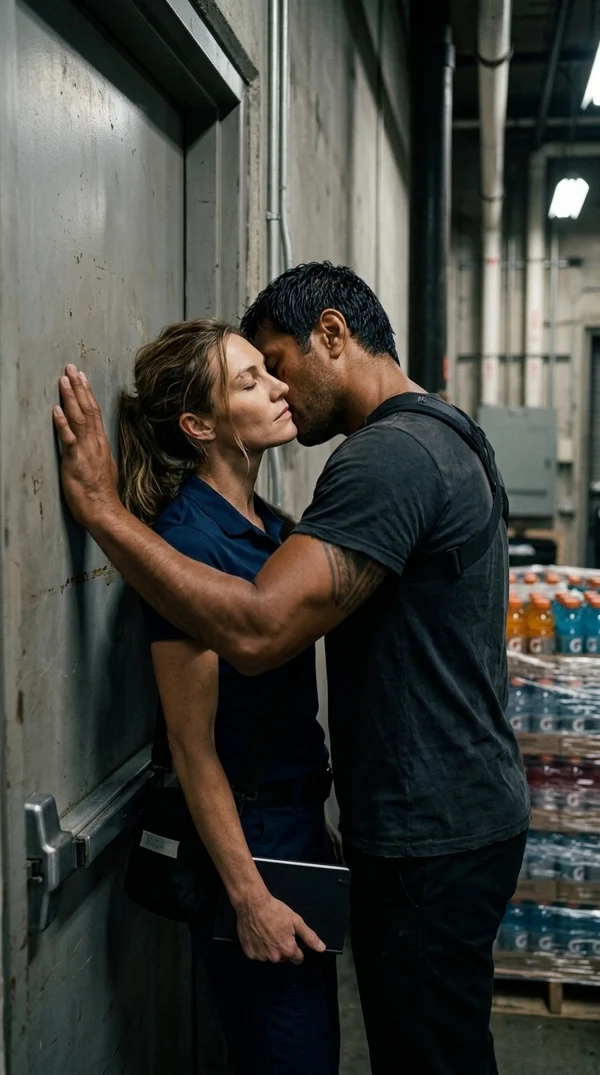
Then he leaned down and kissed me, in the tunnel, with sixty-eight thousand people still in the bowl above us and the whole team ahead on the bus and his shoulder in a sling, and it was quick and it was not careful.
“Nine more of those and I’ll be in a wheelchair by Christmas,” he said, against my mouth.
“Nine more of those and you’ll have a contract,” I said.
The bus ride to the airport was forty minutes and the flight was two hours and he sat with the sling and the ice and slept with his head against the window, and I sat two rows back with Mika and wrote the entry.
R shoulder: stinger 2nd series, grip 60%, recovered at 6 min, grip 90%, overhead full. TENS for pain only. 4th qtr: player asked for brace off, refused. Apprehension neg, cuff 5/5 both ways, joint stable. Stop moved setting 1 to 2 per 9/3 plan. 61yd post. QB sneak 3rd qtr, raise w/ Kosar. Sling post-game. Pain 7/10. No throw Wed/Thu.
Mika read it upside down.
“He asked for it off,” she said.
“He’ll ask every week. He’s a quarterback.”
“And you moved the stop instead.”
“I moved it four degrees inside a range Rao signed on Thursday, after I’d tested the joint. That’s not a favor. That’s the plan doing what it was written to do.” I turned the page so she could read it the right way up. “Same words go in the chart tomorrow morning. Same numbers.”
Mika put her head back. “You know what’s going to happen.”
“Say it.”
“Somebody in this building is going to find out you’ve got a book, and it’ll be somebody who wants a season, and they’ll say it’s a second set of notes.”
I looked at the page.
“Then they’ll open it,” I said, “and the first thing they’ll read is three signatures and a date, and the second thing they’ll read is the same numbers that are in the chart.”
“And the third?”
“The third’s my handwriting,” I said. “Which is the only thing in it that’s mine.”
The plane came down through the cloud at Kansas City and the lights came up in the window in the shape of a city laid out flat on a plain, and Colt woke up and looked at the shoulder, and I shut the book.
What did you think?