The Feast of Rooks, chapter 5 of Every Lie by Dawn
She answered him on Katrine’s heron paper, in Katrine’s round hand, because he already had enough of hers.
Music room. Noon. Bring your own pen.
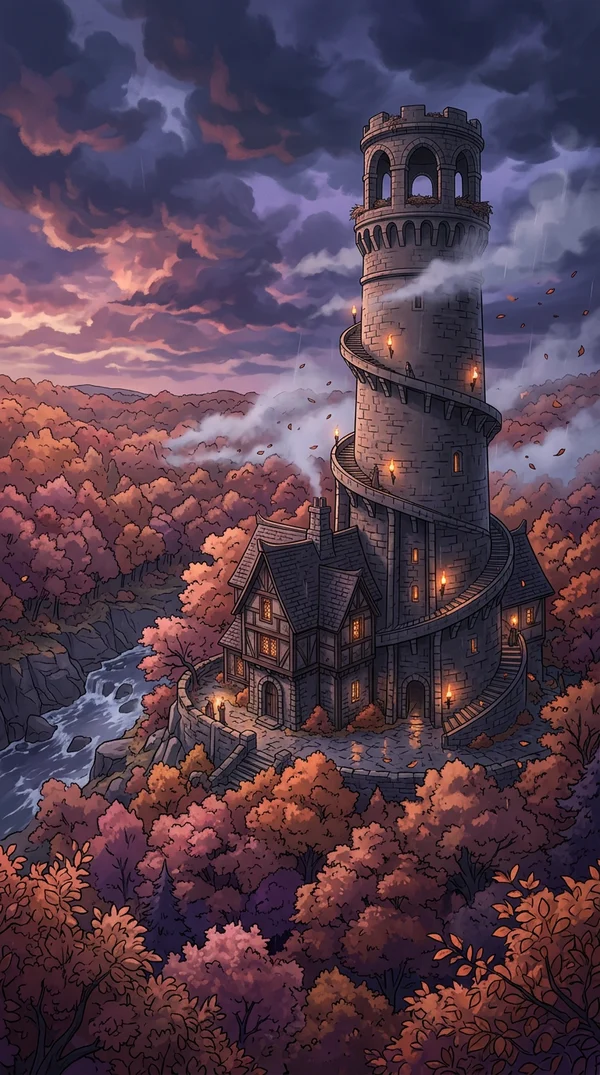
The music room was in the right hip of the wyrm, a round chamber where the great socket of the thighbone had been floored over and the acoustics were so strange that a whisper by the harpsichord could be heard at the door. Nobody used it but the dancing master, and he was at his dinner.
Casimir came in on the stroke of noon and shut the door and leaned on it.
“Well?”
“Yes,” said Kit. “I’m what you think.”
She had decided that on the floor of her bedroom with her mother’s case gone, and she had decided it again at the Petitions Gate, and she had decided it a third time at four o’clock that morning, lying awake with his letter on her chest. He knew already. Saying it was only paying a debt that had already come due.
He nodded slowly. “How long?”
“Since I was sixteen.”
“How many?”
“Seven. Counting the mill.” She lifted her chin. “Counting you.”
“Me.” He came away from the door. “I’m not one of your lies. I’m the one who remembers them.”
“Your father’s tears are one of mine. So’s the contract in the vault. So’s Lady Ines’s bad temper.”
That surprised a sound out of him that might have been a laugh. “Lady Ines has always had a bad temper.” Lie, rang her ear, and then, in the same breath, she saw his mouth twitch and knew it was the truth, and the double sensation was so dizzying that she had to put a hand on the harpsichord.
“Who,” he said. “Who are you writing for?”
She tried. She truly did. She had planned it, the words in their order, plain as a bill of sale. The door in her throat shut on the first of them. She stood there with her lips parted and nothing coming out, and the band round her wrist burned, and she pushed back her cuff without meaning to, as though the burn were something she could show him.
Nineteen lines. He looked at them without a word.
“An inked contract,” he said quietly. “With a silence clause.” He reached into his coat and took out a pen, a plain steel nib in a black holder worn pale where his fingers went, and held it out to her across the harpsichord. “They always say speak. Lawyers forget people have hands.”
She stared at the pen.
Then she took it, and he slid a sheet of music paper across to her, the back of a minuet, and she wrote.
She wrote it all. The Chancellor. The midnight study. The thirty nights. The clause, word for word, because she had it by heart: a confession touching the death of Prince Halvard Corvane, written in the hand of Prince Casimir, the ink cut with his blood. Fen. The Ress debt. Collected in full. She wrote until the minuet’s back was covered and turned it over and wrote between the staves.
The band on her wrist stayed cool. The clause said speak. Sarrow’s notary had the most beautiful hand in Lanthorn and he had forgotten people had hands.
Casimir read it standing up. She watched his face, because his face, she was learning, was the only part of him that couldn’t be overheard.
When he reached his blood, he went perfectly still.
“Well,” he said at last, aloud, lightly. “At least she’s honest.”
The lie in it was so loud she flinched. He saw her flinch, and his jaw eased, a very little.
He took the pen back from her, and their fingers touched on the holder, and he wrote under her last line in his fast slanting hand: Your brother is in the Debt Tower.
She nodded.
And when you’ve learned my hand, and you have my blood, you’ll write it. And the whole kingdom will remember I killed Hal, and so will I, and so will you.
She took the pen. You’ll remember both, she wrote. You’re inked.
He read it twice. Then he laughed, properly this time, a low cracked sound in that strange round room that came back at them from the walls. “God help me,” he said. “That’s the kindest thing anyone’s said to me in nine years.”
It sounded like a lie. She had begun to suspect that the ones that sounded worst were the truest.
They could not agree about Sarrow. They could not agree about Fen. They argued for an hour in pen and ink on the backs of three minuets and a galliard, and at the end of it he wrote, Then we agree on nothing, and underlined it, and she wrote, The widow, and he stopped.
The deed was genuine. He had certified it. He’d had to. It was.
“But a genuine owner,” said Kit aloud, slowly, the idea coming as she said it, “can give her property away. In plain ink. Without any magic in it at all.”
He looked at her.
“A deed of gift,” she said. “From Lady Katrine Aubery to Marta Hesk, the mill’s income and tenancy, for her life and her son’s. It needs the Treasurer’s countersign, because it’s dowry land.”
“Which Brannock will never give.”
“Which Brannock will give,” said Kit, “on Thursday, in my hand. And which the Chancery Examiner, who is very respected, who no one has ever met, will find to be entirely genuine.”
The gold ring in his eyes caught the window light. “That’s forgery.”
“It’s ordinary forgery,” said Kit. “Practically honest.”
They did it there and then, on the harpsichord lid, with his ink and her hand. She had seen Brannock sign the Settlement minutes; she had his B in her head, the lazy one that sat down halfway through like a fat man on a bench. Casimir stood behind her and read over her shoulder, which no forger allowed and which she allowed, and when she was halfway through the countersign he said, close to her ear, “Lazier,” and she said, “I know,” and made it lazier, and her hand was perfectly steady and the rest of her was not.
He smelled of cedar and ink. His chest was an inch from her back. She could feel him through her dress as she would have felt a banked fire.
“There,” she said.
He took the deed and turned it slantwise against the light, as she would have done. “If I didn’t know,” he said, and stopped. “I would certify that. I’d swear to it.”
“No one would believe you.”
“On paper,” he said, and smiled at her, an unguarded, wholly unfamiliar smile, and she had to look down at the deed.
Oskar carried it to the Chancery that afternoon with the Reader’s certificate pinned to it. On the Thursday, the Treasury’s steward rode to Greywater with a new tenant and was met at the mill door by Marta Hesk, a deed of gift and a copy of the Chancery’s seal, and rode home again. Oskar reported it with his hands, grinning, and Casimir translated, and Kit did not need to believe a word of it. She had Oskar’s grin.
The Feast of Rooks fell on the thirteenth night.
It was the Corvanes’ own feast, older than the kingdom. The rook was their bird, black and clever and loud, and on that night the whole court wore black feathers and beaked masks and drank dark wine in the Hall of Ribs, under the vault of the wyrm’s chest, while tame rooks walked about on the bones overhead and dropped things.
Kit wore a black gown that Lady Katrine apparently owned and a half-mask of glossy feathers, and for the first time since she’d come to the Bones, nobody could see her face.
He found her anyway. In a room of two hundred people in black feathers she knew him by his height and the heat at her shoulder.
“You look,” he said, “extremely ordinary.”
The lie rang. She laughed, because now she knew which way to turn it.
He danced with her twice, which was scandalous, and the second time it was not a pavane. He told her, loudly enough for the dancers on either side, that she was the dullest woman in Lanthorn and he had never wanted anything so much in his life, and the dancers smirked into their feathers.
She was beginning to understand what it meant to live like that. To be able to say anything. To be heard by no one.
When the music ended he did not take her back to the hall. He took her out by a side arch into the rook gallery, a long dim passage between two ribs where the court’s birds roosted at night in rows along the bone, shifting and muttering. There was one lantern. There was no one else.
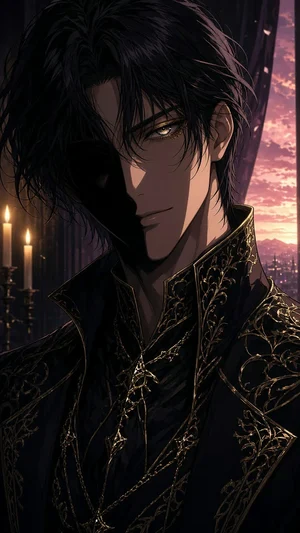
He pushed his mask up into his hair. His face in the low light was all edges.
“I’m going to say something,” he said. “You won’t believe it.”
“Then don’t say it.”
“I’ve been lying awake,” said Casimir, “listening to you through two inches of oak, every night for thirteen nights, and I don’t know whether you’re going to destroy me, and I find I don’t actually care.”
Every word had the hesitation in it. Every word went into her ear crooked. And he was looking at her as though he had never once in his life been allowed to say a true thing and have it land, and was saying it anyway, into the dark, to the one person who couldn’t help him.
“Don’t talk,” said Kit. “Every time you talk I stop believing you.”
“Then I won’t.”
He didn’t.
His mouth was hot. That was her first thought, and it was not a thought so much as a shock, the way the first step into a bath is a shock. She had kissed people before. Boys in the Paper Quarter, a printer’s journeyman with clever hands. None of them had been warm like this, as though there were a forge somewhere under his ribs. She pushed her own mask off and it fell somewhere and a rook complained. His hand came up to her jaw and then into her hair and the pins started to go, and she let them, and she got both her fists in the front of his coat and pulled him down, because she was short and impatient and had been wanting to for thirteen nights.
He made a sound against her mouth that went straight through her.
There was nothing false in that. There was no hesitation stroke anywhere in it. She could believe it completely, because it wasn’t words.
When they broke apart she was against the rib, the bone cool behind her shoulders and him blazing in front of her, and the rooks along the gallery had all woken up and were muttering about it.
“That,” said Casimir hoarsely, “was not in the terms.”
“I’m a forger. I amend things.”
He laughed into her hair. Then he lifted his head, listening. Footsteps in the hall arch. He stepped back, put his mask down over his face and was a prince again in the space of a breath, and walked away up the gallery without looking back, which she understood, and hated.
The footsteps belonged to the Lord Chancellor.
Sarrow wore no feathers. She wore plain black, as always, and a narrow mask of black silk that was the merest concession to the evening. She stopped beside Kit and looked up at the rooks, and then at Kit’s hair, which was coming down.
“Eighteen,” said Sarrow.
Kit said nothing. She put up a hand and found a hairpin still in place, the heron one.
“Your brother has been moved to the Low Cells. For his own health; the upper floors were overcrowded. The Low Cells are at the waterline. They are damp at this season.” Sarrow said it the way she might have read out a tide table. “I mention it because I’m told you are fond of him.”
“You can’t touch him. It’s in the contract.”
“I haven’t touched him. I’ve moved him.” Sarrow’s pale eyes came back from the rooks. “I hear you made a gift of Greywater mill. To its tenant.” For the first time since that midnight study, her face changed. Not anger. Something older and colder than anger. “Of all the places in Sallowmere, Lady Katrine. Of all the places you could have chosen.”
She did not explain. She looked at Kit’s swollen mouth, and at the empty end of the gallery where the prince had gone.
“The court rides to Kestrel Lodge in three days, for the heir’s hunt. It’s a tradition.” The Chancellor adjusted her silk mask. “Princes bleed easily on a hunt. It’s in the blood.”
She walked away. The rooks watched her go.
Kit stood against the rib with the taste of him still on her mouth, and eighteen lines on her wrist, and her brother at the waterline in the dark.
Then she pinned up her hair, very neatly, the way a lady would. She knew where she would get his blood.
What did you think?