The Pairing, chapter 1 of Everything My Dragon Burned
The man whose brother I killed is standing in my dragon’s shadow, and he has not looked at me once.
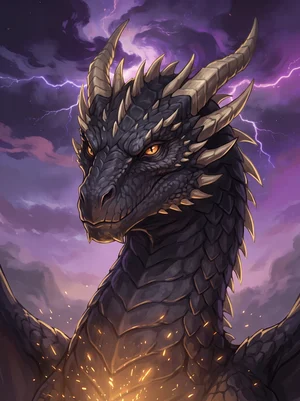
That’s a skill. Hask’s shadow is not small. At eight years old my dragon is the size of a grain barge, black as a cold stove, and when he shifts his weight the frost on the muster field cracks like gunshots. Eighty riders stand in rows on Cinder Ridge with their dragons behind them, breath smoking in the dawn, and every one of them has managed to look at me at least twice since Captain Ardan Locke walked onto the field.
The only time he has ever spoken to me was across his brother’s pyre, a year ago, through the smoke. Four words. You’ll answer for it.
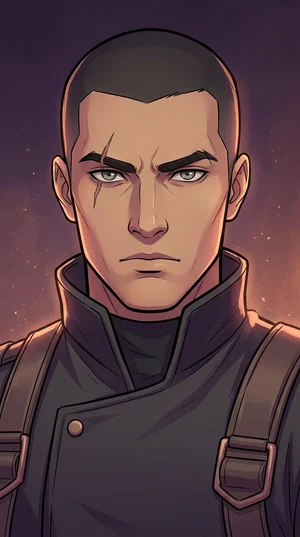
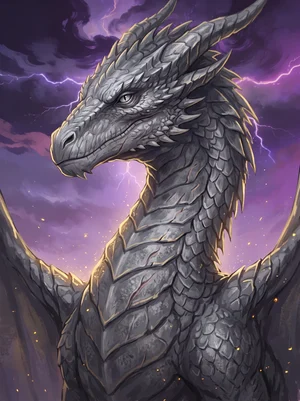
Now he just stands there. Tall, dark hair cropped to the skull, flight leathers worn pale at the knees. A scar cuts through his left eyebrow and keeps going, as if it had somewhere better to be. Behind him his dragon, Morrow, sits like a cathedral that has decided to tolerate the weather. She is silver-gray and enormous and old, and she regards Hask the way a duchess regards a dog that has been sick on the carpet.
Hask, for his part, would like to eat Captain Locke.
I can feel it through the bond. It sits behind my breastbone like a coal someone has dropped down my shirt: hot, specific, delighted. That one. Mine to bite. Yes?
“No,” I murmur, without moving my lips.
The coal sulks.
“Holt,” says Sol out of the side of her mouth. Lieutenant Ysolde Fenn is in the row beside me with her dragon Bracken, who is brown and placid and chewing something she shouldn’t. “He’s here.”
“I noticed.”
“He transferred himself. Off the southern front. Into the Ninth.” She lets that sit. “Into your wing.”
“It’s not my wing. I just live in it.”
“Maren.”
“I know.” I keep my eyes on the command platform, where Wing Commander Hester Varga is climbing the steps with the pairing roll in her fist. “I’m aware of who he is.”
Everybody is. A year ago, at Harrow Ford, in the smoke, Hask burned Lieutenant Jory Locke and his golden dragon Saffi out of the sky. The inquiry ruled it unresolved, which is the army’s word for we couldn’t hang her, but we’d like to. They call me the Ford Butcher in the mess when they think I can’t hear. I’ve heard. I’ve also heard worse, and I’ve said worse about myself, at three in the morning, to a canvas roof.
The thing I can’t say, the thing nobody believes, is that I don’t remember it.
Not a flicker. Not the smoke or the fire or the fall. I went under that day, deep, and when I came up Hask had eaten the whole of it. I have the tally knot to prove it. I have the inquiry transcript. I have a gap in my life the exact shape of a man’s death, and I have his brother standing forty feet away, not looking at me, with his jaw set like a locked gate.
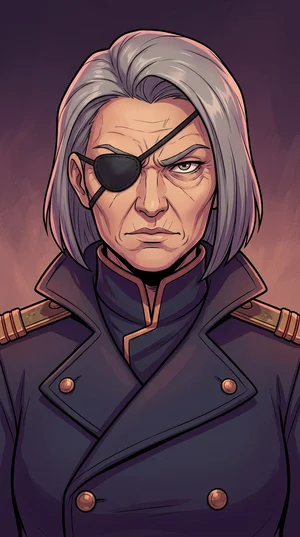
Varga reaches the top of the platform. She is fifty-four and has one eye, the other covered with a patch of black leather that she claims she lost to an Ossine bolt and Sol claims she lost at cards. Her voice could strip paint.
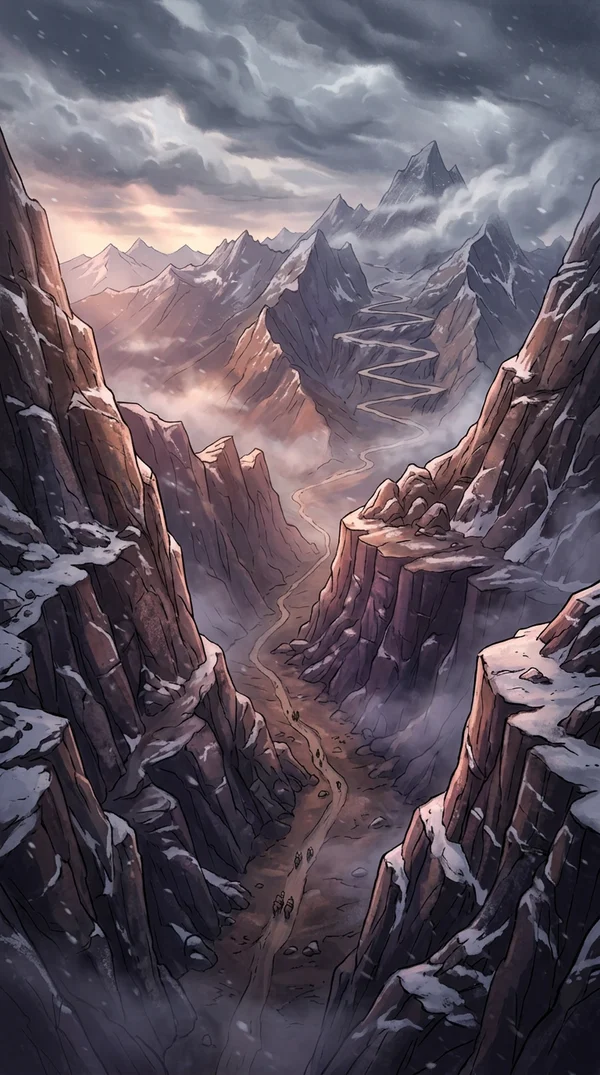
“Ninth Wing,” she says, and eighty riders straighten. “This is the Saddle campaign. Last of the year. The weather-readers give us thirty days before the snow closes the pass. The Ossine League has twelve thousand foot and a hundred chain-spitters coming up the far side to get through before it does. If they get through, they winter in our valley, and the valley does not survive them. If we hold, the war ends at the thaw on our terms. Any questions?”
Nobody has any questions. Varga’s questions are rhetorical, like her mercy.
“Pairings,” she says, and starts to read.
It goes fast. Fenn and Okoro. Darrow and Quill. Pairs fly wing to wing on patrol, cover each other in strikes, share rations and tents and blame. A good pair is the difference between coming home and coming home in a sack. I’ve flown with eleven partners in eight years, and every single one of them asked to be reassigned within a month. Hask bites. I don’t, much, but I don’t apologize for him either.
“Holt,” says Varga.
I wait.
“Locke.”
The field goes so quiet I can hear Bracken chewing.
Then it doesn’t. It goes loud all at once, a mutter rolling down the rows like a gust through dry grass. Somebody laughs, high and disbelieving. Somebody else says Gods in a way that makes it a prayer for entertainment.
Ardan Locke looks at me for the first time.
His eyes are gray. Not soft gray. The gray of a blade before it’s been oiled. He looks at me the way you look at a ledge you’re about to jump off, measuring the drop, and something behind my breastbone that is not Hask turns over and lies very still.
Hask, meanwhile, lunges.
He does it the way he does everything, without warning and with total commitment. His head snakes past my shoulder, jaws open, and I get my fist into the soft ring of his nostril and hang my whole weight off it. “No.” He stops a yard from Captain Locke’s face. His breath rolls over the man, hot as a forge door, and stirs his cropped hair.
Ardan doesn’t step back. He doesn’t even blink.
Behind him, Morrow lowers her great gray head until her jaw is level with Hask’s. She doesn’t open her mouth. She just looks at him, down the long elegant length of her nose, and lets out a breath that is not fire, only smoke, cold and contemptuous.
Hask closes his jaws.
The coal in my chest goes several unprintable shades of offended.
“Lieutenant Holt,” Varga calls, pleasantly. “Captain Locke. My tent. Now.”
Varga’s tent smells of lamp oil and wet dog, though there is no dog. She sits behind a camp table covered with maps of the Saddle and does not invite us to sit.
“Before you start,” she says, “I don’t care.”
“Ma’am,” says Ardan. His voice is low and even and costs him something; I can hear it, the way you hear a strap creak before it snaps. “With respect, you can’t—”
“I can. I did. It’s written down.” She taps the pairing roll. “Morrow is the steadiest dragon in the wing and the only one Hask won’t eat. Hask is the fastest thing in the Kettle Mountains and the only one who can keep up with Morrow in a dive. You are, gods help me, the two best riders I have. I need the Saddle held for thirty days, and I need a strike pair who can hit a spitter battery in the dark and come back. You’re it.”
“She killed my brother,” Ardan says.
He says it to Varga. He doesn’t look at me. But I feel it land all the same, low, in the place you take a kick.
“The inquiry found the matter unresolved,” says Varga.
“The inquiry found she went under so she wouldn’t have to remember.”
“The inquiry found what it could. Lieutenant?”
That’s for me. I make myself stand straighter. “I went under. Hask took the toll. I don’t remember any of it. Ma’am.”
It’s the same thing I said a year ago to the board, and it sounds the same now: thin, convenient, the kind of thing a liar would say if she’d thought of it first. I see it hit Ardan’s face. I watch him put it away somewhere to be dealt with later, the way you’d put a knife in your boot.
“Paired riders share a tent,” Varga says, as though none of us has spoken. “Paired dragons coil round their riders at night, and if you put them in separate rows they fight till dawn. I am not losing a dragon to a lovers’ quarrel between lizards. You will share rations. You will share a tent. You will fly left and right wing on every patrol until the snow comes. At the end of the campaign there is the Reckoning, and what you do at the Reckoning is your affair. Until then, you are mine. Dismissed.”
Ardan salutes, precise as a ruler. He turns on his heel.
At the tent flap he stops, and for one second I think he’s going to say something to me. Instead he looks down at my left wrist, where my tally cord is knotted. Twenty-seven knots in dark red silk, tied so tight they’ve gone hard as beads. Then at his own. Four knots. Four, in eight years of flying. The man almost never goes under.
He leaves without a word.
“Well,” says Varga, “that went better than I expected.”
Major Simon Pell is waiting outside the tent, and he does what nobody else on this ridge would do. He puts his arms round Ardan Locke and holds on.
“Son,” he says. “Look at you.”
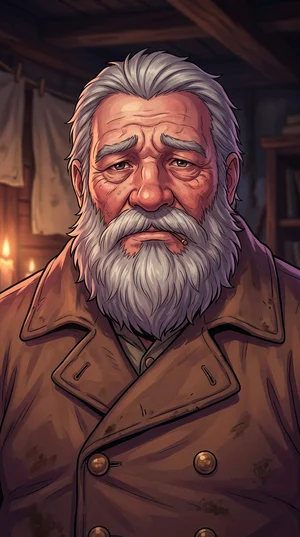
Pell is the wing’s quartermaster: a big, gray-bearded man with a limp and a face like a kind loaf of bread. He flew once. His dragon Cobble died under him over the Reach twelve years ago, and a rider who outlives his dragon is grounded for life, so now he runs the stores, the feed and the forage, and calls every rider under thirty son or girl. He taught both Locke brothers to fly. Everyone knows that, too, and the rest of it: the plains girl he married when the Saddle was still a trade road, who went home across the pass with their daughter the first spring of the war. He keeps the child’s milk tooth in a locket on his watch chain, and if you sit with him long enough in the mess he’ll show it to you.
Ardan’s arms come up slowly and hold him back. Over Pell’s shoulder his face does something I’m not meant to see, a crack running through it and sealing over, fast.
“Simon,” he says.
“Not since the pyre,” he says. “Not one letter, you young fool.” Pell steps back, eyes wet, chewing. He always chews cloves; he says they’re for his teeth, and the whole stores tent smells of them. Then he sees me, and the wet goes out of his eyes, and what replaces it is a kind of sorrowful patience. “Lieutenant Holt.”
“Major.”
“I testified against you,” he says gently, as if reminding me of a birthday. “I told the board there was no flare. I want you to know I take no pleasure in it.”
“I know, sir.”
Every rider carries a red flare in a tube on her saddle. It’s called the last light. You fire it when your dragon has gone into frenzy and you can’t bring her back, and it means one thing to any wingmate who sees it: burn us both, now, before she kills our own. If Jory Locke fired the red at Harrow Ford, then Hask did what he was asked. If he didn’t, then Hask did murder. Pell was the only witness close enough to see, and Pell says the sky was empty.
“Fly carefully,” he says, to both of us, and limps away toward the feed lines, and the smell of cloves goes with him.
The tent they give us is standard issue: twelve feet by ten, oiled canvas, two cots, one brazier, one lantern. Morrow and Hask circle it twice, like dogs choosing a spot. Then Morrow lies down on the north side, pointedly, and Hask lies down on the south, and the tent sits between them like a fence between two farms that have been feuding for generations.
Inside, Ardan sets his cot as far from mine as twelve feet allows. He lays out his kit with a neatness that is frankly hostile. He doesn’t speak.
I unbraid my hair. I take off my boots. I sit on the edge of my cot and say, because one of us has to, “There’s a rule about waking letters.”
His hands stop on his kit.
“If either of us goes under deep, the other one carries the letter. That’s standard pair procedure. You’ll want to write one.” I keep my voice dry. “In case Hask eats your opinion of me.”
“I don’t go under,” he says.
“You’ve got four knots.”
“Four times in eight years. I keep what’s mine.” He looks at my wrist again. “Where’s yours?”
“My what?”
“Your waking letter.”
“I don’t write them.”
“Twenty-seven knots and you don’t write them.”
I shrug. “Letters are for people who have someone to tell.”
He looks at me a moment longer, then turns down the lantern. In the dark I hear him lie back on his cot, and the canvas tick as Morrow shifts her weight outside, and Hask’s long, aggrieved breath against the south wall.
I sleep, eventually. I dream what I always dream. A red light in smoke, swinging, like a lamp on a ship that’s going down. It doesn’t mean anything. It’s just there, every few nights, for a year now. I wake from it with my heart going and my mouth dry.
Ardan is awake. I can tell from his breathing; it’s too careful.
“Holt,” he says into the dark.
“What.”
“At the Reckoning,” he says, “on the last day of the campaign, I’m going to stand up in front of the wing and call blood grievance against you.”
The brazier ticks. Outside, my dragon goes very still.
“I thought you should know,” says Ardan Locke, “so you can make your peace.”
What did you think?