One Glass of White Wine, chapter 1 of Forty Nights of Yes
“Sleeping with her,” the blonde read out, “is like sleeping with furniture.”
Her friends shrieked. One of them slapped the bar so hard the olives jumped in their dish.
I was two stools away, and I was the furniture.
I knew it before she said his name. I knew it from the first text she read, the one about inventory, because my husband had sent me the same word at 7:42 that evening. Stuck doing inventory at Renton. Don’t wait up. Happy anniversary. And a heart. The yellow kind. The kind you send your dentist.
“Wait, there’s more,” the blonde said, scrolling. She had a voice made for reading things out loud. “‘Told her I’m doing inventory. She’ll be at the Belcourt right now with her one glass of white wine, like every year.’”
I looked down at my one glass of white wine.
“‘Twenty-four years,’” she read, “‘and she’s never once asked me for anything. Not once. You know what that’s like?’”
“Oh my God, Brooke.”
“No, listen. ‘Sleeping with her is like sleeping with furniture.’”
That was when they screamed.
Then the smallest of the three stopped laughing and put her hand flat on the bar. “Wait. Brooke. The Belcourt? We’re at the Belcourt.”
Brooke didn’t even look up from the phone. “Why do you think I picked it?”
They all turned on their stools at once, delighted, scandalized, looking up and down the bar for a sad woman with a glass of white wine. The one in the green dress looked straight at me. Her eyes went over my gray cardigan and my reading glasses on their chain and the music bag at my feet, and they kept going, the way your eyes slide over a coat rack.
“Nobody,” she said. “God. Imagine.”
Twenty-four years ago tonight I married Keith Gorski.
At the end of the bar, a man I had never spoken to put down his glass.
You should understand about the glass of wine.
Keith ordered it for me on our first date, in this bar, when the Belcourt was shabby and the chandelier was half dark and nobody famous had bought it yet. Scotch, and she’ll have a glass of white wine. I didn’t like white wine. I didn’t find that out for years. By then it was a tradition, and every October seventh for twenty-four years I had sat on one of these green leather stools and ordered a glass of something I didn’t want, because he’d chosen it once and I had taken his choosing for a kind of love.
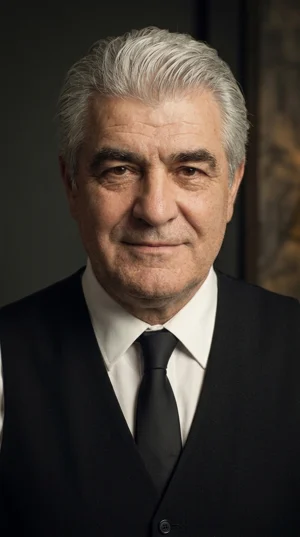
Some years he came on time. Some years he came at ten with a story. Last year he didn’t come at all, and the bartender, a silver-haired man with a face like a kind bulldog, had brought me a little dish of almonds I hadn’t ordered and said nothing, which I’d appreciated more than I could say.
This year Keith was doing inventory.
I knew the blonde now. That was the worst of it. I’d been trying not to know her since she sat down, because I’d seen her face a hundred times on our own television. Two years ago the Gorski’s Home & Sleep commercials had changed. It used to be just Keith, in a blue blazer, flopping backwards onto a king-size pillow-top and grinning at the camera: Come lie down at Gorski’s! Now there was a woman flopping down beside him. Brooke. Thirty-something, honey highlights, a laugh like a car alarm. His marketing director. Keith and Brooke want you to rest easy.
I had watched those ads on my own couch. I had once said to Keith, mildly, that she seemed very good at falling onto mattresses.
He’d said I was jealous of a professional, and I’d apologized.
“Read the one about the anniversary,” the smallest friend begged, and Brooke said, “Shay, I can’t, it’s too mean,” and then read it anyway, and I didn’t hear what it said because I had started to count.
It’s what I do. I’m a piano teacher. I have spent twenty-five years sitting on a bench beside eight-year-olds saying one and two and three and, and when something is too much for me, my mind goes to the metronome and stays there. Sixty to the minute. One. And. Two. I counted my breathing and my heartbeat and the bottles on the shelf behind the bar, and I thought: I will finish this glass. I will finish it and put on my coat and pick up my music bag and walk out past them, and they will never know, and that will be the last thing I ever do for Keith Gorski.
My hand was shaking too much to lift the glass.
“Madam.”
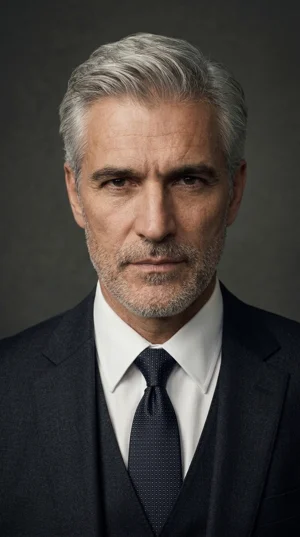
The man from the end of the bar was standing behind Brooke’s stool. I hadn’t seen him walk the length of the room. He was tall, in a charcoal suit without a single thing wrong with it, silver at the temples, and he spoke quietly. I don’t think he had ever in his life needed to raise his voice.
“It’s after nine,” he said.
Brooke looked up at him with her phone still lit in her hand. “Sorry?”
He touched a small cream card that stood in a brass holder on the bar beside her drink. I knew what it said. There was one at every place. I’d read it every year. The Belcourt. You will be called by your name. You will not be hurried. Nothing will be brought that you did not ask for. No telephones in the bar after nine.
“After nine o’clock,” he said, “telephones are put away in this bar. It’s on the card.”
“Oh my God. Are you serious?” Brooke laughed and looked at her friends for support. “We’re celebrating. I’m, like, a regular person. I’m in the commercials.”
“I’m sure you are,” he said. “Radu.”
The silver-haired bartender was already there, holding three coats over his arm. I hadn’t seen him move either. Nobody in this hotel seemed to move. They just arrived.
“Your bill has been taken care of, ladies,” Radu said, in an accent I had never placed in twenty-four years of almonds. “The doors are this way.”
There was a short, loud argument that I did not take part in. Brooke said it was a public bar. The man in the charcoal suit agreed that it was a public bar, and that it was also his. Brooke said she’d post about this. He said he hoped she would put the telephone away first. Shay, the small one, was already sliding off her stool with her face pink, and as Radu walked them out she looked back once, at the bar, at me.
I think she knew. I think she was the only one who ever did.
Then they were gone, and the bar was quiet the way a room is quiet after a cymbal, and the man in the charcoal suit sat down.
Not beside me. On the stool past the empty one. He left one stool between us, very deliberately, like a rest written into a bar of music.
“Ms. Bjornstad,” he said.
Nobody called me that. People who knew me called me Lise. People who knew Keith called me Mrs. Gorski, and I’d stopped correcting them in about 2004.
“You know my name.”
“You’ve signed it on my bar for eleven years. L. Bjornstad. The B is very decided.” He nodded to Radu, who had come back and was standing with his hands folded on the brass. “What do you want?”
I looked at my glass. “I’m fine. I have this.”
“You’ve had that every October since I bought this hotel,” he said. “You’ve never finished it before ten o’clock, and you’ve never once looked as if you liked it. I didn’t ask what you have. I asked what you want.”
I opened my mouth, and nothing was in it.
It’s a strange thing to find out at forty-eight. You’d think a question like that would have an answer lying around somewhere, the way you keep a spare key under a pot. I looked for one. I looked hard. There was nothing there but the metronome.
“I don’t know,” I said.
“Then take your time.” He set his own glass down on its napkin and turned the napkin a quarter-inch, so the Belcourt’s little crest faced me. “Tell me what you want. I have all night.”
I laughed. I didn’t mean to. It came out of me like a wrong note in a quiet passage, and I put my hand over my mouth.
“I’m sorry.”
“Don’t be. That was the first honest sound you’ve made in my bar.”
“You don’t know that.”
“I do, actually.” He looked at my hands. I had put them on the bar, both of them, the way you put your hands on a table when the room is moving. “Every year you sit there and wait for him, and your right hand plays something on my bar. The same thing. Your left hand stays in your lap. I used to think it was nerves. Radu told me it was music.”
I took my hands off the bar.
“Beethoven,” I said, before I could stop myself. “It’s the opening of a sonata. The left hand’s too loud to practice in public.”
“Even on wood?”
“Especially on wood.”
He almost smiled. It didn’t reach his mouth; it was something that happened in the lines beside his eyes, and then it was put away again. His watch was steel and plain and old. I noticed it because he noticed me looking at it, and turned his wrist very slightly so I could see the face. Nine twenty-two.
“He’s right, you know,” I said. My voice came out much too steady. It sounded like someone reading the weather. “What she read. I am. I’m cold. Everybody says so. He calls me his ice queen at parties. It’s a joke. People laugh.”
“Do you laugh?”
“I’m a good sport.”
“That isn’t what I asked either.”
I pushed the wine away. A small, stupid gesture. The glass slid six inches along the brass rail and stopped, and Radu took it away as if I’d asked him to.
“What would you call it,” I said, “a woman who’s been married twenty-four years and has never once asked her husband for anything?”
“I’d call it a woman who has never once been asked.”
I didn’t have anything to say to that. I still didn’t have anything when I stood up, too fast, and reached down for my music bag and my coat, and got one arm into the coat and missed the other sleeve twice, and felt my face burn.
“May I?” he said.
He was standing. He didn’t touch the coat until I nodded. Then he held it so the second sleeve was simply there, where my arm was going, and I went into it. My hair had caught under the collar. I felt it pull at the back of my neck.
“And that,” he said. “May I?”
“Yes.”
His knuckles brushed the nape of my neck as he lifted my hair free of the wool. That was all. Two fingers and a knuckle, a second and a half, a touch so careful it was almost a question in itself, and the whole back of my body went hot and alive and stupid, like a room when someone opens the curtains at noon.
I stood very still. So did he.
“I’m Maxim Ardelean,” he said behind me. “I own the Belcourt.”
“I know who you are.” Everybody in Seattle knew. The man who had bought a dying hotel and made it the most beautiful building in the city, and who ran it by rules. There had been a magazine profile. The Man Who Runs a Hotel Like a Metronome. I had read it at the dentist and thought, with the uncharitable part of me I kept for waiting rooms, that he sounded exhausting.
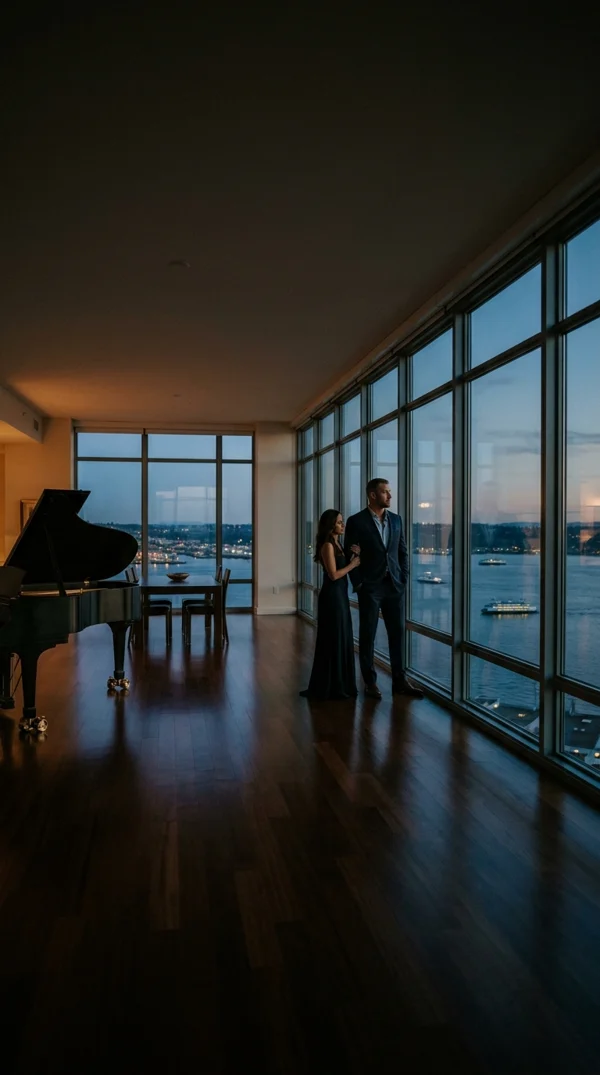
“Then you know I don’t do things by halves.” He came around to face me, and did up the top button of my coat, slowly, with a kind of attention I had never seen anyone give a button. “There’s a room on the eleventh floor. Eleven-oh-seven. The key’s at the desk in your name. Nobody will be in it but you, and nobody will knock. Go up, or go home to him. Either is your right.”
“And tomorrow?”
“Tomorrow at nine, if you want to, Mrs. Thornbury will bring you to the top floor and I’ll show you the rules.”
“Rules for what?”
He looked at me for long enough that I could hear the piano in the lobby, which nobody was playing, humming a little in its strings every time the street doors opened.
“Forty nights,” Maxim said. “My rules. Your word stops it. You’ll know by the end what you are.”

What did you think?