I folded the rules along their soft crease and put them back in my bag with my reading glasses.
He didn’t move. He stood where the word had stopped him, in the middle of the long room, with the black bay behind him, and watched me do it.
“One thing,” I said. My voice came out almost normal. “On the way out. Undo it. Whatever you did with Keith, the bank, the note, all of it. I don’t want anything between you and him with my name in it.”
He looked at me for the space of one beat. Then he said a single word, the only one he said.
“Yes.”
I walked to the elevator. It was a long room. I had never noticed how long. My heels were very loud on the floor, and I didn’t look back at the piano, and the walnut doors closed on him standing there in the middle of the room, and the elevator fell fourteen floors in that long smooth breath, and opened on the lobby, and the lilies, and the night porter, who said, “Good evening, Ms. Bjornstad,” as if it were.
At half past twelve I called Dorothea.
“Do you have a guest room?”
“I have three,” she said. “I’ll leave the porch light on.”
Dorothea’s house was at the top of Queen Anne Hill, a tall gray Victorian full of books and Persian rugs and the smell of her late husband’s pipe, which she said had never come out of the curtains in eleven years and which she would not let anyone clean. She met me at the door in a plaid dressing gown with a gin and tonic in each hand, and didn’t ask me a single question until I’d drunk mine, and then she only asked one.
“Did he hurt you?”
“No,” I said. “He did what I told him.”
She looked at me over her glasses for a while. “Ah,” she said. “That kind.”
My mother’s piano was still in the Garnet Room. I couldn’t go and get it. I couldn’t walk into his building and ask his staff to move it, and I couldn’t teach in that red room under his ceiling, not now. So on Monday I taught at my students’ houses, on their pianos, which is to say on a collection of uprights so out of tune and so loved that I nearly cried at three of them. Maddie Okonjo’s had a plastic doll living inside it. Benji Lindahl’s had a family of crayons living under the lid.
And at night, at Dorothea’s, I practiced on her dining table.
It’s an old trick. Every pianist knows it. You sit at a table and you play the piece on the wood, every note, the right fingers, the right weight, and you hear it in your head. Nobody else hears anything but a soft drumming, like rain on a tent.
I played the whole Appassionata on Dorothea’s mahogany dining table every night that week.
And here is what I found out, sitting there in silence with the fortissimos coming. On the table I wasn’t afraid of them. Not at all. I brought both fists down on the seventeenth bar as hard as I liked, and the mahogany took it, and I heard the chords go off in my head like cannon, glorious, enormous, and my hands didn’t stop.
It had never been the loud I was afraid of. It was being heard.
Maxim
At eight o’clock on Sunday morning I called my lawyer at his house and told him to withdraw every condition I had put to Keith Gorski.
He was quiet on the line. Then he said, “Max. That’s two point three million dollars of leverage over a man who’s been photographing her.”
“It was never mine,” I said. “Call his lawyer first thing tomorrow. No conditions. No threats. The note will be held like any other note, by a lender who has no interest in his marriage. Do nothing with it. Nothing at all. Unless Ms. Bjornstad asks.”
“And if she never asks?”
“Then you’ll do nothing forever,” I said, “and I’ll go on paying you for it.”
At nine o’clock that night I went up.
I don’t know why. It was habit, or it was the rules, or it was that I didn’t know what else to do with nine o’clock now that she wouldn’t be in it. The room was dark. I didn’t turn on the lamps. I stood by the window and took off my watch and wound it, and it took eleven seconds, as it always does, and then I put it back on and there was the rest of the night.
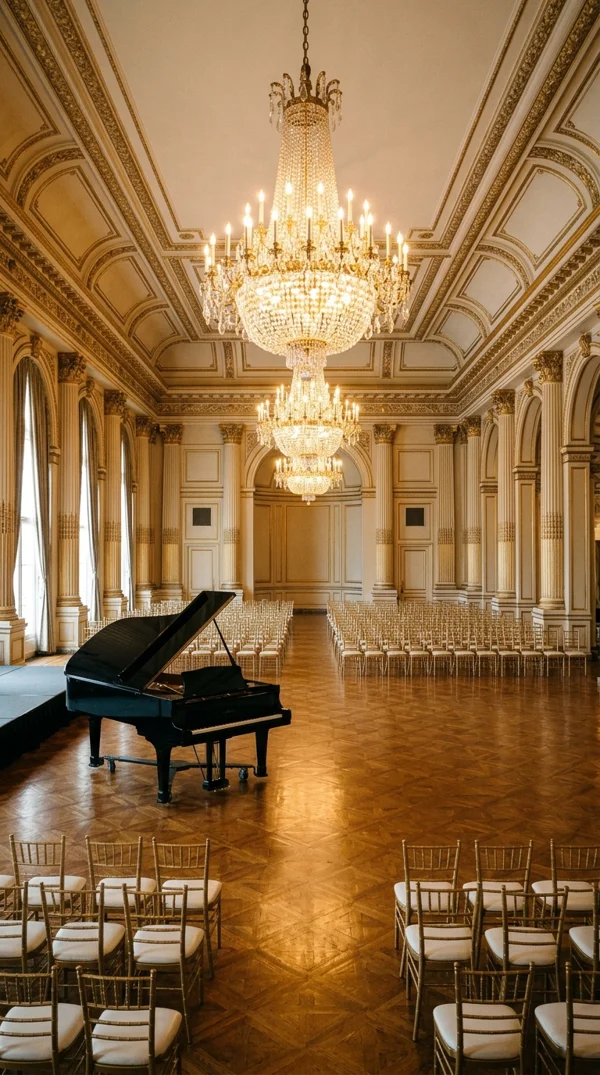
The piano was closed. She’d closed it on the ninth night, very gently, so it wouldn’t make a sound. I’d sat in this same chair then, by rule, and waited for her, and she had walked the length of the room to me.
I sat in it now. I didn’t call her. I had her number and I had a driver and I had a building full of people who would carry a message anywhere in the city in twenty minutes, and I sat in my chair with my hands on the arms of it and didn’t move them.
She was right. That was the thing I couldn’t get past, sitting there in the dark. Not that she’d stopped me. That she’d been right. In September, fourteen years ago, a woman I loved had said enough, and I had been so frightened that I’d made a folder, and found a doctor, and decided. And on Wednesday a woman I loved had said rule nine, and I had been so frightened that I’d called a bank, and decided.
I had told myself I’d written the rules so I’d never again be a man who doesn’t stop. I had been wrong about what I needed to stop doing.
I’d written rule seven myself. Your word stops everything, at once, with no explanation owed. I had meant it when I wrote it. I had never thought about what it would be like to keep it.
Mrs. Thornbury came up at ten with a question about the Rainier Room. Whether to cancel Sunday.
“Ask her,” I said. “It’s hers.”
She went away. I sat there until midnight, and then I went to bed, and on Monday at nine I went up again, and on Tuesday. I’ll go up every night until the fortieth, I thought, and then I’ll stop, because that was the offer, and because her word stops it, and because for once in my life I am going to do exactly what I was asked.

 100 to start reading with.

What did you think?