What Is Traded, chapter 4 of He Would Rather Starve
She did not notice the blood until the house did.
The piece of stone that had struck her ankle had opened the skin through her stocking, a scrape no worse than she had given herself a hundred times in the yard. She was still kneeling by the chain when she saw the dark spot spreading in the wool, and a single drop run down over her shoe and fall onto the flagstone.
III. BLEED NOT UPON THE STONE.
The crypt went cold. Not the honest cold of a vault in winter but a cold with a direction, as though a great door had opened somewhere above and all the warmth in the house was being drawn out through it. The brazier flames lay flat. And through the stone under her knees came a sound, very low, felt more than heard, like something enormous turning over in its sleep.
Above her, at the top of the crypt stair, a door banged open.
“Miss Vane.” His voice. It was not courteous now. “Are you hurt?”
“My ankle. It’s nothing. A scrape.”
There was a silence at the top of the stair that went on far too long. She looked up. She could see nothing of him but a shape against the grey light of the passage, and a hand on the door frame, gripping it.
“Do not come up,” he said. “Not yet. Mrs. Bell is coming. Stay where you are.”
“I’m not the one who should be staying where I am. Somebody filed through the hoist chain.”
The hand on the door frame tightened until she heard the wood creak.
“Who,” he said, and stopped. When he went on, his voice was lower, and so controlled it frightened her more than shouting would have. “Who did this?”
“I don’t know. That’s rather the point.”
“Mrs. Bell,” he said, past her, to someone she could not see, “salt, and quickly. And then the key to the crypt, and then Toby.” And then, to Hester again, more quietly: “I am going to go away now. Not far. I am sorry. I cannot stay at the top of this stair with your blood at the bottom of it, and keep my word.”
The shape at the top of the stair was gone. She heard his steps go away down the passage, too fast, and a door shut somewhere, and then another.
Mrs. Bell came down with a box of salt and a cloth and said nothing at all. She knelt, as stiffly as Hester’s father used to kneel by the end, and scrubbed the flagstone where the drop had fallen, and poured salt on it in a thick white crust. The low sound in the stone stopped. The flames in the brazier stood up again.
Then she looked at Hester’s ankle and bound it with a strip of linen from her apron pocket, quickly and well, as though she had bound a great many ankles.
“Show me,” she said, and Hester showed her the link.
Mrs. Bell turned it in her fingers. Her face did not change, but Hester saw her mouth go thin.
“The crypt key,” Hester said. “Who has it?”
“It hangs in the kitchen. On the nail by the dresser.” Mrs. Bell set the link down very carefully on the trestle, as if it might go off. “Where it has hung for thirty years.”
“So anyone could take it.”
“Anyone in this house.” Mrs. Bell met her eyes. “There are three of us, Miss Vane, and one of them can’t come down here without your leave, and wouldn’t touch a file to save his life. Draw your own sum.”
Toby came clattering down the stair a moment later, white under his weathered color, and stopped dead at the sight of the broken slab. “God’s teeth,” he said. “Miss Vane. Are you all right? I left it hung, I know I left it hung, but it was a sound chain, I’d swear on my mother. It’s been in the coach house since Michaelmas.” He knelt by the stone. “Who’d do a thing like that?”
Nobody answered him. Mrs. Bell picked up her salt box and went up the stair without a word.
Toby watched her go. Then he looked at Hester, and his face was gentle and troubled and a little ashamed, like a man who did not want to say what he was going to say.
“I wasn’t going to tell you,” he said. “I saw her lamp in the yard last night. Late. After the bell. I thought she’d gone out to the hens.”
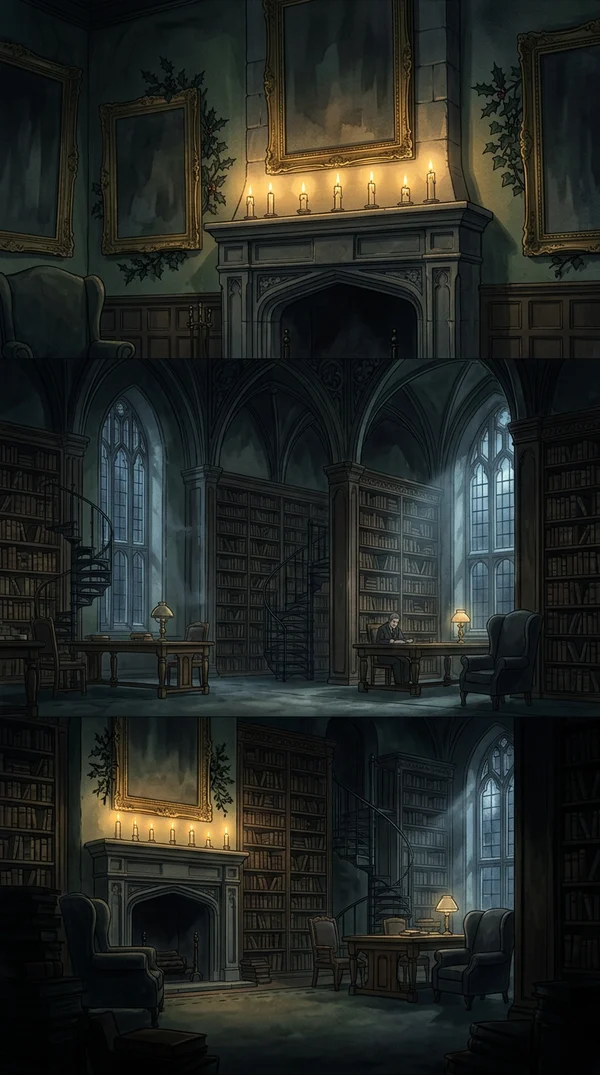
The Ledger of the House lay on its stand at the far end of the library table, and in the late afternoon, before the light went, Hester went and read it.
She told herself it was because a stonecutter reads everything with writing on it. That was true. It was also true that the house had nearly killed her, or someone in it had, and the Ledger was the only thing in Wintersend that seemed willing to tell her anything.
V. WHAT IS TRADED HERE IS WRITTEN; WHAT IS WRITTEN IS OWED.
It was written. Everything was written. On the page after her contract, in the same rust-brown ink, in a hand that belonged to no one, the house had been keeping its accounts.
Hester Vane to Tobias Crane, one sovereign, for carriage from the bridge.
She had paid him that on the first night, at the door, far too much, because she had been cold and proud and wanted him to think she could afford it. She had not seen him write it down. Nobody had written it down. It had simply been written.
Under it went the house’s ordinary business, line after line. Agathe Bell to the carrier, flour and lamp oil, for eleven shillings. Tobias Crane to a man of Cold Ashby, a salver, for six pounds. Agathe Bell to the carrier, salt. She turned back a page, and another. The same three or four names, the same carriers and grocers, back and back. T. Crane appeared a great deal, selling things. She supposed somebody had to sell what a man who did not eat no longer used. Further back the hands of the trades were older, and the trades were stranger, and she found a line that made her stop with her finger on the page.
Ambrose Severn to Joseph Hebden of Cold Ashby, a cup, for two guineas.
A cup of what, she did not need to ask. She turned the page back and found another, the same month the year before, and another, and another, years of them. She shut the Ledger.
That evening she did something she had never done in her life. She went to the woodpile in the yard and found a scrap of the broken slab, a fist-sized piece of gritstone with a good fine grain in it, and sat by the kitchen fire with a small chisel and a riffler and carved a wren.
It was not a good wren. She was a letter-cutter, not a carver; it was too round, and its tail stuck up like a thumb. But it had a wren’s cocked, indignant look. She had noticed that Mrs. Bell put crumbs on the kitchen sill every morning before the fire was lit, and that a wren came to them, a small brown fury of a bird, and that Mrs. Bell stood and watched it eat with her hands in her apron and her face for once not shut at all.
She set the stone wren on the sill.
Mrs. Bell came in with a bucket and stopped and looked at it.
“What’s that for?”
“Nothing,” Hester said. “It’s for nothing.”
Mrs. Bell looked at her for a long moment. Then she looked at the wren. “What do I owe you?”
“You don’t owe me anything. That’s what for nothing means.”
“Nobody in this house gives anything for nothing,” said Mrs. Bell. But she did not move the wren off the sill.
Later, when the house had gone dark and the dusk bell had rung, Hester stopped in the library on her way to the crypt and opened the Ledger again to the last page. She read down the day’s trades. Flour. Lamp oil. A pair of boots resoled.
There was no wren.
She stood there with her finger on the page for longer than she meant to, not knowing yet why it mattered, only that it did.
He was waiting in the library when she came back up at dusk, at the far end of the table, in the dark, as he had been on the first night. He had put the candelabrum at her end.
“I have asked Mrs. Bell to make up a room in the west wing,” he said, before she could sit, “which is as far from me as this house allows. You will be paid in full. You need not cut another letter. The work can wait until spring, and someone else.”
“And the rule over the door? None leaves before the thaw who has signed?”
“You need not leave. You need only stop.”
“No,” said Hester.
“Miss Vane.”
“I don’t take money for nothing.” She sat down. “You’d be paying me three hundred sovereigns to sit in a cold room in the west wing and wait for whoever filed that chain to think of something better. No. If somebody wants me to stop cutting your names, I’d very much like to know why. The quickest way to find out is to keep cutting them.”
He was silent. She could not see his face. She could see his hands on the table, at the edge of the light, very white.
“You think it was Mrs. Bell,” he said.
“I think I don’t know who it was. Toby says he saw her lamp in the yard last night. Mrs. Bell says there are three people in this house and draw my own sum. And you’re the third. And you wouldn’t touch a file to save your life. Her words.” She looked at the dark where his face was. “Why does she stay?”
“I have never asked her.”
“Not in eleven years?”
“In eleven years,” he said, “I have not been able to look at her for long enough to ask her anything.”
The fire ticked in the grate. Somewhere above them the house creaked and settled.
“I will make you a bargain,” he said at last.
“I’m listening. I’m always listening to bargains.”
“You will not go down to the crypt alone. Toby or Mrs. Bell will be on the stair while you work, both, if I can arrange it, so that each one is watching the other. And you will give me one hour each day, at dusk, here, before you go down. So that I know you are alive.”
“What do I get?”
He considered it. “Chess,” he said. “I have played it alone for a hundred and eighty years. I am very good, and I am very tired of beating myself.”
“I don’t play chess.”
“Then I will teach you, which will be worse for you and better for me.” One corner of his mouth lifted, very slightly, as if to see whether it still could. “And names. You will read me the list, and I will tell you who they were. It is easier to cut a name if you know it.”
She looked at the length of the table. Thirty chairs. Him at one end in the dark and her at the other in the light, and between them the polished wood going on and on, like a road at night.
“All right,” she said. “That’s a bargain.”
There was no pen and no blood. She glanced at the Ledger on its stand, at the far end of the table, near his hand. She wondered whether, if she went and looked, she would find the hour written down.
She did not go and look. Instead she stood up, and picked up her candle, and moved one chair along the table toward him, and sat down again.
He watched her do it. He said nothing at all.
But she saw his hands, at the edge of the light, go very still.

What did you think?