Grudge, chapter 3 of Kill Me Before It Burns
Jory took one look at us coming down the Cendry dock ladder, chained wrist to wrist, me in a strange man’s coat with a lump in the front of it, and said, “Well. That’s not the egg.”
“It was the egg,” I said.
“And that’s not Dace.”
“That’s the Breaker.”
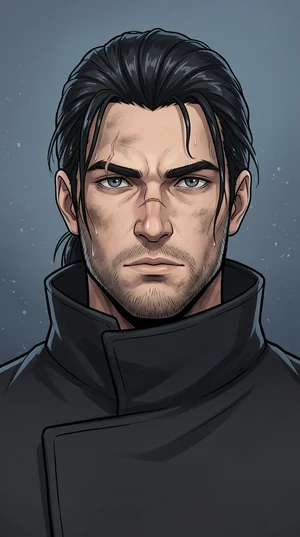
Jory Fenn is twenty-four and the best skiff pilot on the lower isles, and he has a face like a pleased dog. He took in Idris from boots to hair, slowly, and then turned to me with his eyebrows up somewhere near his hat.
“Sorrel. Darling. I leave you alone for one night.”
“Can you fly us to the Hook or not?”
“I can fly anything to the Hook.” He held out a hand to Idris to help him into the skiff, and when Idris didn’t take it, Jory simply took his elbow instead. “Mind the wet bit. Mind the other wet bit. It’s all wet bits, honestly, she’s a skiff. You’ve got lovely forearms for a man who hunts my friends. Don’t tell Tobin I said so. My fella on Tallow. He blows glass at the Cendry works and he’s the jealous sort, and he’s got forearms too.”
Idris looked at me over Jory’s head.
“He does this,” I said. “It means he likes you.”
“He doesn’t know me.”
“He likes everyone he hasn’t met yet. It’s a terrible weakness.”
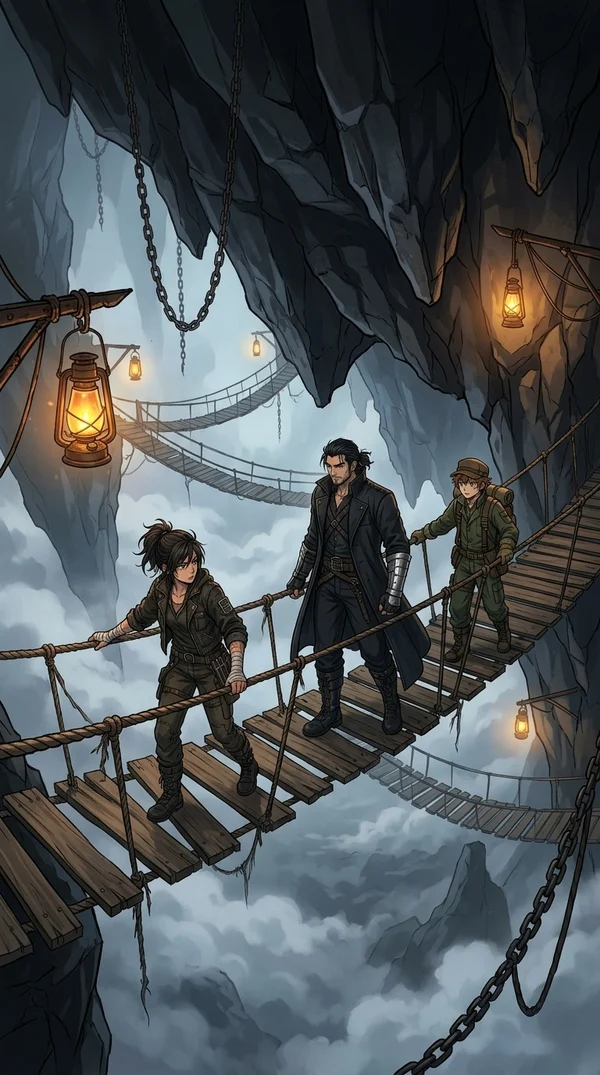
The Gossip is a narrow skiff with a storm-sail and a keelstone sliver set in her belly, and she flies like a gull with a grudge. Jory took us down through the dark in long slow spirals, off Tallow’s lift and into the wet air below, and by the time the sky was going grey we were inside the Lowmarrow fog, so thick I could taste it. Idris sat in the bottom of the skiff with the chain across his knees and didn’t say anything. Every few minutes the hatchling would put its head out of my coat and look at him, and he would look back, and neither of them blinked first.
Brask’s Hook hangs off the north edge of Lowmarrow on six chains and a prayer. It’s a gutter-dock: a rambling, tarred wooden platform where the isle’s runoff pours over the lip into the fog, and where skiffs too small or too shabby for the proper docks come in to tie up. There’s a crane, a smokehouse, a store of rope and tar, and a kitchen built around the biggest stove on the isle, because Auntie Brask believes that most problems are caused by people being cold.
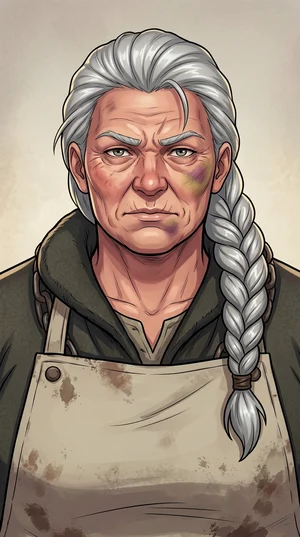
She was standing in the kitchen door when we tied up, wiping her hands on an apron. She’s a big woman, grey hair in a braid as thick as a hawser, two fingers missing from her left hand. She told me when I was nine that a dragon took them, and I didn’t believe her until I was nineteen.
She looked at the chain. She looked at Idris. She looked at the lump in my coat.
The hatchling put its head out and yawned, showing every needle.
Auntie Brask sat down on the step.
“Cold waits,” she said, after a while. “Warm wakes. You daft, daft girl.”
“I know.”
“Did you carry it under your shirt?”
“I needed my hands.”
“You needed your head.” She got up again, with a noise, and held the door. “Come in, then. Bring your Breaker. Mind he wipes his feet.”
Inside she didn’t ask a single question. She opened the stove, raked out a shovel of glowing coal, set it on the hearthstone and held out her maimed hand for the hatchling. I unbuttoned the coat. The hatchling came out slowly, sniffed the air, and saw the coal.
It went down my leg like water and fell on the coals with a cry of pure joy.
We watched it eat. It took a coal in its jaws the way a cat takes a mouse, crunched, swallowed, and glowed, very faintly, along the seams of its belly scales. It ate four. Then it saw the spoons in the jar on the table and climbed the table leg to get them.
“Let it,” said Brask, when I moved. “It wants iron. They want iron and heat and someone to bite. Vael ate a whole harness rack once, buckles and all.”
Idris had gone still beside me. “You knew Vael.”
“I was a groom in the Corona yards for thirty years.” Brask didn’t look at him. “That was a long time ago.”
“What’s your name?”
“Odette Brask.” She was watching the hatchling. “And yours?”
“Ravelle.”
She didn’t say anything. She went to the stove and stood with her back to us, stirring a pot that didn’t need stirring, and the back of her neck had gone a dull red.
The hatchling had got the lid off the spoon jar. Idris, who I think simply couldn’t help himself, reached out to take a fork away from it before it swallowed the tines. It whipped round and bit him between finger and thumb.
He didn’t yell. He just went white and very polite. “Let go.”
It didn’t. It held on and looked at him with total self-satisfaction, and I felt the satisfaction, hot pennies on my tongue.
“She holds a grudge,” Brask said. “Look at the frill on her. She’s a she.”
“Grudge,” I said. “That’s her name, then.”
Idris pried his hand free. “You can’t name a dragon Grudge.”
“Watch me.”
“It’s the last dragon in the Ninefold.”
“Then she should have a name people remember.” I held out my arms and Grudge, who had swallowed the fork after all, climbed into them, heavy and hot. “Grudge. Hello.”
She sneezed on me. A spark came out with it, tiny and blue, and went out.
Jory came in from tying off the skiff, saw the fork-shaped bulge going down her throat and said, “Oh, I love her,” and that was settled.
By midday I couldn’t stop shaking again. Grudge had eaten half the cutlery and two more coals and had doubled in size since the Cendry roof, cat-sized now and heavy as a sack of meal, and every bit of that had come out of me. My fingers were white. Brask took one look at my lips and pointed at the settle by the stove.
“Blanket,” she said. “Both of you. He’s warm. Use him.”
“We’re chained,” I said. “I’m already using him.”
“Use him better.”
Which is how I ended up on Brask’s settle in front of the stove, under her old wool blanket, pressed against the side of the man who’d sworn to kill me, with the chain lying across both our laps and a dragon asleep in the hollow between us like a hot brick.
He was very warm. That was the problem. He was warm the way a stone wall is warm after a long day, all the way through, and my body wanted it so badly I had to keep reminding myself whose it was. His arm was along the back of the settle because there was nowhere else to put it. My head was very carefully not on his shoulder.
“You can lean,” he said, to the stove.
“I’m fine.”
“Your teeth are knocking.”
“They’re thinking.”
He made a small noise, the noise of a man declining to argue with a woman’s teeth. After a while I leaned. He didn’t move except that his arm came down off the back of the settle and lay along my shoulders, heavy and careful, as if he were laying a coat over someone asleep.
“This doesn’t mean anything,” I told his collarbone.
“No,” he agreed. “It’s tactical. If you freeze, I’ve chained myself to a corpse for nothing.”
“That’s the most romantic thing anyone’s ever said to me.”
“Then you’ve been robbing the wrong people.”
I laughed before I could stop it, and felt him feel it, the small jolt of it going through both of us under the blanket. His thumb moved once on my shoulder and went still again, as if it had done something without permission.
Grudge stretched in her sleep, rolled onto her back and put all four feet in the air. I put my palm on her copper belly, because I couldn’t not. Her heart was going under my hand, fast and light. The same beat I could feel in my own throat.
And then, under it, another.
Slower. Quieter. Further in. Like someone knocking in another room of the same house.
“Auntie,” I said. “Why has she got two heartbeats?”
Brask was at the table chopping onions. The knife stopped.
“Hatchlings are odd,” she said, and put the knife down, and went out to see to the smokehouse, and didn’t come back for an hour.
I looked at Idris. He was looking at the door she’d gone through.
“Do you know her?” I said.
“No,” he said, slowly. He didn’t sound sure.
The fog came down thicker in the afternoon and Jory went to find out what was being said on the docks. I must have slept. When I woke, the light was brown and the stove was ticking and Idris’s head had gone back against the settle, his eyes closed, his breath slow.
I looked at the chain. I looked at his wrist.
I slid my fingers under his cuff, very gently, and pushed back his sleeve.
The silver line ran under his skin from the heel of his hand halfway to his elbow, thin as a harp string, catching the stove light. Wyrmgut silver. I’d fenced an inch of it once, out of a Reliquary inventory, wrapped in a twist of lead because it hummed in your pocket. The buyer had told me nothing could cut it. Not steel, not acid, not a jeweller’s saw. Nothing but the fire that spun it, and the fire that spun it had been dead for twenty years.
“Find what you were looking for?” Idris said, without opening his eyes.
I didn’t take my hand away. “You sleep like a liar.”
“I don’t sleep with thieves’ hands on me.” He opened his eyes and looked at me, and he didn’t pull his arm back either. “It’s an oath cord. Every Breaker wears one. Any bond not of the blood, I will end. Any wing not of the Crown, I will bring home.”
“And if you don’t?”
“It tightens.” He turned his hand over in mine. The silver had a faint warmth to it, like the memory of a fever. “On Tallow, when I didn’t hand you to the Lanterns, it decided I was being slow. It’s been sulking ever since.”
“That’s a stupid way to make a man keep his word.”
“It works,” he said.
Grudge woke, then. She looked from my face to his, rolled off the settle, and climbed him. Straight up his coat, claws and all, and turned round twice on his chest, and lay down with her chin on his collarbone and her tail around his neck, and sighed.
The warmth in my mouth was smug and lazy and very, very pleased with itself.
“Traitor,” I told her.
Idris didn’t answer. He had gone completely still under the dragon, the way you go still when a bird lands on you. Then, slowly, he lifted his free hand and laid it along her back. His thumb moved once over the ridge of her spine.
“She likes you,” I said. “I don’t know why. You’re going to cut her off me like a bad stitch.”
“She likes my heat. That’s all.” His voice had gone strange. He kept his eyes on the dragon. “It’s always heat, with them. They don’t know any better.”
“You sound like you know.”
For a while I thought he wouldn’t answer. The stove ticked. Out on the dock the fog was dripping off the crane.
“I had one, once,” he said. “When I was eleven. She lived nine hours.”
What did you think?