Founders' Gate, chapter 2 of Ninety Percent Chance of You
At five in the morning on Bloom 109, Founders’ Gate was a very old arch in a very small town with a statue in front of it, and the far side of the Ring was a dark mass overhead dotted with the lights of early kitchens. Ondine Ferrow stood on her plinth in bronze, thirty-two forever, with a trowel in one hand and a slide rule in the other and the face of someone who has just been told the budget. She built the Ring so her crew would never forget what a sky looked like. Every couple who walks the Long Walk starts under her and finishes under her. Tourists rub her left boot for luck. It’s gone gold.
I was not walking the Long Walk. I want that clear. I was walking twenty-five kilometers round the inside of a drum to collect six rolls of paper, with a man who thought I’d set his tree on fire, and I had brought a satchel, a drum tube, two flasks of coffee, and a level of dignity I intended to maintain for the full distance.
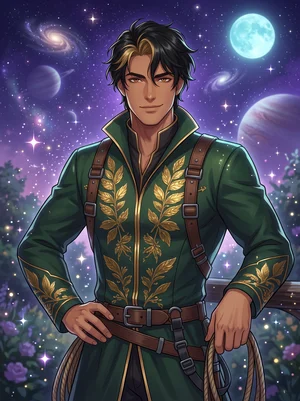
Rook arrived at four minutes past five with a coil of rope over each shoulder, a harness bag, and a paper sack of apples. He looked at me. He looked at the drum tube on my back.
“You look like you’re going to post a very large letter.”
“Good morning to you too.”
“Is it?”
“It’s dry,” I said. “I checked.”
The Gatehouse door opened.
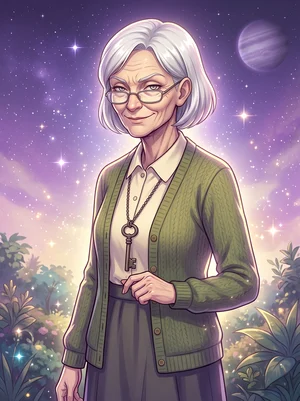
Mina Quaile is eighty-one and keeps the Walk Ledger. She came out in a quilted dressing gown with her white hair in a net, a mug of tea in one hand and a brass stamp in the other, looked at the two of us under Ondine, him with his ropes and me with my tube, and smiled like a cat finding a door left open.
“Well,” she said. “Finally.”
“We’re not walking,” I said.
“Of course not, dear.”
“I mean it. This is an errand. A research errand.”
“Mm.” She put her mug down on the Gatehouse step and took two Walk Cards from her dressing-gown pocket, which suggested she’d had them there for some time. Cream card, a circle printed on it with six empty boxes round the rim, one for each Stem. She stamped the first box on each with the Founders’ Gate stamp, which is an oak leaf, and held them out. A key on a chain swung at her throat as she leaned, old and dark, the kind of key nobody makes any more.
“You’ll want these stamped at every Gate,” she said. “Otherwise it doesn’t count.”
“It doesn’t count anyway. It isn’t a Walk.”
“Then it won’t hurt to have the card.” She tucked mine into the front of my satchel with her own hand. “Six thousand two hundred and twelve couples on the Ledger, Rainwright. Every one of them said they weren’t walking.”
Rook took his card and put it in his shirt pocket without looking at it. That was somehow worse than if he’d argued.
Mina went inside. A minute later the Gate Board beside the arch chimed. Every Board shows the same things: tomorrow’s sky in a couplet, the date, and in small brass figures in one corner the weight, which has said 1.00 every day of my life here. The Gatehouse has a line to all of them, and Mina posts her odds under the weather the way other people post the tide tables.
MARLOWE & ADAIR. 40 TO 1.
“Forty to one,” I said. “That’s insulting.”
“It’s generous,” said Rook.
My handset buzzed. Tully, who had sold Mina the information that we’d be at the Gate at five, which was how Mina knew, had sent me a message: put a week’s pay on you. dont let me down. also you’re on every board in the ring. also the bakery says hi.
I put the handset away. “Let’s go.”
The rules of the Long Walk are simple. You walk the whole circle in a single day, starting and finishing at Founders’ Gate, and you stamp your card at all six Stems. That’s it. People have done it in seven hours, in a wheelchair, carrying a goat. The saying is that if you walk it with someone you come back upside down, which means two things. At the halfway point, under Stem Four, your whole life is hanging over your head, the right way up for other people. And people who finish together are, statistically, in love.
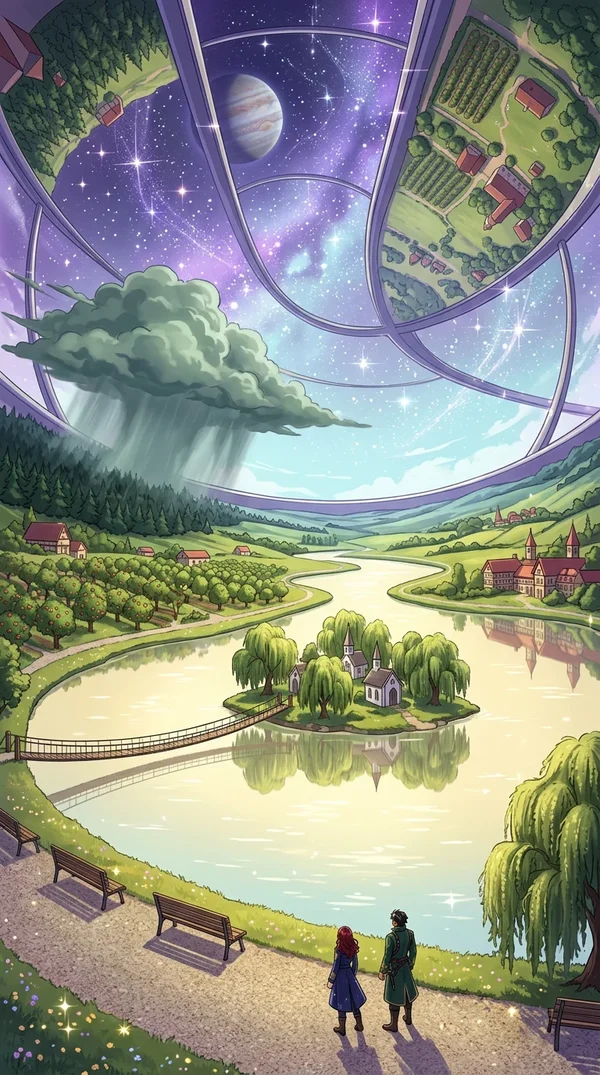
We went spinward out of Landing onto the path to Sweetwater, the land rising ahead of us as it always does, a gentle slope that never gets any steeper because you’re always at the bottom of it. Above us the far side of the Ring brightened as the Lamp warmed. The Overmere hung up there, a sheet of pewter light, with the Wildwood beyond it like a dark green bruise. Somewhere up there, past the lake, was yesterday’s storm. I couldn’t see it. I didn’t like that I couldn’t see it.
Sweetwater was hosed and quiet. The wedding arch on the chapel lawn had been propped upright, its roses drowned brown. The burned cedar limb still lay across the Loop Line rail, black and smoking faintly, with a ring of warden tape around it. The Vow Cedar had a raw white wound sixty meters up. Rook stopped and looked at it, and I didn’t say anything, and I counted that as a kindness.
Then he got an apple out of his sack.
“You know about this,” he said.
“About apples?”
He threw it. Not hard. Straight up and forward, the way you’d toss it to a friend standing a few paces ahead, except there wasn’t anyone, and the apple went up and came down and curved, smooth as a swallow, and dropped into his left hand as if it had been called.
I have seen tourists do this for two years. It had never been done at me before, as a point.
“The ground moves under it,” Rook said, the way you’d explain soup. “It goes up, you go round. Comes back to the left. Same with rain.”
“Rain falls on a slant,” I said, “because the floor of the Ring is moving at about two hundred meters a second, and a raindrop up at cloud height is going slower than the ground it’s falling toward. The air drags it most of the way into line, but not all. From a cloud at a thousand meters it lands roughly thirty-five meters antispinward of where you’d expect. More from higher. I write it into every rain. I wrote it into the rain that went sideways into your lunch on my first day, which was a coil error, which I’ve apologized for in writing.”
He took a bite of the apple.
“Twice,” I said.
“You’re very short on sleep,” he said, chewing.
“I’m very short on patience.”
“You’re short,” he said. “Generally.”
“I’m average. You’re a tree.”
He handed me an apple. I didn’t want it. I took it. It was so good it made me angry.
The Stem Two Bellhouse is a round brass cabin forty meters up the side of the Stem, with a bell on top like a hat. The ladder is in a cage. The cage has a lock. Rook had the key.
“I go up,” he said. “Clip on to me. You come up after on my line.”
“I can climb a ladder.”
“Everyone can climb a ladder. I’d like to know you can fall off one.”
So I went up on his rope like a parcel, and I was furious about it for the first twenty meters and then I stopped being furious, because there’s something about climbing behind somebody who knows what he’s doing. Every few rungs he checked the line with a flick of his wrist without looking down. When I put my foot wrong he said, “Left,” before I’d noticed I’d done it. At forty meters you weigh a shade under a whole you, ninety-nine parts in a hundred; you couldn’t measure it with a bathroom scale. I felt it anyway. Everyone does. It’s the first floor of the sky.
The drum sat in a glass case on a plinth in the middle of the Bellhouse, a brass cylinder turning so slowly you couldn’t see it move, wrapped in a paper roll ruled in faded blue. Four pens rode on it, one each for rain, wind, pressure and the wet of the air, scratching four lines in ink that a founder had mixed. The case opened with a Rainwright’s key. Mine fit like a hand in a glove.
I knelt on the boards and read the season’s roll from the beginning, the way my father used to read his barometer, with his finger on it.
Rain: what the Almanac said it had written. Every night, two to four, the little ticks of scheduled showers, my Show Rains in daylight, the eleven hiccups, yesterday’s cloudburst like a cliff. No surprises.
Pressure and wind: fine.
The fourth line was wrong.
“What?” said Rook, from the doorway. He couldn’t have heard anything. I hadn’t said anything.
“The humidity.” I put my finger on it. “It’s high. All season. Look, there, and there. The air’s been holding more water than it should. Way more. As if there’s water up there the Ring doesn’t…” I stopped. “As if there’s water up there that isn’t on anybody’s books.”
“Is that bad?”
“It’s impossible,” I said. “Which is worse.”
I unclipped the roll, rolled it, and put it in the tube on my back. I fitted a fresh blank from the Bellhouse locker and set the pens on it, and watched them start to scratch, and closed the case. One down. Five to go.
At the foot of the Stem Two Gate, Rook stamped both our cards with the Stem Two stamp, which is a peach. He did mine without asking, holding it flat on his palm, and handed it back.
The Asante Orchard sits on the terraces above the Gate, rows of Founders’ Blush peach trees in pink Bloom flower, and at its top, beside a wooden house with a green door, Del Asante was hosing mud off forty white wedding chairs.
She was in overalls with her hair tied up in a scarf, her parents eating breakfast on the porch steps, and when she saw us coming up the orchard path she dropped the hose, put both hands on her hips, and lit up like a festival at dusk.
“No,” she said. “You’re walking it?”
“We’re not walking it.”
“Forty to one! I put ten on you.”
“Everyone needs to stop betting on me.”
Kwame Asante came down the steps with a jar of last year’s bottled peaches and Efua with a jug of something cold, and they sat us on the porch and fed us as if we’d come back from a war. Kwame asked Rook about the Vow Cedar. Efua asked me about my mother. Del sat on the rail and watched us with her chin on her fist and her eyes going back and forth like someone at a tennis match.
When Rook went round the back with Kwame to look at a split limb in the old pear, Del slid along the rail to me.
“The complaints,” she said quietly.
“What about them?”
“You know they’re not about you. Not really.” She pulled a leaf off the rail and turned it over. “His mum left. On a hauler, when he was ten. Just went. Sends a postcard every Founders’ Day, same words every time. Everybody in the Wildwood knows. He doesn’t talk about it.” She looked at me sideways. “And then you turn up. Off-world. On a contract. Leaving.”
“I’m not leaving. I’m finishing a contract.”
“You applied to a dry moon. Tully told Mina. Mina told everyone.”
I opened my mouth to say that Tully was going to be living on the street, and Del tucked the leaf behind my ear and got up and picked up her hose, and I sat there with a peach in my hand and nothing to do with my face.
I filed it. That’s what I do with information. I put it in a box and I put a number on it and I don’t take it out until I need it. I filed it under Not My Business. I put it at fifteen percent relevant. I took it out four times before we’d left the porch.
Rook came back round the house wiping his hands. He was looking past me, up, at the sky, and his face had gone still in a way I’d learn to recognize.
I turned and looked where he was looking.
High over the far side of the Ring, over the Overmere, a cloud was building. Not a cloud. The cloud. Grey-green, gathering itself up out of nothing over the lake like a fist closing. As I watched, it grew a dark skirt of rain that hung down toward the water and didn’t quite reach it, and inside it, very faint, something flickered.
Down at the foot of the orchard, the Stem Two Gate Board chimed.
We could just read it from the porch. The tiles clattered over under our names and our odds, and the Almanac, which only ever writes tomorrow’s sky, wrote today’s.
Spinward cloud and spinward pair; walk my pace. I’ll meet you there.
What did you think?