The Last Stone, chapter 1 of One Kiss to Kill the Dragon King
I had been eating poison for eighteen years, so the dragon didn’t frighten me nearly as much as the veil.
It was Princess Amarante’s veil, eleven yards of silk the color of new cream, sewn with seed pearls by forty women who had wept, I was told, the entire time. It smelled of her. Orris root and bergamot and the particular sourness of a girl who has been told no for the first time in her life and has thrown a hairbrush about it. Every breath I took through it tasted of someone else’s tantrum.
“Hold still,” said Dorrit, and lifted the hem of it to reach my mouth.
The spoon was silver. My number was scratched into the handle, 17, in the Mistress of Tasters’ own crabbed hand. On it trembled one green drop.
I opened my mouth. I swallowed. I smiled while I did it, from habit, though the only people watching were three hundred soldiers of Orlen and the Lord Chancellor on his gray horse, and none of them cared what my face did.
Ashlily tastes of burnt honey. It’s sweet first and then it isn’t, and the finish goes on long after you have stopped wanting it. In a jug of wine it would kill a lord by the next new moon. In a dragon’s blood it would kill him before the candles burned down. In me it did nothing but sit on my tongue like an old friend, because I had been taking it since I was six, twice a day, every day, and there was more of it in me now than there was of anything else.
“That’s the morning,” Dorrit said, and tucked the spoon into the case at her hip. The case held six little green bottles in a row and a knife with a bone handle. She had shown me the knife on the first night of the journey, as you show a horse the whip so you will never need to use it.
“You’re very good to me,” I said.
“I’m paid to be.” She let the veil fall. “Remember. Your mouth carries it. Your blood carries more.”
“I was there when they taught it to me, Dor.”
“Then remember it on the seventh night.”
She didn’t need to tell me. Nobody knows ashlily the way a taster does, from the inside. The queen kept four of us at Haverl: two on the spoon, tasting her morning and night, and two resting clean. Three days without a dose and the bane goes out of a taster’s blood, and what it leaves behind is the only cure for ashlily anyone has ever found. A queen whose court poisons each other with burnt honey likes to keep the remedy in the next room. I had rested clean twice. The second day is a fever that takes your teeth apart; some girls don’t come out the other side of it. I had been bled once, into a silver bowl, for a duchess. She lived. I was not invited to the celebration.
On the seventh night, at the Ember Rite, before the dragonkin court of Gildenhollow, the king of the dragons would kiss his tribute bride. That was the custom, three hundred years old. I would bite the inside of my lip before he did it. Hard. My blood in his mouth, eighteen years of bane in my blood, and the dragon who had held the Skarn since before Orlen had a queen would die on his own floor in front of everyone who feared him.
And then, at the midnight horn, the honor guard waiting at the bottom of the mountain would come up the Thousand Steps, and the hoard would belong to Orlen, and I would belong to nobody at all.
That was the bargain. A house with a blue door in Haverl. A pension. My taster’s bond burned in front of me. Lord Grennet had written it out and signed it, and I had folded it small and sewn it into the hem of my shift, where it sat against my knee like a promise.
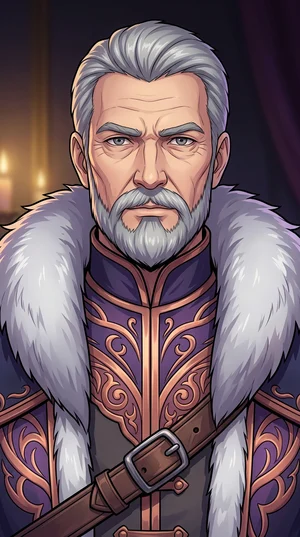
He rode up beside me now. Aldous Grennet, Chancellor of Orlen, sixty and straight-backed, with a soldier’s hands and a courtier’s beard. He had been a general once. Eighteen years ago he had ridden all night to meet the dragon at Thornby, and arrived too late for everyone but me. He had found me in the ash behind the bakery, he liked to say, six years old and not crying, holding a burnt loaf like it was a doll.
I didn’t remember that. I remembered the heat, and the roof of the bakery coming down in a single slow sheet of red, and my mother’s voice from the other side of it. I remembered a shadow across the moon with wings.
“Nervous?” Grennet asked.
“Of course not, my lord. I’m marrying a monster in front of his family. Every girl dreams of it.”
He smiled. He liked me when I was clever, as you’d like a dog that can open a gate. “The Last Stone,” he said, and pointed.
It stood where the mountain road ended, a gray standing stone as tall as two men, cut with the words of the Ember Compact in a script so old that the letters had gone soft as soap. Above it the Thousand Steps climbed into cloud. Below it, Orlen spread out green and gold to the river, every vineyard I had ever been made to taste the wine of.
The treaty said no armed man of Orlen would set foot past the Stone. The treaty said a lot of things.
The soldiers halted. The horses stamped. Somebody’s harness creaked. I put my hand on the cold face of the Stone because my knees were less steady than my mouth, and I waited for the sky to do something.
It did.
First the wind dropped, all at once, as if someone had shut a door. Then the cloud above the Steps went dark from the inside, and bulged, and tore. And the dragon came down through it.
I had been told he was the size of a cathedral. That was a lie. Cathedrals hold still. He was the size of a storm with a spine in it, black at the edges and the deep copper of a cooking pot along the belly, every scale catching light and throwing it back. The wind of his wings flattened the veil against my face so hard I tasted silk. Horses screamed. Three hundred men of Orlen remembered all at once that they had mothers.
He landed above the Stone, on the first broad landing of the Steps, and the mountain took his weight with a sound like a cellar door.
His head was longer than I was tall. His eyes were gold. Not yellow; gold, the hammered, rich, coin-in-a-fist color of it, with a dark slit down the middle that widened as he looked at me.
I lifted my chin. I am a taster. We swallow first and scream later, if we scream at all.
The dragon breathed out. Heat rolled over me like an oven opened, smelling of hot stone and cloves and something underneath, something bitter and familiar that I could not name in the moment and should have.
Then he folded.
There isn’t a better word. The great body drew in on itself like a closing fist, scales sinking, wings pulling down and in, the whole terrible bulk of him going smaller and denser and stranger, and where the dragon had been a man stood on the landing with one hand on the rock, breathing hard.
He was tall. Dark-haired, the hair long enough to be a decision, and wearing black that had certainly not been on the dragon. He had a face like a blade somebody had been careful with: long, severe, a mouth that looked as if it had stopped smiling a century ago to save effort. There were scales still at the side of his throat, copper and black, going down slowly like embers.
His eyes stayed gold.
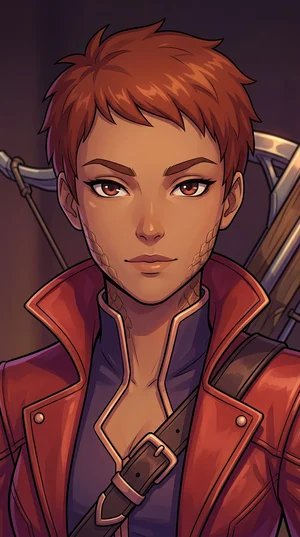
Two people came down the Steps behind him, a woman in a red leather coat with scales along her jaw and a crossbow on her back, and a younger man with a lantern. Guards. The woman looked at the king, and then at me, and her eyebrows went up into her hairline and stayed there.
“Lord Chancellor,” the king said. His voice was low and dry and carried without effort, the way heat does. “You’re early.”
“Your Majesty.” Grennet bowed from the saddle. “Orlen honors the Compact. We bring the year’s gold and the seventh-year bride. Her Royal Highness, Amarante of Orlen.”
The king came down the last few steps. He did not look at Grennet again. He looked at me, and he kept looking, and I had the strangest idea that he was tasting the air the way I would taste a sauce: for what was in it that shouldn’t be.
He stopped an arm’s length from me. He smelled of cloves and smoke and, under that, burnt honey.
That was the thing I noticed and should have kept noticing. I put it down to my own mouth. Eighteen years of ashlily and you taste it everywhere.
“May I?” he said, and lifted the veil.
I don’t know what he saw. A woman of twenty-four, small, sharp-chinned, gray-eyed, with Amarante’s pearls in her hair and no expression on her face, because the third rule of tasters is that you smile while you swallow, and I had swallowed a great deal to get here.
His pupils went wide and black in the gold. For a moment the scales at his throat came back up, a ripple of copper, as if something underneath his skin had lunged.
The woman with the crossbow said, very quietly, “Oh, shit.”
The king let the veil fall. “The gold may be left at the Stone,” he said to Grennet. “My people will carry it. The bride comes with me. Her maid may come. No one else.”
“Of course, Your Majesty.”
“And Lord Chancellor.” The king finally turned his head. “Your soldiers may camp at the Stone until the Rite, as is customary for the bride’s honor. If one of them puts a foot on the first step, I’ll eat his horse.”
The Thousand Steps are not a thousand. I counted. They are one thousand one hundred and six, cut into the mountain at a pitch designed by someone who hated knees, and by the four-hundredth my legs were shaking and the veil was a wet rag in my mouth.
The king walked beside me. He did not offer his arm. Dorrit climbed behind us with the guard who had the lantern, and the woman in red, whom he called Ilka, went ahead and occasionally looked back at me as if I were a bet she hadn’t decided whether to take.
At the five-hundredth step he said, without turning his head, “You’re not Amarante.”
I kept climbing. It is very important, when you are caught, to keep doing whatever you were doing. Stopping is a confession.
“I’m sorry to disappoint Your Majesty.”
“You haven’t. I met Amarante at her mother’s coronation. She was nine. She bit me.” He climbed another step. “She has green eyes, she’s left-handed, and she’s never been afraid of anything in her life because nobody’s ever let anything happen to her. You’re right-handed. You’ve been holding the rail with your left so I won’t see. And you’ve been afraid since the moment the cloud went dark, and you haven’t let it reach your face once.”
I said nothing. Behind me Dorrit’s breathing had changed.
“Who are you?” he asked.
“Your bride, Majesty. The Compact says a daughter of the royal house. It doesn’t say which house is royal this year.”
That earned me a look. A short one, gold and assessing. At the corner of his mouth something happened that, on a less disused face, would have been the beginning of a smile.
“Here is what I know,” he said. “Orlen sent me a liar. Orlen always sends me a liar, but they usually trouble to make her a princess. Here is what I don’t care about: why. Here is what I need.” He stopped on a landing where the wind came round the shoulder of the mountain and pulled at the wet silk. “My court has been watching me for three years, waiting for me to fail. A king who keeps the Compact, who takes his bride before them and holds the Rite on the seventh night, is a king who isn’t failing. So. You’ll play the willing bride. In public you’ll look at me as if I’m the best thing that ever happened to you. In private you’ll be left alone. On the seventh night we’ll hold the Rite. On the eighth morning I’ll take you down the far side of this mountain with enough gold that you’ll never need to lie for anyone again.”
“And if I refuse?”
“Then I’ll walk you back down a thousand steps and tell Grennet I don’t accept forgeries.”
One thousand one hundred and six, I thought. And then Grennet’s men would cut my throat at the Stone, because a taster who had failed was a taster who had seen too much.
I looked up at him. The light of the high snow was behind him, and his eyes were still that impossible gold.
The seventh night. The Rite. The kiss. He was offering me exactly what I had climbed this mountain to get.
“Done,” I said.
“Good.” He started climbing again. Then he stopped, two steps above me, so that for once I had to look up to see his face. “One more term.”
“Your Majesty?”
“You never kiss me.” He said it plainly, the way you’d tell a guest which stair creaks. “Not in public. Not in private. Not for the court, not for the Rite, not because you’re bored or curious or think it would be funny. Whatever happens in that hall on the seventh night, your mouth stays your own.”
The wind snapped the veil against my face. I tasted silk, and orris, and under it, on my own tongue, the long dark finish of burnt honey.
“Why?” I asked.
“Because I said so. Are we agreed?”
Behind me, Dorrit had gone completely silent. Ahead, Ilka had turned around on the step and was staring at her king as though he had grown a second head.
I had come up this mountain with one weapon. It was in my mouth. I had swallowed it every morning and every night since I was six years old, and it was the only thing in the world I had ever been allowed to keep.
And the dragon had just made it the one thing I could never give him.
“Agreed,” I said, and smiled, and kept climbing.

What did you think?