Song of the Year, chapter 1 of The Bodyguard My Ex-Husband Hired
I watched my ex-husband win Song of the Year on a television bolted above the bar at Robert’s, with a beer I couldn’t afford going warm in front of me.
“This one’s for my wife,” Dalton said, holding the trophy up into the lights. “Ashlyn, baby, you’re my muse. Every word of it is you.”
Every word of it was me. I wrote “Porch Light” at our kitchen table in East Nashville in 2014, the week after the second miscarriage, on the back of a past-due electric bill. He was asleep. I still have the bill. I have the voice memo, too: me at two in the morning, crying and humming, saying leave it on, leave it on over three chords.
I’d signed an NDA in the divorce because my lawyer said I’d never win and Dalton’s label had money for ten years of court. I was forty-three. I’d taken the settlement and a job writing jingles for a mattress company.
The bartender glanced at me. Everyone in that bar knew who I was. That was the worst part.
I went home, sat on the back steps, and posted the voice memo with the date showing. One line: I wrote this for us. I guess it’s yours now.
By sunrise it had four million plays.
By seven, there was a black truck parked across the street from my house.
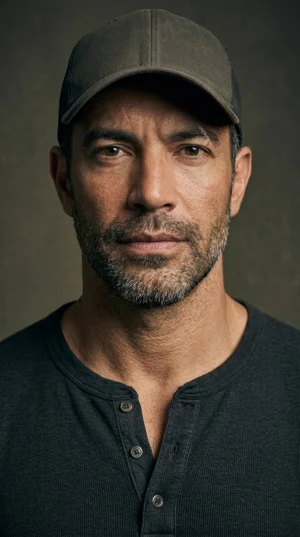
It was still there at nine, and at noon: a big man with a close-cut beard and a ball cap who didn’t even pretend to read his phone. When I finally marched across the road in my bathrobe and banged on his window, he rolled it down and looked at me with calm, tired eyes.
“Ma’am,” he said. “Go back inside and lock the door.”
“Who sent you?”
He didn’t lie. I’ll give him that.
“Your ex-husband’s people.”
I had flour to the elbow on one sleeve, because at eleven o’clock I’d decided that if my life was ending I’d at least have biscuits, and I stood in the street with it drying on me while a man I’d never seen before looked at me like weather.
“His people,” I said. “Which people? He’s got a lot of people. He’s got a man whose whole job is carrying his hats.”
“Highwater.”
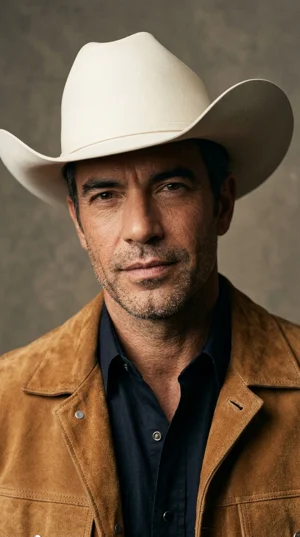
Wendell Shaw, then. Dalton’s manager, and the owner of the company that published “Porch Light” and collected on it every time it played in a truck stop. Wendell, who’d sent flowers to the hospital in 2014 with a card that said Thinking of you both. I could still see the card. He’d had his assistant sign it.
“And what are you supposed to do?” I said. “Sit there till I die of embarrassment?”
“Sit here till you see me.” He had a low voice, flat Texas under it, and he used it like he was paying for every word. “You’ve seen me. Now go inside.”
“Is that a threat?”
He looked out the windshield at my little house. The paint coming off the porch rail. The porch light I’d forgotten to turn off, still burning in the middle of the day like an idiot.
“It’s a truck,” he said. “Lock your door.”
And he rolled the window up.
My phone had been face down on the kitchen counter since four a.m., buzzing itself in slow circles toward the edge. When I turned it over, it said two hundred and eleven missed calls, and then it said two hundred and twelve, and the name on it was Junie.
“Well,” Junie Rucker said, when I picked up. “You lit the match.”
“I know.”
“No. I don’t think you do. You’re on the news, honey. The real news. A man on Channel 4 used the word bombshell and looked happy about it.”
Junie had two hits in the nineties and a house in Inglewood that the hits had paid for, and she’d been my friend since I was twenty-two and too dumb to know she was famous. She’d been sitting beside me at the Wren the first night I ever played “Porch Light” for a room, and she’d put down her knitting halfway through the chorus. She was the first person I’d thought of at two o’clock that morning on the back steps, with my thumb over the button, and I hadn’t called her, because I knew she’d tell me not to.
“Are you mad?” I asked her.
“I’m proud of you so hard I’m about to throw up.” A lighter clicked; she’d quit in 2009 and still carried it. “Also I’m scared. Wendell’s not going to let this sit, Hattie.”
“He’s already not letting it sit. He sent a man.”
“What kind of man?”
I went to the front window and moved the blind with one finger. The truck was where it had been. The man in it was where he had been. He hadn’t moved his head, but I had the clear, cold feeling that he’d seen the blind move.
“The big kind,” I said.
There was an email from a law firm on West End with my name spelled right and nothing else right in it. Material breach of the confidentiality provisions of the Marital Dissolution Agreement. Liquidated damages of two hundred fifty thousand dollars ($250,000) per breach. They wanted the memo taken down by five o’clock tomorrow and a written statement that it was “a private recording of a composition owned by Highwater Music.” They’d attached the statement so I wouldn’t have to write it. Considerate.
There was a text from Tammy in marketing at Bellweather Beds that said call me when u can!! with two exclamation points, which in Tammy’s language meant one of us was fired.
And there was one from Dalton, at 3:12 that afternoon, the first in eleven months.
Hattie what are you doing. Call Wendell. Please.
I looked at please for a while. He’d always been good at that word. He’d say it with his forehead against mine in the dark and I’d give him whatever he wanted, a chorus, a bridge, a line I’d been saving, the last of the coffee. I’d given him my name for nine years, so he could put his on things.
I didn’t call Wendell. I didn’t take it down.
At dark I sat at the kitchen table and didn’t turn on the overhead.
It was the same table. In the divorce Dalton’s lawyer had asked me, with real curiosity, what I wanted from the house on Woodland Street, and I’d said the kitchen table, and he’d written it down like he was taking an order for something small and sad. Oak, scarred, a burn ring from a pot I’d set down without thinking. I’d moved it into this rented shotgun house where it took up the entire kitchen, and I ate at it and wrote mattress jingles at it and did not, ever, sit on the side where I’d sat that night.
I sat there now.
Here is what I remember about that week in 2014, if you want it in the order my body keeps it. The plastic hospital bracelet I didn’t cut off for four days, because cutting it off would mean it was over. The kettle on the back burner, ticking as it cooled. A stack of mail I’d been not opening since the first time, the first baby, the one we lost the February before, and on top of the stack the electric bill in its pink envelope that meant they were serious now. Dalton asleep upstairs with his boots still on, because he’d played the Wren that night and come home and said I’m sorry, baby, I’m so sorry into my hair and then he’d been asleep, the way men can be.
And the porch light. I’d left it on for him when he went out, and then I couldn’t turn it off. I don’t know how to explain that. I sat at this table and looked at the switch by the back door and thought, if I turn it off, there’s nobody left out there to wait for.
I turned the pink envelope over and wrote on the back of it until it was full.
Leave it on, leave it on, somebody’s still on the road home. I don’t care what the meter costs, I won’t be the dark you get lost in.
I recorded it on my phone at 2:14 in the morning because I was afraid I’d lose it, and I was crying so hard on the second verse that I had to stop and say the words instead of singing them. That’s the version four million people had listened to since midnight. A woman in a kitchen saying leave it on to nobody.
Dalton woke up at ten and found the bill on the table. He read it standing, still in his boots. He didn’t say anything until the kettle had stopped ticking, and then he said, “Baby, that’s a hit,” and he was right. It was the only time in nine years I saw him cry.
I picked up my phone and played the memo once, all the way through, with the sound low. Then I went to bed in my clothes and lay there listening to my own house.
Dobro woke me.
He’s a beagle and something larger, eleven years old, deaf in one ear and loyal to the refrigerator, and in all the time I’d had him I’d never heard him make the sound he made then, a low wet rumble down in his chest like a truck idling. He was standing at the bedroom door with his hackles up, pointed down the hall toward the kitchen.
The clock said 11:40.
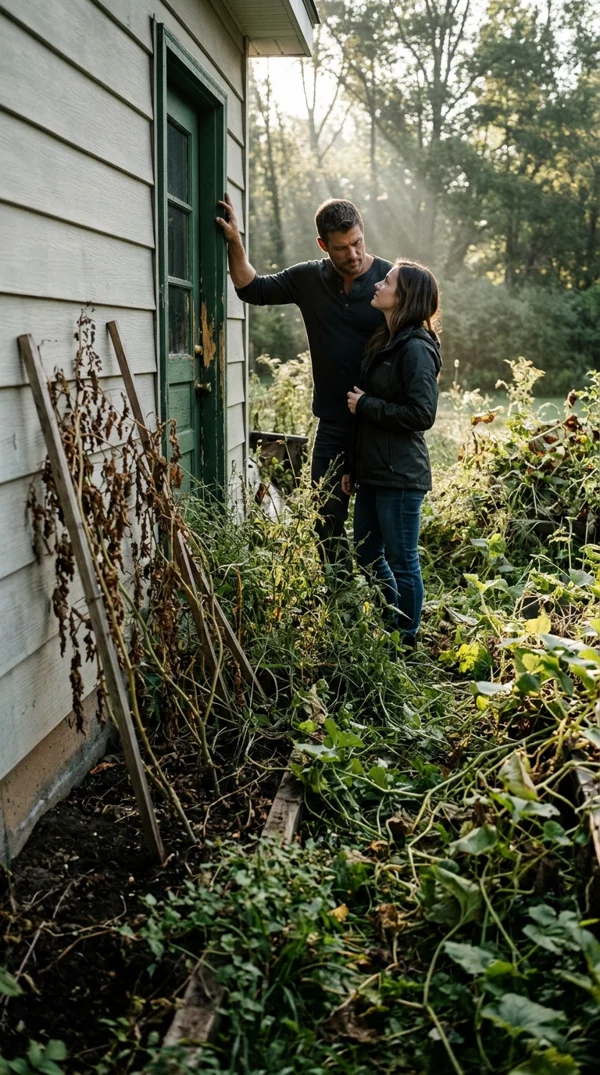
The motion light over the back steps was on. I could see it through the kitchen window from the end of the hall, white and flat, lighting up the dead tomato plants and the edge of the shed. It came on for possums. It came on for wind.
Then the back doorknob turned.
Not fast. Not someone in a hurry. Someone patient, trying it the way you’d try a stuck jar, a little pressure, a little more. The door was a hundred years old and the deadbolt was newer than the door, and I heard the bolt take the weight and hold, and the knob go back.
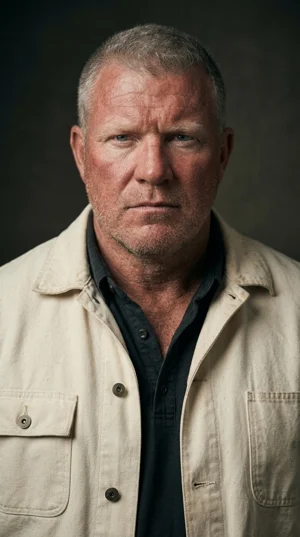
Through the glass at the top of the door I could see the shape of him. A pale jacket. Not as tall as the man in the truck. When he moved away from the door, toward the window over my sink, he moved like he was favoring one leg, a little drag on the right, as if the knee didn’t quite bend.
I didn’t scream. I want that on the record. I stood in my own hallway in my socks with my hand on the dog and my phone somewhere in the bedclothes behind me, and I didn’t make a sound, and I think that was the worst of it: I’d been quiet for so long that I didn’t even know how to scream anymore.
A truck door slammed in the street.
The pale jacket stopped. Then he was gone, fast now, his bad leg swinging, out past the shed toward the alley, and a second later something big came around the side of my house at a run, quieter than anything that size had a right to be, and the motion light caught him: the beard, the ball cap, one hand held low and open at his side.
He went to the alley and stood there. He didn’t chase. He stood and looked down it for a slow count of ten, and then he turned and looked at my back door, at the glass, right at me in the dark of my hallway as if he could see me there, and I believe he could.
A minute later there was a knock at the front.
I opened the door on the chain. He stood on my porch under the light I still hadn’t turned off, breathing hard through his nose, not touching the frame.
“You okay?”
“That was you,” I said. “Your people. You and him.”
“No, ma’am.”
“Then who—”
“Lock the back. Put something under the knob.” He looked past me, down my hallway, at the kitchen, at the glass. When he looked back at me, his tired eyes weren’t tired anymore.
“That man isn’t with me,” he said. “He isn’t with my company. Whoever sent him didn’t send him to watch you.”
What did you think?