Closing Time, chapter 2 of The Bride He Waited For
He knocked at a quarter to nine, on the glass, two raps with a knuckle. I knew it was him by the second one. Everybody else in Merritt would have tried the handle.
I had washed eighty plates, which was a lie, because they were paper, but I had washed every real dish in the building, both coffee urns, the tea dispenser and the floor mats, and I’d put the chairs up on the tables in the dining room so I could mop under them, and then I’d sat down at the counter in my mother’s apron with a glass of sweet tea I didn’t want and the letter from Tate Gatlin’s office, and read it again. I’d read it so many times I could have recited it to him through the door.
I let him in because I wanted to see his face when I told him.
He’d changed out of the uniform into jeans and a blue work shirt with the sleeves turned back, and the star was clipped to his belt beside the gun. He stood inside the door and looked at the chairs on the tables, legs in the air, like a field of something dead.
“You mopped,” he said.
“I was raised here.”
“I remember.” He took the fourth stool from the end of the counter, and I hated that I noticed. “Tell me,” he said.
I had planned to make him ask. I’d planned to stand behind the register like it was a pulpit. Instead I sat down two stools away from him and told it to the pie case.
“I was on the porch at eight. You said nine, but I was on the porch at eight because I couldn’t stand being in the house. I had the navy duffel with my name on the luggage tag. I had on a yellow dress off the sale rack at the mall in Macon. I’d done my hair three times.” I turned my glass. “At twenty to nine your mama’s car came down Pecan Street, and I thought, well, he’s sent her, they’ve made up, she’s come to give us her blessing. That’s how stupid I was. She got out in a hat. She said, ‘He asked me to bring you this, Adele. He couldn’t face you.’ And she gave me a letter.”
He didn’t move.
“Yellow legal paper. Folded in thirds. The kind you all carried on your clipboards.” My voice was doing fine. I was proud of it. “It said you’d thought hard about it. It said your mama was right that we’d both be sorry. It said take the money, make a life, don’t call. And it was signed.”
“Signed how?”
“With your name, Beau. How do you think?”
He let that sit. Behind me the pie case hummed its one note.
“I tore it up,” I said. “I tore it up and threw it on the porch boards, and I took her check because I had eleven dollars to my name, and I got in her car. That’s the part I never told anybody. She drove me to the bus station in Macon herself. She had the ticket in her pocketbook. Charlotte, one way. She walked me in and stood there in her hat until they called it.”
“She drove you,” he said, and his voice had gone down to almost nothing.
“She bought me a Coke from the machine for the ride.”
He set both palms on my mother’s counter and pressed down, as if it had started to rock under him, and looked at his hands.
“Your turn,” I said.
“Thursday night somebody left a note for me at the front window at the office. Said your mama was driving you down and I should meet you there.”
“I didn’t send you a note.”
“I know that now.”
“You don’t know anything now.”
“I know I put on my good shirt,” he said, “and drove to Macon at eight, and sat on a bench outside the probate office, and the lady at the counter let me sit there, and at ten-thirty the judge’s clerk came and asked if we still wanted the appointment, and I said she’s coming. And at five the man with the keys came down the hall and locked the doors, and I was still there.” He looked up. “I’ll tell you the rest when you can stand to hear it.”
“I can stand to hear anything.”
“No,” he said. “Not tonight.”
I got up because I couldn’t sit still with that. I went behind the counter and reached for the coffee urn to drain it, which I had already done, and I wasn’t looking, I was looking at him, and I caught the hot-water spigot on the side of the urn with the inside of my wrist.
I didn’t make a sound. I’ve burned myself on every piece of equipment in the restaurant business, and you learn not to make a sound, because there are customers and because nobody has time. But he was off the stool and behind my mother’s counter before I’d pulled my hand back, and he had my arm under the cold tap at the dish sink before I could tell him I was fine.
“I’m fine.”
“Hold still.”
The water ran. His hand was around my forearm, not tight, just there, the way you’d hold a bird you’d caught in a house to put it back outside. His thumb was on the inside of my wrist, an inch above the burn. I could feel my own pulse going against it like something trying to get his attention.
He felt it too. I watched him feel it. He didn’t move his thumb.
Nineteen years. I’d been married for eleven of them to a man who never once noticed when I cut myself, and here was this one, who I’d hated with my whole body on the bus to Charlotte, who I’d hated through three kitchens and two apartments and a wedding at a Myers Park country club with a string quartet, holding my wrist under a cold faucet in a closed diner like it was his job.
“That’s enough,” I said. My voice was not doing fine anymore.
He turned the water off. He let go. He took a clean side towel off the stack, folded it in half and wrapped my wrist in it, and tucked the end in so it would hold, and then he stepped back out from behind the counter, to the customer side, like he’d crossed a line he didn’t have the right to and was putting himself back.
I picked the letter up off the counter and handed it to him, because I couldn’t think what else to do with my hands.
He read it standing. I watched him read it. I knew what it said. Notice of sale under power. Security deed from Marjorie A. Tolliver to Whitcomb Farmers Bank. Default in payment. The debt secured has been and is hereby declared due. The legal ad that was going to run in the Bellamy County Ledger every week for four weeks, telling the whole county that on the first Tuesday in August, between the legal hours of sale, at the courthouse door, the bank would sell my mother’s diner to the highest bidder. A payoff figure good through the end of the month. One hundred twenty-eight thousand, four hundred dollars and change.
“She was four payments behind,” I said. “She was sick since March. She didn’t tell me she was sick. She didn’t tell me anything. I found that on her kitchen table with a pen on top of it, Thursday, when I came in to get her good dress for the funeral home.”
He folded the letter along its creases and laid it down.
“Mama’s bank,” he said.
“Your mama’s bank.”
“My granddaddy’s.” He looked at the window, at the dark square, at the bank’s limestone front across it with the one security light burning. “His voting shares came to me four years ago. I signed a proxy the same afternoon that let her keep voting them. I didn’t read it. I didn’t want anything to do with that building.”
“So you own a bank.”
“I own a vote I gave away. Monday morning I take it back.”
“And then what? You fire your mother?”
“Then I call the board. And Tate Gatlin tells me the bylaws want thirty days’ notice for a special meeting, and he’ll be right, and the meeting lands after the sale.” He said it flatly, a man reading out the weather. “So that won’t save it. Not in time.”
“Then what are you doing here, Beau?”
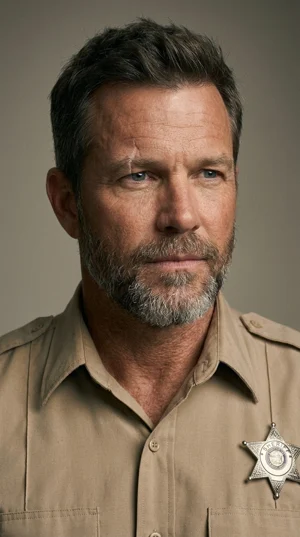
He came back to the counter and leaned on it with both forearms, across from me, the way he used to at two in the morning. The register light was on the side of his face. There was gray in his beard and a white scar through his left eyebrow that hadn’t been there before, and I wanted to know who had given it to him and I didn’t want to want to know.
“Nobody changes a lock in my county without a writ,” he said. “And every writ crosses my desk.”
“You can’t arrest a foreclosure, Sheriff.”
“No.” The corner of his mouth moved. “But I can make it awful slow.”
“That’s not a plan. That’s a sheriff.”
“The bank’s not taking Margie’s, Dell.”
“You don’t get to decide that.”
“No,” he agreed. “You do.”
I took off my mother’s apron. I don’t know why. I folded it on the counter and put my hands on it.
“I’ve got a job,” I said. “I’ve got four restaurants and a man who calls me every hour when I’m gone and an apartment in South End with a parking deck for a view. I was going to sign whatever Gatlin put in front of me and drive home Monday, and you know what, I’d have taken her check, too. I’d have taken it because it would have been the fastest way out of this town, and that’s what I’m good at. Getting out of this town.”
“I know.”
“Then why should I stay?”
He didn’t tell me I owed it to my mother. He didn’t tell me about the courthouse again. He straightened up off the counter and went to the door and put his hand flat on it under the bell, the way he had that afternoon, and he turned around.
“Stay, Dell,” he said. “Not for me. Till you know. And then if you still want a bus, I’ll drive you to it myself.”
What did you think?