Lot Fourteen, chapter 1 of The Cowboy Who Bought My Ranch
The auctioneer read my grandmother’s brand off a printed sheet, and that was how I found out my husband had sold my ranch.
I was standing at the back of the Sheridan sale barn with a coffee going cold in my hand, because Grant had told me that morning he was driving to Billings for a part. Lot fourteen, the man said. Eleven hundred deeded acres on Little Goose Creek, water rights, house, barns, and the Kessler Seven-Bar brand. Reserve met. Seller present.
Seller present. I looked where everybody else was looking.
Grant sat in the second row in the jacket I bought him for our fifteenth anniversary. Beside him sat a woman young enough to check her phone through the whole thing, with her hand in his back pocket.
I’d like to tell you I marched down there. I didn’t. I stood with my boots stuck to the sawdust while sixteen years of calving at two in the morning, of signing whatever he slid across the kitchen table, came up my throat all at once. My name was on that deed. My grandmother put it there. I hadn’t signed anything.
Except I had, hadn’t I. I’d signed everything.
The bidding started low. Neighbors I’d fed at branding time looked at their hands. Then a voice from the rail behind me said, “Two million,” flat as a fence post, and the whole barn turned around.
Wade Garrity didn’t look at the auctioneer. He looked at me. He was the man who’d been trying to buy Seven-Bar for ten years, the one my grandmother called a vulture to his face, and he’d just bid twice what it was worth.
“Sold,” the auctioneer said.
Grant stood up smiling. Wade walked past him like he was a post and stopped in front of me.
“That wasn’t your signature on the listing,” he said, low. “I’ve seen your signature.” Then, loud enough for Grant to hear: “Get in my truck, Jo. You’re not going home with him.”
For a second nobody in that barn made a sound except the cattle.
There were cows in the back pens waiting for the afternoon sale, and they didn’t care about any of it. One of them bawled long and hoarse, the way an old cow does when her calf’s been shipped, and I thought, I know, honey. I know.
Then the noise came back all at once. Chairs scraping. Somebody’s laugh, quick and ashamed of itself. Merle Dykstra up in the auction box leaned into his microphone and said, “Jo, I’m sorry,” in front of two hundred people, and then seemed to realize what he’d done and switched the microphone off with a thump that went through the speakers like a dropped shovel.
Merle had sold my calves every fall for sixteen years. He’d eaten my grandmother’s rhubarb pie at her funeral and cried into it. He’d just read my life off a printed sheet, and he’d known I was standing at the back, because he’d looked straight at me when he said seller present.
Grant was coming up the aisle.
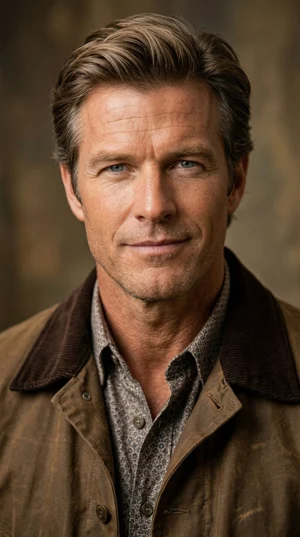
He came the way he went everywhere, easy, a hand on a shoulder here, a nod there, the walk of a man who’d never in his life been the one who had to stay late. He was forty-five and still had all his hair and he knew it. The anniversary jacket was a waxed canvas barn coat from a catalog in Montana, brown, with a corduroy collar. I’d paid two hundred and eighty dollars for it the year the calf check was good. I’d never seen him wear it in a barn.
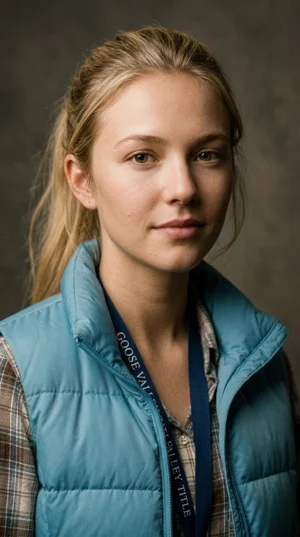
The girl came behind him. Up close she was older than I’d thought, twenty-six or twenty-seven, with a blond ponytail and a puffer vest the color of a robin’s egg and long square nails painted to match. She’d put her phone away. She was looking at me the way people look at a dog they’ve been told bites.
“Honey,” Grant said, and put his hands up like I was the one making the scene. “Let’s not do this here.”
I didn’t say anything. I was busy finding out I couldn’t.
He turned a little, so the rows could see his face, and gave them the grin he used at the bank. “She signs everything I put in front of her, folks. She just forgets.” He shrugged, rueful. “Sixteen years of calving’ll do that.”
Somebody laughed. Not many. Enough.
That would have been the time to hit him. I’d thought about it, over the years, in the private way a woman thinks about things, like driving past your own turn on the county road some night and just going. But I had a cup of coffee in my hand and my grandmother had raised me, and when I finally found my voice it came out level and small and practical, which was worse.
“Did you feed the heifers,” I said, “before you drove to Billings?”
His grin went stiff at the edges.
Because he hadn’t. I knew he hadn’t. I’d fed them at five in the dark with the wind coming down off the Bighorns like it had somewhere to be, and he’d been asleep, and I’d left the coffee on for him. I’d left the coffee on for him.
“Jo,” he said, in the voice he used for the girl at the feed store when she asked about the account.
Behind me Wade Garrity said nothing at all. I could feel him there like a wall at my back in the dark. He hadn’t touched me. He hadn’t moved. He was big and he was waiting, and I understood that he would wait exactly as long as it took me to decide.
That was the part I kept coming back to later. He’d said get in my truck like an order. Then he’d stood there and let me choose.
I looked at my husband one more time. At the jacket. At the girl’s blue nail on his sleeve, resting there like a price tag.
Then I set my coffee down on the rail, very carefully, because my hands had started to go, and I turned around and walked out of the sale barn ahead of Wade Garrity without looking to see if he followed.
It was cold out, the hard bright cold of the last Saturday in October, the kind that gets into your teeth. The lot was gravel and frozen mud and two hundred pickups, half of them with stock trailers, the air sweet and rank with diesel and manure. Somebody’s border collie was going crazy in a truck bed. Past the roofs of the pens the Bighorns stood up along the whole west edge of the world, and there was new snow on Cloud Peak, a long white shoulder of it, the first real snow of the year.
I didn’t know which truck was his. I stopped in the middle of the lot like an idiot.
“Gray Ford,” he said, behind me. “Three rows over.”
It was a working truck, a three-quarter-ton with a flatbed and a bale spike, mud to the door handles. He reached past me and opened the passenger door and stood holding it, and I got in on my own, and he shut it with the kind of care you’d use on a gate you meant to keep.
A black dog of no particular breed was asleep on the floorboards on the passenger side. He opened one eye at me, thumped his tail twice and went back to sleep with his chin on my boot.
“That’s Rooster,” Wade said, getting in. “He’s useless.”
“He’s sweet.”
“That’s what I said.”
He started the truck. The heater came on in a roar of dusty air. He didn’t look at me and I was grateful, because I had started to shake, the deep stupid shaking that comes after you’ve held still too long in the cold, and I didn’t want anybody to see it, least of all him.
He pulled out onto the road and turned south.
For a few miles neither of us said a word. The radio was off. Fence posts went by, and cottonwoods along the creek bottoms with the last yellow hanging on, and hay meadows cut and stacked and gone pale. I knew who owned every field. I knew whose son had broken his arm on which baler. I’d lived my whole life in this county and I’d never once in it ridden in Wade Garrity’s truck.
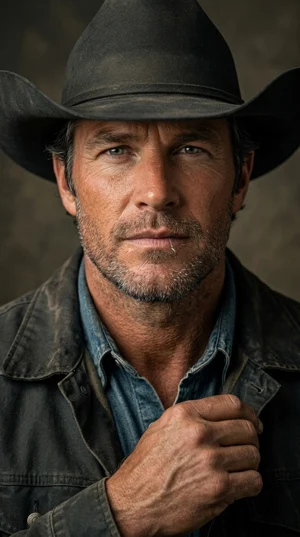
He drove the way he’d bid. No wasted motion. Big hands on the wheel, the left one at the top, a scar across the back of it white as string. He was forty-seven, I knew, because everybody knew everything about Wade Garrity except what he was thinking. He’d buried his wife eight years ago. He ran more cows than anybody between here and the Montana line. He’d tried for ten years to buy my grandmother’s creek, and she had called him a vulture at the Stock Growers dinner with the whole room listening, and he had said yes ma’am and paid for her prime rib.
“Two million dollars,” I said finally. My voice sounded like it belonged to someone who’d been crying, and I hadn’t been. “It’s not worth half that.”
“No.”
“Then why?”
“There was a man on the phone from Denver,” he said. “Bidding through the clerk. He’d have had it cut into forty-acre ranchettes by spring. Log gates with the name burned in. Pole barns for the horses nobody rides.” He checked the mirror. “I wasn’t buying it. I was stopping it.”
“With two million dollars.”
“It stopped.”
I stared at him. He kept his eyes on the road.
“You said it wasn’t my signature.” I pressed my palms flat on my knees to make them quit. “On the listing. How would you know what my signature looks like?”
He didn’t answer. He reached across me instead, slow, a man reaching past a horse he didn’t know, and his arm came close enough that I smelled him, cold air and hay and coffee and something under it that was just a man’s skin, and he opened the glove box.
Inside, under a tire gauge and a box of fence staples, was a bundle of envelopes with a rubber band around it.
He took it out and put it in my lap.
I knew them before I’d turned the first one over. Cream envelopes, the Rafter G printed in the corner. One every fall for ten years, in the mail the week we shipped calves, like he knew when I’d be tired. Offer to purchase. Seven-Bar Ranch, Sheridan County. A number on the first page that went up every year. And across the bottom of every one of them, in whatever I’d had in my hand at the mailbox, ballpoint and Sharpie and one year a red grease pencil from the chute, my answer.
No. J. Kessler.
Fast, every time. Slanting downhill, the way I sign everything, like there’s a calf waiting.
“You kept them,” I said.
“I kept them.”
Ten years of being told no by a woman who couldn’t stand him, and he’d kept every one, rubber-banded in his glove box, where a man keeps the things he needs to reach.
“That’s,” I said. “That’s a little bit crazy, Wade.”
“Probably.”
There was one more envelope on top of the bundle, tucked under the band, and it was newer. September’s. I knew that one too, the way you know your own house from the road. I’d never seen it.
I pulled it out.
The same offer. The same Rafter G letterhead. And across the bottom, in blue ink, in a hand that was trying very hard to be mine, upright and careful and slow, like someone copying out a word in a language they didn’t speak:
Yes. J. Kessler.
The truck hummed. Rooster sighed against my boot. Outside the window the Bighorns kept pace with us, white on top, blue all the way down.
“He mailed it to you,” I said. My mouth had gone dry. “Grant did. In September.”
“I sent it back to him unsigned,” Wade said, “and called your grandmother’s lawyer. Then on Thursday I saw the auction in the paper. Friday I drove out to your place to tell you myself.” He let a mile marker go by. “He met me at the cattle guard. Said you’d gone to Billings.”
Billings. The two of us, sent to Billings, so neither one of us would be standing in the right place.
I looked down at the forged word in my lap. At the careful upright Y, the hesitation in the loop. It was the only time in ten years anybody had told Wade Garrity yes, and it wasn’t even me.
“I don’t understand you,” I said.
He was quiet for a mile. Then he took his eyes off the road, for the first time since we’d left the sale barn, and looked at me, and his eyes were gray and steady and not one bit sorry.
“You’ve never once said yes to me, Jo,” he said. “I figured I’d wait till you meant it.”
What did you think?