Seller Present, chapter 4 of The Cowboy Who Bought My Ranch
“The state keeps a copy,” I said.
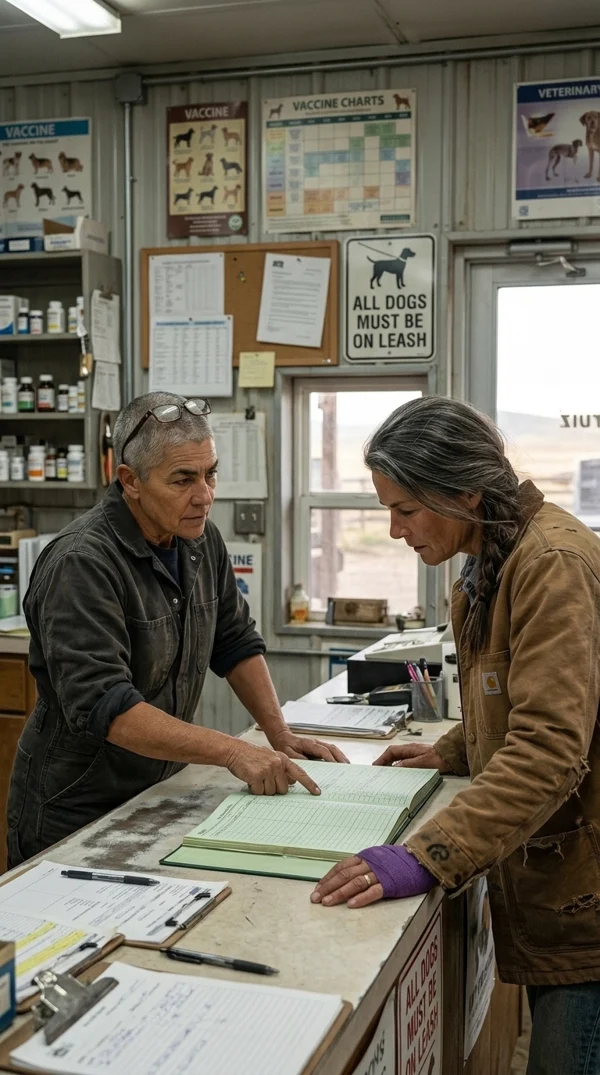
Frances looked at me over her glasses. It was Tuesday morning in her office on Main Street in Sheridan, upstairs from a shop that sold saddle blankets to tourists, and the radiator was banging like somebody locked inside it.
“Of brand transfers,” I said. “Every one. The Livestock Board in Cheyenne. Gran used to say they had a copy of every brand in Wyoming since before there was a Wyoming, and if the courthouse burned down tomorrow you could still prove who owned what cow.” I’d been awake since three working it out. “Grant’s got the brand book. Fine. He’s got our copy. He doesn’t have theirs.”
Frances took off her glasses and let them drop on their chain. She chewed her gum for a while.
“Josephine,” she said, “your grandmother would have liked you better than she did.”
“She liked me fine.”
“She’d have liked you better.” She picked up the phone.
It took most of an hour and three transfers to the right desk. A certified copy, the woman in Cheyenne said finally. Yes, they could. A week, maybe, if we paid for the express. Frances paid for the express. When she hung up she wrote the date on a yellow pad and drew a box around it, hard.
“Now,” she said. “The other thing.”
The other thing was eleven pages long.
I’d asked her to draw it up on Sunday, after the barn coat and the brand book. Petition for divorce, District Court, Fourth Judicial District, Sheridan County. Josephine Ada Kessler versus Grant Thomas Fallon. She slid it across her desk to me with a pen on top.
I didn’t pick up the pen.
I read it. Every page. Every line, the boilerplate too, the parts about jurisdiction and residency and the parts that said irreconcilable differences, which made me laugh once, out loud, so that Frances looked up. I read it the way I read a sick calf. Slow, and all the way through, looking for the thing that was wrong.
It took me twenty-five minutes. Frances didn’t say a word the whole time. She did the crossword in pen.
Then I signed it, fast and downhill, the pen never leaving the paper.
It was the first thing I’d signed in sixteen years that I’d read every word of.
I should have gone straight back to the Rafter G. I knew it when I did it. But the Bird Dog Café in Big Horn had made the pie for every Seven-Bar branding since before I was born, and I’d called in the order for this spring’s two weeks ago, and some stubborn piece of me wanted to walk in there and pay for it like nothing had changed.
The Bird Dog was the kind of place every town out here has one of: a long low room with a pressed-tin ceiling and a counter with stools, a pie case by the register, elk antlers over the door and a bulletin board covered in hay-for-sale cards and lost-dog flyers. At eleven on a Tuesday it was half full. It smelled like coffee and fryer oil and cinnamon, and it went quiet when I came in, the way a corral goes quiet when a coyote walks past the fence.
The Cattlewomen had the big table by the window. Six of them, with their coffee and their planning binder for the Christmas dinner. I’d been the treasurer of the Sheridan County Cattlewomen for four years. I’d balanced that binder.
Peg Arnaud was at the head of the table. Peg had been president for nine years running. She was fifty-eight and wore turquoise earrings the size of silver dollars and she had never, in my hearing, said a single thing behind anybody’s back that she wouldn’t say to their face, which she seemed to think made it all right.
She put her cup down.
“Jo,” she said. “Well. We didn’t expect to see you.”
“I came to pay for the branding pies.”
“Did you.” Peg looked around the table. Two of the women found something interesting in the binder. “That’s brave of you, honey, after everything.”
“After what, Peg?”
I shouldn’t have asked. I knew it while I was asking. But I’d spent a whole marriage not asking things, and it turned out I’d lost the knack.
Peg folded her hands.
“Grant was in Sunday after church,” she said, kindly, the way you’d tell somebody their dog got hit. “He told us all about it. How you’d signed the papers back in the spring and then plumb forgot. How you haven’t been yourself, with the stress, and the change, at your age.” She lowered her voice, which carried it farther. “And about you and Wade Garrity.”
The café was dead silent. Somebody’s fork stopped halfway.
“Me and Wade,” I said.
“Well, honey, it’s all over the county. How it’s been going on for years. How you two planned the whole bid so Grant would end up with nothing.” She shook her head. “Grant says you knew. That you knew all along.”
I stood there in the middle of the Bird Dog with my coat on and my cut hand wrapped in purple vet wrap and the whole room looking at me, and for a second I felt it all come back up, the sawdust and the cold coffee and seller present.
Then I thought: I was in a draw on the Bighorns yesterday, finding a cow that nobody else could see.
I went to the register. The waitress was a girl named Shelby whose wedding I’d brought a ham to. She wouldn’t look at me.
“How much for the pies, Shelby?”
“It’s, um.” She swallowed. “Grant came in and said to put it on his tab, he said. All the Seven-Bar orders. He said it was all handled.”
“Handled,” I said.
That word. I’d heard that word every day of my married life.
I took my wallet out and counted out the money for twelve pies in cash and laid it on the counter, and I put a twenty on top of it for Shelby, and then I turned around to the Cattlewomen’s table.
“Peg,” I said, “you’ve known me since I was four years old. You watched me bury my grandmother. You’ve eaten at my branding fire every spring since Gran handed me the iron. And a man walked in here on a Sunday in a nice coat and told you a story, and you believed him in one cup of coffee.” I buttoned my coat. “I’m not mad at you. I’m just finding out what everybody’s worth.”
I walked out. I didn’t run, and I didn’t cry, and I didn’t let the door slam, which I’m prouder of than anything.
The feed store was worse, because the feed store was business. The account was frozen. Grant had run it to the limit in August and September on mineral and fencing supplies and a new set of panels I’d never seen. The manager, a man I’d gone to 4-H with, said he was real sorry, Jo, but he needed somebody’s name on it who could pay. I bought two bags of mineral with the last of the cash in my wallet and carried them out to my truck myself.
Wade’s gray Ford was parked behind it.
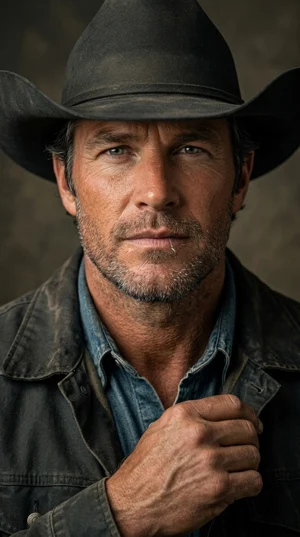
He was leaning on the tailgate with his arms folded. Snow was coming again, light, the flakes big and slow and lazy, catching in the brim of his hat.
I dropped the mineral in my truck bed hard enough to bounce.
“Who told you?”
“Cass. Her sister’s on the prayer chain.”
“I don’t need rescuing, Wade.”
“I know.”
“I mean it. I’m not some woman who has to be fetched home because she couldn’t handle—”
“I didn’t come in,” he said.
I stopped.
He jerked his chin at the Bird Dog across the street. From where he stood you could see straight in through the front window, past the antlers, to the Cattlewomen’s table.
“I got here about the time you were counting out the pie money,” he said. “I figured if you needed me you’d come out and get me.” He didn’t look away from me, not once, the whole time he said it. “You didn’t need me. I watched through the window.”
My throat closed up. I looked at the snow on his hat because I couldn’t look at him.
“Then why’d you stay?”
“Because I wanted to see it,” he said.
That night the snow quit and the sky cleared out the way it does after a storm in the fall, so hard and black and full of stars it looked like you could cut yourself on it.
I couldn’t stay in the house. I went out on his porch in my barn coat with a cup of coffee I didn’t want, and stood at the rail, and looked down the long white meadow to the creek. Three miles away the cottonwoods at Seven-Bar were just a darker line in the dark. There was a light on in my kitchen.
The door opened behind me. He came out and stood at the rail a few feet off, not close. He had a coat on over his shirt and no hat, and his breath smoked.
“Can I ask you something,” I said.
“You can ask.”
“What do you want?” I didn’t look at him. “From all this. From me. You’ve put two hundred thousand dollars in a title company where my husband’s girlfriend can see it. You’ve got me in your house, eating your eggs, doing your books. People think you’re my lover. People think you planned it. What do you want, Wade?”
He was quiet for so long I thought he wasn’t going to answer.
“I want him to lose,” he said. “I want you to get every acre back. And I want you.” He said it the same way he’d said two million. Flat. No dressing on it. “I’ve wanted you for a while. I’m not going to pretend I don’t, because you’d know, and then you’d never believe another thing I said.”
The cold went right through me. Or maybe it wasn’t the cold.
I set my coffee down on the porch rail.
I didn’t decide. That’s not true. I decided in the tack room, with my hand bleeding in his. I just didn’t know it until I turned around, and took two steps across his porch, and took hold of the front of his coat with my good hand, and pulled him down to me.
It was not a polite kiss.
I’d been polite for sixteen years. I kissed him like I’d been starving and somebody had finally set a plate down, and for one second he was so still I thought I’d got it wrong, and then he made a sound low in his chest and his hands came up and took my face, both of them, big and cold and careful, and he kissed me back like he’d been waiting ten years for permission and wasn’t about to waste any of it. His mouth was warm and tasted like coffee. He backed me up against the porch post and the cold of the wood came through my coat and I didn’t care. I had my fist knotted in his collar. I could feel his heart again, slamming, and I thought I did that, and it went through me like whiskey.
He was the one who stopped.
He rested his forehead against mine. We were both breathing like we’d run up the meadow.
“Jo,” he said. “Say what you want. Out loud. So I know.”
I closed my eyes.
“I want to stop,” I said, “being a woman things get done to.”
His thumb moved along my jaw, once.
“Then do it,” he said.
So I did. I kissed him again, slower this time, on purpose, with my eyes open, until the coffee on the rail had gone cold and neither of us cared.
When I let go of his collar he didn’t step back. He put his mouth by my ear.
“Next time you pick it,” he said, “you’d better mean all of it. Because I’m not stopping at the porch.”
What did you think?