I Refuse It, chapter 1 of The Mate He Refused at Court
The light finds me first.
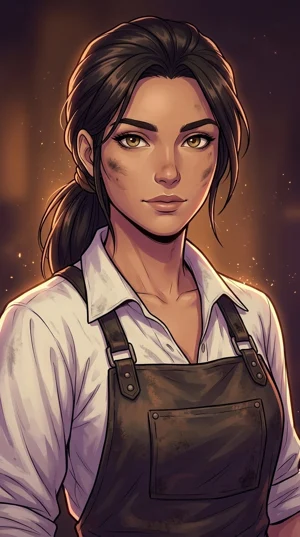
I’m not supposed to be in it. I’m the glassmaker. I’m standing at the back of the Midsummer hall in my good blue dress with sand still under my fingernails, because I spent the spring rebuilding the great lens in the dome and the High Lord said I should see it work. That’s all I’m here for. To watch my own glass do its job.
At noon the sun comes through the Sunglass and falls onto the dais in a column so solid you could lean a ladder on it. The High Lord walks into it first, alone, as he has every Midsummer for two hundred and forty years. After him the court will follow two by two, laughing, hoping, because where true mates stand in the same light, it flares gold between them. Everybody knows that. It’s in every song in Summer.
There isn’t a song about the light leaving the dais.
It does. It leaves him. It comes across the hall like water poured from a height, over five hundred heads, and it lands in the middle of my chest, warm as a hand, and stays.
Five hundred faces turn.
I can hear the dome tick in the heat. I can hear somebody’s bracelet. I can hear my own heart, which is behaving like a bellows somebody has dropped down the stairs.
He comes down off the dais. The court parts for him. He walks the whole length of the hall with the gold running between us like thread off a spindle, and he stops in front of me, close enough that I can see the light caught in his eyelashes, and for one second his face is the face I know. The one from the workshop. The one that laughs.
“Breathe slow,” he says, so low that nobody else can hear it.
It’s what I say. It’s the first thing I ever taught him.
Then he lifts his head and says to the whole court of Summer, in a voice that carries to the doors, “I refuse it.”
The light goes out.
There are two halves to the rite. Every child in Summer knows them. The light asks, and each of you answers, I take it or I refuse it, and then it’s done, one way or the other, and the court can get on with the dancing.
He said his half.
I didn’t say mine. I stood there in the sudden dark with my mouth shut and five hundred people watching me not cry, and then I turned round and walked out through the doors, down the hill, past the lake and the Sunsands and the last Summer milestone, onto the coast road with no money and no coat. It took me eleven days to walk home to Gullmouth. I didn’t cry until the ferry, and then only because a man was selling hot chestnuts and I couldn’t afford any.
Fae can’t lie. That’s the other thing every child knows.
I have had three years to notice that he never said he didn’t want me. He said he refused it.
I’ve decided that’s worse.
I don’t say his name any more. Not out loud, not in my head. I’ve got very good at he.
“He has turned away six envoys,” says Maudie Dimmock, “in two years. Six. He didn’t even see them. They sat in a gatehouse for a week drinking Summer wine, and then a very polite man sent them home.”
“Then send a seventh.”
“I’m sending you.”
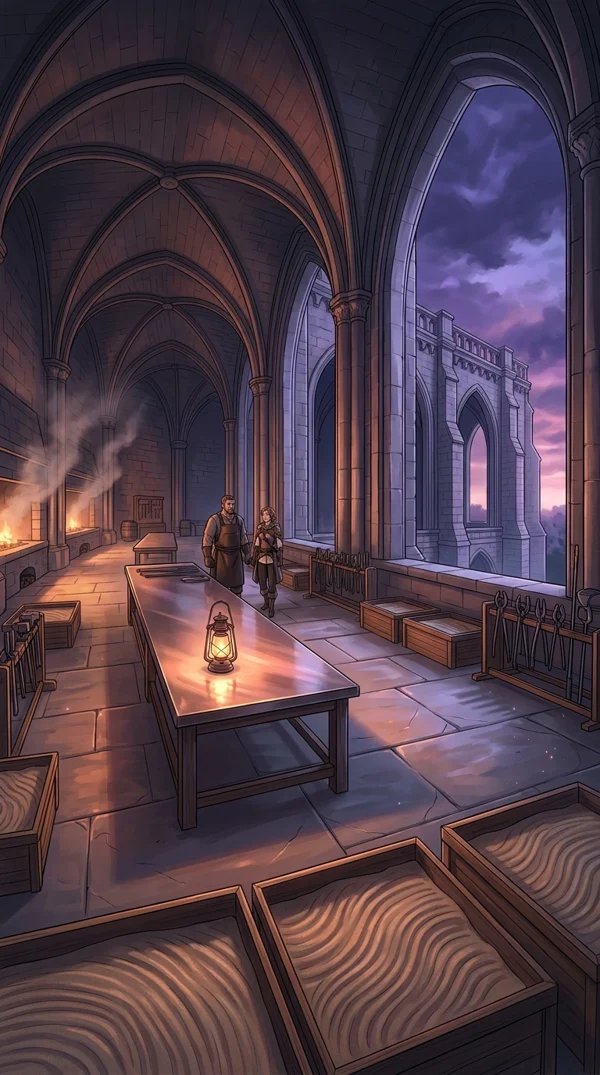
We’re in my glasshouse on Furnace Row, where there have been Glasses since before the Row had a name. We are not an imaginative family. I was twenty-five that Midsummer. I’m twenty-eight now, the glasshouse is mine, and my furnace is out. So is the one next door, and the one next to that. You can walk the whole of the Row at noon now and not feel heat on your face, which hasn’t been true in nine generations, and it’s because the Summer court closed the Sunsands to the free cities at the end of the second winter. Without sunsand there’s no clear glass. Without clear glass, Gullmouth is a town of four thousand people who know how to do one thing.
Maudie is Guildmistress. She’s sixty-three, built like a crucible, and she has never asked me how I am, which is why I like her.
“He’ll see you,” she says.
“He saw me last time. In front of five hundred people. He’s in practice, Maudie.”
“He won’t refuse you twice.”
“You don’t know that.”
“No,” Maudie agrees. “But I know you. You’ll walk in there and make him wish he hadn’t.” She lays the letter of credentials on my marver, on the cold steel where I roll the glass, and smooths it flat with her thumb. “Envoy of the Seven Free Cities of the Glass Coast. It’s got a seal and everything.”
I look at the letter. I look at my cold furnace.
I think about four thousand people who know how to do one thing.
“I’m taking Wilf,” I say.
“Take who you like.”
“And I’m not wearing a dress.”
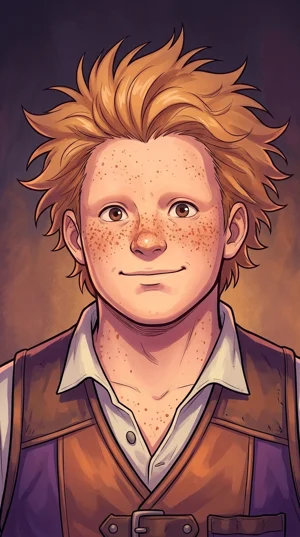
Wilf Pennick is my journeyman. He’s twenty-three and freckled, has no eyebrows at present, and has never been further than the ferry. He spends the three days of the journey with his face out of the carriage window, waiting for fae.
“Will they be beautiful?” he asks, on the second day.
“Yes.”
“All of them?”
“All of them. It’s very tiring.”
On the third morning we come over the last hill and there’s Sunmere on its lake: white walls, green copper roofs, and the great dome in the middle with my lens in the top of it, catching the sun like an eye coming open. Wilf makes a noise I have only ever heard him make at pastry.
I don’t look at the dome. I look at the roses.
Sunmere is famous for its roses. The spring I was here they were coming into bud along every wall, red as a forge mouth, and you could smell them all the way down to the water. Now they hang brown on the stem. Not dead. Cooked, like something left too near the glory hole.
The lake is low, with a crust of dried weed a yard wide along the shore. It’s spring, and the air coming in at the carriage window is the air of an August afternoon, thick and gold and too warm, and the grass on the hills above the town is the colour of straw.
“Is it meant to be like this?” Wilf says.
“No,” I say. “It isn’t.”
In the arcade outside the hall the lamps are lit, though it’s morning. They’re lampglass, Summer’s oldest luxury: no oil, no wick, just a globe of clear glass with a little fire living in it. The court’s own fire, caught by coast glassmakers who blew the glass in the light so it would take the flame and keep it. Half the lamps in this arcade are mine. I’d know them in the dark.
They’re burning too bright. Every one of them is white instead of gold, which is what lampglass does when there’s too much heat behind it. And the one by the hall doors has a crack running through it from the ring to the base, and the fire inside is leaking out along the crack in a thin bright line, like light under a door.
I stop under it. I can’t help it.
“Mistress Glass.”
A man has come out of the hall to meet us. He’s tall, as they all are, with dark auburn hair tied back and the kind of elegance you see on a hawk sitting still. He’s holding a crystal goblet, which nobody holds at this hour, and he smiles at me as if we’re old friends.
“Lord Cathal,” he says, and bows. “Chancellor of Summer, and the High Lord’s cousin, for my sins. You won’t remember me.”
I do. He stood at the left of the dais that Midsummer. He watched it all.
“My lord,” I say, and curtsey.
“I’m afraid you’ve come a long way for very little.” He has a soft voice, the kind that always sounds sorry on somebody else’s behalf. “The High Lord doesn’t receive. He’s been unwell. I’ve handled the court’s business these last years, and I’ll be glad to hear the free cities’ terms myself.” He tips his glass towards the doors. “Though, as it happens, Faolan is in the hall today. For the first time this season.”
He says the name easily. He’s allowed. He’s blood.
His smile deepens. “The court heard who the envoy was.”
The hall is the same.
I thought it would look smaller. People say that about places that hurt them, that they go back and it’s all smaller than they remembered. It isn’t. It’s exactly the size of five hundred people turning round.
They’re all here. Summer’s court in green and gold and the white of noon, beautiful as a rack of new goblets, and every one of them looks at me as I come through the doors, and looks away, and looks back. I hear it go down the hall ahead of me. The refused one. The glass girl. It’s her.
I look up.
My Sunglass hangs in the top of the dome, twenty feet of crown glass in the iron frame I first drew on the back of a sand bill, and there’s a crack in it. A star. It starts dead in the centre and runs out in six bright lines to the lead, and I feel it in my own teeth.
Lightning, I think. It must have been lightning.
Then I look at the dais, and I stop thinking about glass.
He’s thinner. The court coat hangs on him as if it were cut for a broader man. His hair was the colour of a copper pan in firelight, and it’s gone dull, like copper left out in the rain. He’s sitting very straight on the throne, too straight, the way you sit when you’re holding something in.
And he’s wearing gloves.
Summer lords don’t wear gloves. Their hands are the court’s hands, bare for every oath and every gift. I spent a whole spring watching his.
There’s a glass of wine in the right one. He isn’t drinking it. He’s watching me walk.
I walk.
It’s a long hall. I counted once, when I was measuring for the scaffold: two hundred and eleven paces from the doors to the foot of the dais. I’m wearing my good boots and my leather work coat, oiled, because I told Maudie I wouldn’t wear a dress and I meant it. The letter of credentials is in my hand with its seal. I don’t look at anyone and I don’t hurry.
Two hundred and eleven.
I stop at the foot of the dais and look up at him.
In Summer you call the High Lord my lord. Everyone does, unless he asks you otherwise.
He asked me otherwise, once.
I sink into a curtsey so perfect my mother would have wept, all the way down, and hold it, and come up, and look him in the eye.
“My lord,” I say.
The glass breaks in his hand.
It doesn’t crack. It goes all at once, with a sound like a bell dropped on stone, and wine and splinters spray over the step and across his gloved knuckles, and a thin dark line of blood runs out from under the leather and down his wrist.
Nobody in the hall moves.
I’ve been breaking glass since I was nine. I know how it goes when you squeeze it: it cracks where the fingers are, and it fights you first. That isn’t what happened. He didn’t close his hand. His hand didn’t move at all.
That glass broke the way glass breaks when you take it straight off the pipe and drop it in a bucket of cold water. All at once, everywhere, because the heat changed faster than it could bear.
I look at the gloved hand and the blood, and at his face, which hasn’t changed at all.
Then the High Lord of Summer stands up.
“Leave us,” he says.
The court goes. You’d think a whole court would make a noise leaving a room, but they go like water down a drain, fast and nearly silent, silks hissing, and the doors at the far end swing and swing. Wilf goes with them, looking back at me with his mouth open. Lord Cathal goes last and slowest, until the High Lord looks at him.
“All of you,” he says.
Cathal bows, and goes.
I turn too. I’ve done what I came to do, for today. I’ve walked the hall and I’ve said it, and tomorrow I’ll come back with my terms and say it again, and again after that, as often as it takes.
I’m six paces down the hall when he speaks.
“Not you, Mistress Glass.”

What did you think?