Maudie reads the Compact out in the guild hall with her spectacles on the end of her nose, and when she gets to sand at the old price, by the old weight, a man at the back starts to cry.
He’s a bottle-blower from the bottom of the Row called Jethro Mudge, sixty if he’s a day, with forearms like hams. He just stands there with his cap in his hands and cries, and nobody laughs at him, and then the woman beside him starts too, and then the whole hall is on its feet and roaring, stamping on the boards, throwing caps at the rafters.
They lift me onto a table. I let them. I stand on the table in the middle of the guild hall of the Gullmouth Glassmakers with four hundred people shouting my name, and I smile, and I wave, and I feel absolutely nothing at all.
“You did it,” Maudie says, when they let me down. She takes her spectacles off and looks at me with her little hard eyes. “You did it. So why do you look like a pot that’s cracked in the firing?”
“Long journey.”
“Mm,” says Maudie, exactly the way Dervla says it, and I have to turn away.
The Row lights its furnaces that night on the promise. The guild’s last reserve of sunsand goes out on credit, a sack a house, and by midnight you can walk the whole length of Furnace Row and feel the heat on your face again, door after door, as it’s been for nine generations. People stand in the street just to feel it.
Wilf has lit mine. He did it while I was at the hall, and he’s gone to bed, and the glasshouse is warm and bright and smells of home, and I stand in the middle of it and can’t think what to do with my hands.
So I unpack.
The guards in the east court put my trunk on the carriage roof. I didn’t look in it. I open it now on the floor by the cullet bin, the corner where we keep the broken glass for the next melt, and lift out my good blue dress, my other boots, my sand bills.
On top of my sand bills, wrapped in a glove, there’s something small and hard.
I know before I unwrap it. I know from the shape of it through the leather. I sit down on the floor, right there, in the cullet, and unwrap it anyway.
It’s the moth.
My glasswing. Clear wings, amber veins, the body no longer than my thumb. Wrapped in the glove I left on his desk, folded round it twice and tucked in on top of everything, where I’d find it first.
He put it there. He’d have had to go to the guest wing himself, before dawn, before the east court, and kneel down by my trunk with his bare burning hands and not touch it. He’d have had to lift it out of its green silk with my tongs, and lay it in the glove, and wrap the glove round it, so that it didn’t break.
The only thing he kept, in three years. He gave it back.
I know what that is. I’ve been to enough funerals on the Row. That’s what you do with the things that belong to somebody else, at the end. You give them back.
He’s decided again. On the dais he decided what I could survive, and in the east court he decided it again, and now he’s decided I should have this back, because by noon on Midsummer there won’t be anybody left to keep it for.
Nobody asked me.
I sit on the floor of my own glasshouse with the moth in my hand and the broken glass under me crunching every time I breathe, and I look at it.
Midsummer is the day after tomorrow, at noon. Sunmere is three days away by carriage.
By horse, if you change horses at every inn and never stop, and don’t sleep, and don’t mind dying of it a bit yourself, it’s a day and a half.
I get up off the floor.
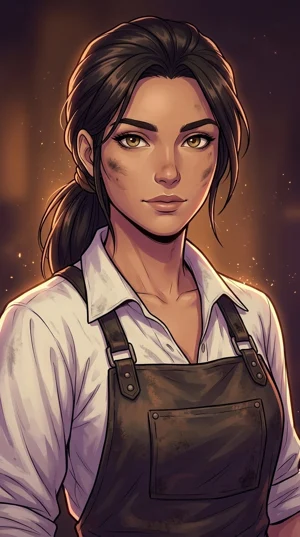
I pack by furnace light, with a rag round the heel of my hand where the cullet got me. I didn’t feel it go in. You never do, with cullet; it’s the sharpest thing in a glasshouse, and it’s patient. Pipes, two, the good ones. Jacks. Shears. A punty. My leather apron. And a sack of cullet from the clear bin, the very best Gullmouth glass, clean as water, the kind we save for the guild’s own windows, because if I’m going to catch the whole of Summer in a gather, I’m going to do it with glass I trust.
I’m tying the sack when Wilf comes down the stair in his nightshirt and looks at me.
“You’re going back,” he says.
“I’m going back.”
“I’m coming.”
“Wilf…”
“I’m your journeyman,” says Wilf, with enormous dignity, and one eyebrow. “Where the gaffer goes, the journeyman carries the bag. You said that. On my first day. You made me write it down.”
I did say that. I’d forgotten.
“Get dressed,” I say. “We need horses. Lots of them.”
We never get as far as the livery yard.
At first light the Row goes quiet.
I hear it before I see anything. Furnace Row at dawn is never quiet: there’s always someone stoking, someone calling, a cart on the cobbles. Then it all stops, door by door, coming up from the harbour end, until the silence reaches us. Wilf and I go to the glasshouse door with the sacks still in our hands.
There’s a horse in the street. A big grey, lathered white to the knees, steaming in the cold sea air, head down. Its rider is getting off it the way a man gets off a horse when he’s forgotten how legs work.
His coat is scorched black. His hair is full of road dust. His gloves have burned through at the palms where the reins were, and the reins have burned through too, and been knotted, and burned again. The puddles on the cobbles, where he stands, are steaming.
Every glassmaker on the Row is in their doorway. Nobody makes a sound.
He looks up the street, and sees me, and walks towards me.
He walks badly. He’s been riding for two days without stopping, and it shows in every step, and it’s costing him more than riding: there are scorch marks on the cobbles behind him, faint and brown, one for every stride, like footprints in dry grass. Old Jethro, on his step with his cap in his hands, takes a step back. Maudie Dimmock comes out of the house opposite in her shawl and stands with her arms folded.
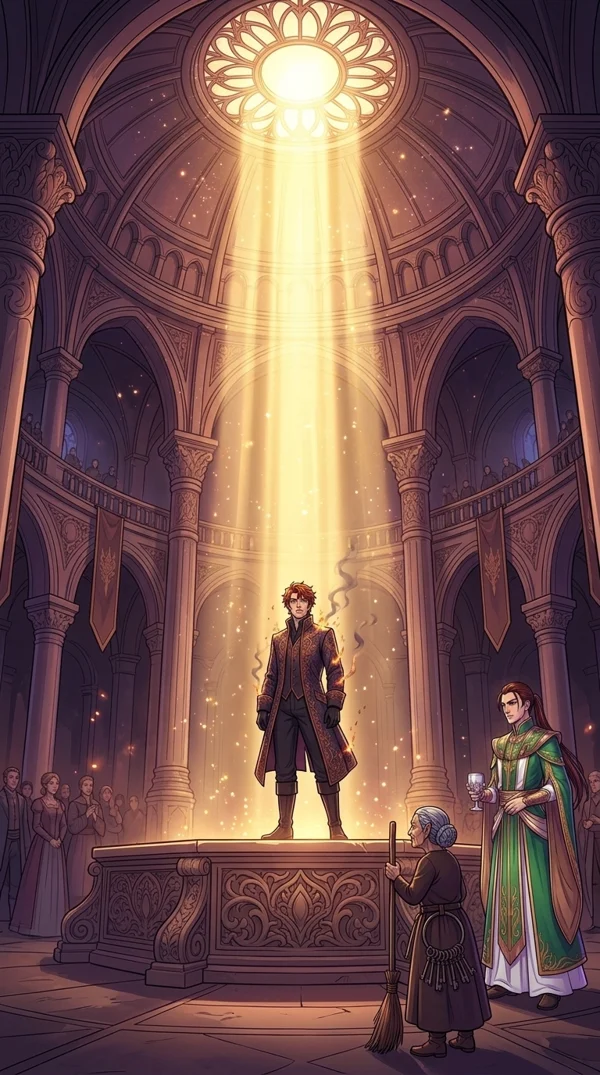
The High Lord of Summer, who hasn’t left his court in three years, walks past me through the door of my glasshouse, into the middle of the floor, to the corner where the cullet is, and kneels down in it.

 100 to start reading with.
What did you think?