Her Rules, chapter 3 of The Vampire's Night Nurse
I didn’t sleep on Friday.
I lay in my half of the duplex off Skidaway Road with the blackout curtains I’d bought for nights and the window unit rattling, and I read the binder again in my head. I’d gone through the whole thing at four that morning, page by page, while he lay facing the wall. That’s another thing you learn on nights: the chart tells you what the family won’t.
The hospice consent, signed by Thornton under his power of attorney. The do-not-resuscitate order. A diagnosis of dementia, end stage, which is the one diagnosis nobody questions in a ninety-year-old. Nobody orders a brain scan on a man of ninety who has stopped eating. They nod, and they sign. And at the back, in a plastic sleeve, an advance directive dated the fourteenth of August, in a shaky blue hand: Upon my death I direct that my body be cremated within twenty-four hours. No viewing. No autopsy. Witnessed by Ozella Haygood and somebody from Thornton’s office.
No autopsy.
When somebody dies at home under hospice, it’s an expected death. The nurse comes and pronounces. The doctor signs the certificate. Nobody calls the medical examiner, because there’s nothing to examine. A ninety-year-old with dementia who wouldn’t eat. It happens every day in Chatham County.
If you had a man in that bed who would light up an autopsy table like Christmas, and you wanted him gone without anybody looking too close, hospice was exactly how you’d do it.
I turned over and punched my pillow and thought about the gold ring with the tape around it, and his voice saying I don’t intend to stop, and the cold of his fingers on my arm where Thornton’s hand had been.
At four in the afternoon I gave up and made eggs.
Tatum didn’t look at me at handoff on Friday. She read me the same report as Thursday, word for word, unresponsive, no change, and at the end, with her keys in her hand, she said, “Did he say anything? After?”
“He said good night.”
She left fast. I don’t think she’d slept either.
At eleven I went down to the kitchen. It was the size of my whole duplex, with a brick floor and a stove from about the Eisenhower administration, and Ozella Haygood was sitting at the long table in her gray cardigan with a cup of something black in front of her.
“Sit down,” she said. “You look like you want to ask me something.”
She poured me a cup from a saucepan on the stove. It was chicory, boiled. Tatum was right: it was tar. It was the best coffee I’d had in two years.
The doorbell went while I was drinking it. Ozella got up and came back with the courier’s clipboard and a white paper bag from the hospice pharmacy, the comfort kit: morphine, lorazepam, the little bottle of atropine drops for the end. She signed the courier’s slip without her glasses, Mrs. O. Haygood, in a schoolteacher’s hand with a loop on the H like a lasso, and put the bag on the counter at arm’s length.
“He won’t need that,” she said.
“Mrs. Haygood…”
“Ozella.”
“Ozella. How long have you known?”
“Forty-one years.” She sat back down. “I came for a week to help Miss Lottie with the silver. I stayed.”
She told me about the giving. Not the way he had, all history and France. The way a woman tells you how a household runs. First Sunday of every month, after dark, one of the family came, and Ozella made them a plate after, because you’re supposed to eat something. Liver and onions, usually. Orange juice. Miss Lottie had come every first Sunday for forty years, rain or shine, even after her hip, even the year of her chemo, and she’d sit on the edge of his bed and roll up her sleeve and tell him all the gossip from her bridge club while he drank, and when it was done she’d say Well, that’s me for the month, like she’d paid the light bill.
“She died the week before Christmas,” Ozella said. “Eighty-four. In January the other cousins started finding reasons. By February Mr. Thornton told them all not to bother. Said Uncle was tired and wanted to go.” She turned her cup on the table. “I rolled my sleeve up myself in March. Right there by the bed. He sent me out of the room.”
“Why?”
“I’ve got a valve in my heart that clicks.” She tapped her chest. “And I work for him. He said, I’ll not take from someone who can’t afford to say no, Ozella. Same as he says about everything.” She looked at me over the top of her glasses. “He’s said it about you already, hasn’t he.”
He hadn’t. Not yet.
“Is this what you want?” I asked him.
It was one in the morning. I’d done his mouth care and turned him and put lotion on his heels, which were nothing but bone, and sat down in the chair by the bed with my hands in my lap. He was watching me in the lamplight, those slate-gray eyes with the silver flash at the back of them.
“Is what what I want?”
“I’ve sat with this before. It has a name, in hospice. Voluntarily stopping eating and drinking. I had a retired schoolteacher in Richmond Hill with ALS who decided she was done, and it took eleven days, and I was there for six of them. It’s a patient’s right. I’ll never force anybody.” I made myself look straight at him. “So I’m asking you the hospice question. Is this what you want? Or is it what you think you’re owed?”
He was quiet so long I thought he’d gone to sleep. Then he said, “I should like to see another spring. The azaleas in the square. I’ve seen a hundred and thirty-three of them and they’ve never once bored me.”
“Then…”
“And I will not take.”
“You wouldn’t be taking. Not if somebody…”
“Somebody who?” He didn’t raise his voice. He didn’t have to. “Ozella, who has a heart that clicks and has nowhere else to live? A cousin with a mortgage that Thornton holds the note on? You?” His mouth thinned. “You’re paid to be here, Berenice. You’re paid to do what you’re told by whoever signs the agency’s checks. How exactly would you say no to me?”
“The same way I say no to you every night,” I said. “I’ve been doing it since seven o’clock. I said no when you wouldn’t let me turn you. I said no when you told me to go sit downstairs and leave you alone. I’m the only person in this house who isn’t scared of you or scared of Thornton. I’m the only person in this house who can say no to you.”
He looked at me.
“They pay me to keep you comfortable,” I said. “Nobody’s paying me to bleed. That part would be mine.”
For a second something moved across his face that I’d seen on a lot of faces at the end. Hope, in a man who’d put it down. It’s terrible to watch. It looks like pain.
“Go home, Berenice,” he said quietly. “Think about it in daylight. I’m told things look different in daylight.”
They didn’t.
On Saturday night I came in at seven with my canvas bag and inside it, in a Ziploc, a twenty-three-gauge butterfly needle, a tourniquet, alcohol pads, gauze, tape, and a sixty-milliliter syringe.
I waited until three. I don’t know why. Maybe because three is the hour most people go, and I wanted to put something on the other side of the scale.
I pulled the chair up to the bed and turned on the lamp and laid it all out on a clean towel on the nightstand, the way I’d set up for a line on the unit, and he watched me do it without saying anything. His eyes went to the needle once and then came back to my face and stayed there.
“Here’s how it’s going to go,” I said. “These are my rules. You want to argue, argue now.”
“Tell me.”
“It’s my blood, and I draw it. Me. From my own arm. Into this.” I held up the syringe. “Not from my skin. You never put your mouth on me for this. Sixty milliliters, once a week, to start. That’s about four tablespoons. I’ve given a pint to the Red Cross every eight weeks for twenty years, I’m O negative, I know exactly what I can spare, and I set the dose. Not you. If I say stop, you stop. And nobody charts this, and nobody ever knows. Not Ozella, not Thornton, not my mother’s ghost.”
“That’s all?”
“That’s all.”
He thought about it. Then he said, “One more. Mine.”
“Go on.”
“You may change your mind. At any time. Tonight, next week, a year from now. Even after.” His eyes held mine. “Especially after.”
“Fine.”
“Say yes, Berenice. So I’ve heard it.”
“Yes.”
I tied the tourniquet one-handed and swabbed the inside of my left elbow. I have a vein there that every phlebotomist I’ve ever met has complimented, which is the only part of my body anybody has complimented in years. I slid the needle in and the blood came up the tube dark and slow, and I filled the syringe to sixty, and I took the needle out and pressed gauze on and taped it.
There were cut-glass cordial glasses on the sideboard by the window, six of them on a silver tray, so old the crystal had gone faintly violet. I emptied the syringe into one.
I put my arm behind his shoulders and lifted him, because he couldn’t lift himself, and held the glass to his mouth.
He closed his eyes.
He drank it the way my mother drank communion wine: slowly, and as if it might be taken away. I watched his throat move. I watched for aspiration, because I’m a nurse, and then I stopped watching like a nurse, because something was happening that no nurse has ever charted.
The color came up under his skin.
It came the way a sunrise comes up behind a curtain: nothing, and then a warmth in the gray, and then a definite blush, rising from his throat into the hollows of his face. The paper of his cheeks went less like paper. His lips, which had been the color of a bruise, went pink. Under my arm, through the thin cotton of his nightshirt, I felt his back go from stone to something nearer a living man’s.
His hand came up and closed over mine on the glass. It was warm.
It was the first warm thing about him.
He finished it. He opened his eyes, and they were gray again, clear, and wet.
“Merci,” he said, very low.
I got the Doppler and put it to his chest because I didn’t trust myself to say anything. Nine beats a minute. Whoosh, and then not long enough, and then whoosh.
I laid him back on the pillow. My hands weren’t steady. I told myself it was the sixty milliliters.
At three-twenty I wrote in the chart, Patient resting comfortably. It wasn’t a lie. It was the first time in twenty-four years I’d ever written down less than I saw.
He was watching me when I looked up. Not like a patient. Like a man.
“Berenice,” he said. “May I?”
I knew what he meant. I’m forty-seven, not dead.
I should have said no. I had a whole speech about it, about professional boundaries and the board of nursing and what happens to women like me who get too attached. I’d given it in my head to myself in the car.
“Yes,” I said.
He touched my face first. Just his fingertips, along my jaw, checking I was real. Then he drew me down, and I let him, and his mouth found mine.
It was cool. And then it wasn’t.
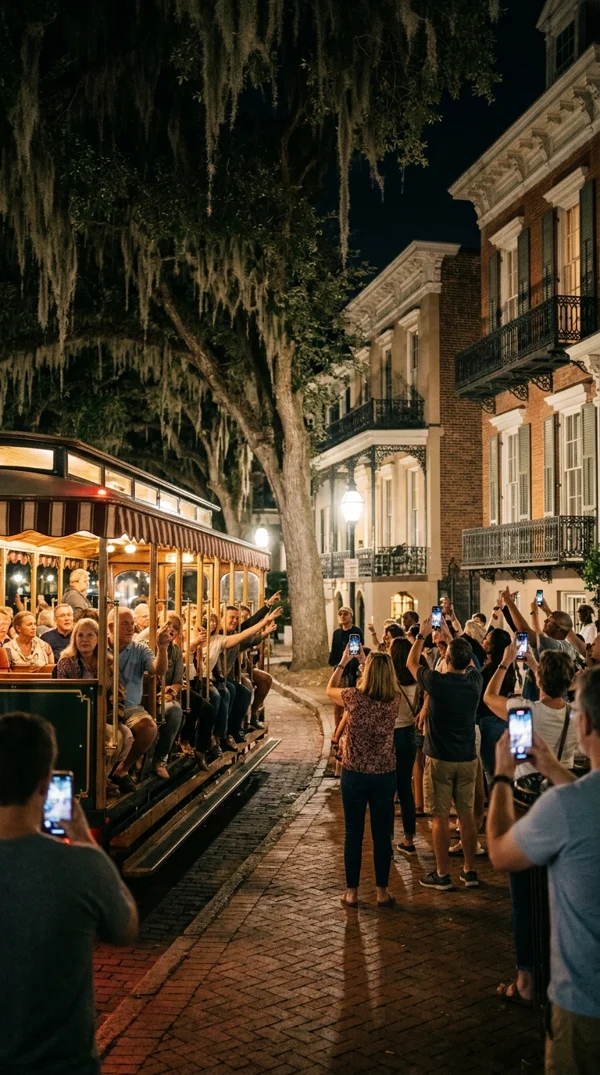
It was the slowest kiss of my life. It was a kiss like a man drinking something he’d been told he’d never taste again. His hand slid into my hair at the back of my neck and held me there, not hard, and I made a sound I didn’t know I still made, and the old house creaked around us, and somewhere outside, very far away, a car went around Rutledge Square with its windows down and somebody in it laughing.
I pulled back. I had to. My heart was going like I’d run the stairs.
“I’m your nurse,” I said.
His thumb moved once across my lower lip. His eyes were very bright.
“Then come back when you’re not,” he said. “Come on your night off, Berenice.” His glance went down over my navy scrubs, and up again, slowly. “And not in those.”
What did you think?