The Truck, chapter 3 of Two Keys in the Glovebox
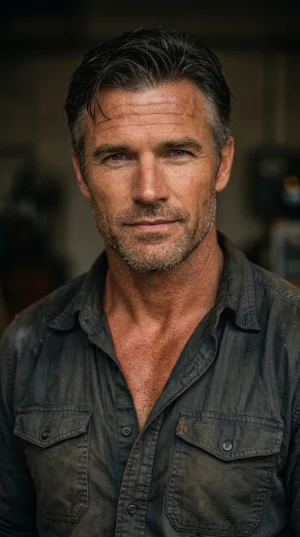
Zeke gave his statement to the insurance company on Saturday morning, standing on our back patio in his robe with the phone against his good ear, and I listened to every word of it through the window over the kitchen sink.
I was washing a skillet that was already clean. I washed it three times.
“Coming back from Ada,” he said. “Yes ma’am. I had some paperwork to drop at our branch in the city, so I came home by way of the city. A coworker’s car had quit on her at the branch, and I offered her a ride home to Broken Arrow.” A pause. “Shiloh Dekker. D-E-K-K-E-R. No ma’am, she wasn’t driving. I was driving. It was raining and I was tired and I don’t remember much after the bridge.”
He laughed a little at something the woman said. Even with a line of staples in his head, Zeke could make an insurance adjuster laugh.
At 9:52 my phone buzzed on the counter. Rocco.
Hers says the branch now.
I dried my hands and wrote it in the back of my green ledger, under the date, below the line where I’d written down what Zeke had said at 4:10 on Thursday morning. The ledger is where I keep every client’s formula and every tip and every allergy for twelve years. It seemed like the right place.
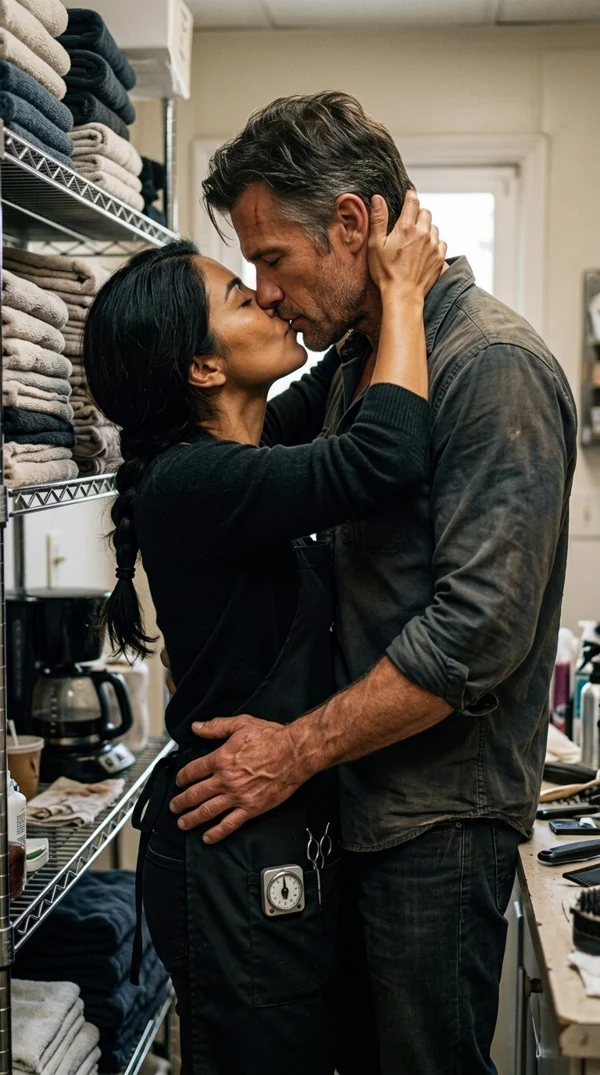
When Zeke came in, he kissed the top of my head on his way past the table, the way he’d done a thousand mornings.
“Hey, babe. You didn’t see the truck key in my stuff, did you? The fob?”
“The trooper must have kept it,” I said.
“Huh.” He stood there a second. “Well. They’ll mail it, I guess.”
He went to lie down in the recliner with his pain pills and the Saturday games, and I went down the hall to our bathroom and opened the cabinet under the sink, and looked at the box of tampons on the back shelf where I had put his key fob on Thursday night. In all our years of marriage Zeke had not opened that box. He’d have walked to Ada first.
The insurance company would talk to me too. My name is on the policy. I made sure of that in 2016, after he let it lapse the first time.
The adjuster had a soft Texas voice and a lot of patience. The truck had been towed to Cimarron Auto Salvage in Stroud, she said, and from the yard’s photos it looked like a total loss. An appraiser would go out Tuesday.
“Can I see it before then?”
“It’s your vehicle, Mrs. Dunn. They’re open Saturday till three.”
After I hung up I went to the fire safe in the hall closet for the title. The safe was the one thing in the house that was both of ours: a gray box the size of a microwave, with our passports and our marriage license and my mother’s rings and my grandmother’s rosary, and a row of hanging folders I’d labeled myself in 2015 with a label maker I was very proud of at the time.
TRUCK. HOUSE. TAXES. GLOSS — BUILDING.
The truck title was where it should be. The Gloss folder was empty.
Not thin. Empty. No deed, no closing statement, no refinance papers from 2019, which I remembered signing at a long table at the bank with Zeke beside me saying it’s just so the rate’s better, babe, and me signing where the yellow tabs were because I had a color correction at three.
I stood there with the empty folder in my hand for a while.
Then I took my wallet out of my purse and slid a card out from behind my driver’s license, where I’d kept it for three weeks. Heavy cream stock. Dorinda Beaudry, Beaudry Family Law, 301 South Main. On the back, in my own writing: Sept 15, 10:30.
I had already sat in Dorinda Beaudry’s office. I had already eaten one of her peppermints and told her about the money Zeke borrowed from the salon and never paid back, and the second mortgage on the house I found out about from the mailman, and how tired I was. I had eighteen thousand dollars in a credit union account in my name only, saved twenty dollars and fifty dollars at a time out of my tips. I was going to file after Gloss turned twelve. The anniversary was Last Friday, the thirtieth. I wanted one more good night in my own shop first.
I had been leaving my husband for three weeks. I just hadn’t told him. I hadn’t told anybody.
I put the card back behind my license. I didn’t tell Rocco either. I’m still not sure why. I think I wanted one thing in all of this that I’d done first, before anybody gave me a reason.
On my way out I opened the tampon box and put Zeke’s key fob in my jeans pocket.
Rocco picked me up at the QuikTrip on Kenosha at one, not at my house. Neither of us had to say why.
He drove like he talked. Both hands, no radio, no hurry. The Turner Turnpike runs west out of Tulsa through red dirt and blackjack oak and long nothing, and you can see the weather coming twenty miles off. We paid the toll and passed the Sapulpa exit, and for a long time neither of us said anything, and it wasn’t uncomfortable. That surprised me.
His truck was very clean inside. A hard hat on the back seat. A pair of rubber gloves in a canvas bag with a date written on the cuff in marker. A Thermos.
“She asked about you,” he said, past Bristow. “Wanted to know if you seemed upset.”
“What did you tell her?”
“That you seemed tired.” He glanced at me. “She says she’ll get her mother to drive her Monday.”
“You should drive her.”
He looked at me a little longer that time.
“I want you in the lot,” I said. “Where you always are. I want everything to look exactly like it always looks.”
He nodded slowly and looked back at the road. “All right.”
Ten miles east of the Stroud exit he slowed down without saying anything and pulled onto the shoulder.
The median was wide there, a dip of brown grass between the eastbound and westbound lanes. You could see where the truck had gone in. Two long dark gouges through the grass, and then a place where the ground had been torn open and thrown, and then nothing, and then another torn place. Pieces of glass in the grass, catching the sun. A strip of white plastic trim. A deep red smear on the guardrail post that I decided was paint.
Rocco didn’t get out. He sat with his hands on the wheel and looked at it.
“Three times,” he said. “It went over three times.”
I wanted to say something. There wasn’t anything. The two people who’d been in that truck had lied to us, and they’d still been in that truck, and both of those things were sitting on my chest at the same time.
He pulled back onto the road.
Cimarron Auto Salvage sat on the east side of Stroud behind a chain-link fence with a sign that said NO PARTS PULLING ON SUNDAY. A boy in a canvas coat with his name on it, TYLER, unlocked the gate and checked my driver’s license against a list on his phone and pointed us down the third row.
“The F-250? Came in Thursday, about suppertime,” he said. “On a rollback.”
“Thursday at suppertime,” Rocco said.
“Yes sir. Paperwork’s in the office and the office is closed Saturdays.”
The crash was at 1:40 in the morning. I did the arithmetic. Rocco didn’t have to.
The truck was white, and it was ruined. The cab was crushed down on the passenger side so the roof nearly touched the door, and the windshield was a sagging sheet of white crumbs, and the bed was twisted off true. It was every bit the wreck you’d want to see if you were an insurance company looking for a total loss.
It wasn’t Zeke’s truck.
I knew it the way I know a woman’s had box dye before she sits down. Not one thing. Everything.
The grille was chrome. In April Zeke had put a black honeycomb grille on his truck, twelve hundred dollars, and I knew it was twelve hundred dollars because it came out of our joint account the same week as my new shampoo bowls, and we’d had words. This grille was factory chrome, bent and pitted, with a bird’s nest of dead grass in the corner.
The driver’s seat was clean. On Thursday morning Zeke’s scalp had bled down his neck and into his ear and soaked his collar, and there wasn’t a drop on this seat. No glass in it either. Every other surface in the cab glittered.
I took out my phone and I photographed it the way I photograph a client before a color correction. Every angle. Good light. Close and far. The grille. The seat. The bent plate on the bumper.
Rocco walked around the truck once, slowly, and opened the passenger door as far as it would go, which was about a foot. He got down on one knee in the gravel with a flashlight and reached under the front of the driver’s seat and felt around for a while, his face turned away.
“What are you looking for?”
“Airbag module. Event data recorder.” He pulled his arm out and showed me a plastic connector in his palm with its wires snipped clean, the copper bright. “It’s a black box. Speed, brake, steering, seat belts. The last few seconds before it went over. Somebody’s cut it out.”
“The insurance company would want that.”
“So would a lot of people.”
He stood up and brushed the gravel off his knee. I opened the glovebox, which was the one thing on that side of the cab still whole. Inside was a Ford owner’s manual in a vinyl sleeve.
Zeke’s owner’s manual was in the bag the trooper gave Rocco on Thursday morning. I’d seen it.
I took the key fob out of my pocket and held it up and pressed the lock button. Nothing. I pressed it again. Nothing happened on this truck at all.
“Battery could be dead,” Rocco said.
“Could be.”
“Could be the battery’s not even hooked up.”
“Could be.” I put the fob back in my pocket. My hand was shaking now, finally, two days late, and I put it on the side of the bed to steady it. The metal was warm from the sun.
Rocco came around the truck and stood beside me. He didn’t touch me. He put his own hand on the bed rail an inch from mine, so I could feel the warmth of it there, and waited until I was done shaking.
Then he leaned in through the space where the windshield used to be, and wiped the dust off the corner of the dashboard with his thumb.
“Raina,” he said. “Come look at this.”
I looked. The little metal plate with the truck’s serial number on it, the one you read through the windshield, was held on with two pop rivets.
And the rivets were bright.
What did you think?